Greek beaches deploy €366,950 barriers against jellyfish
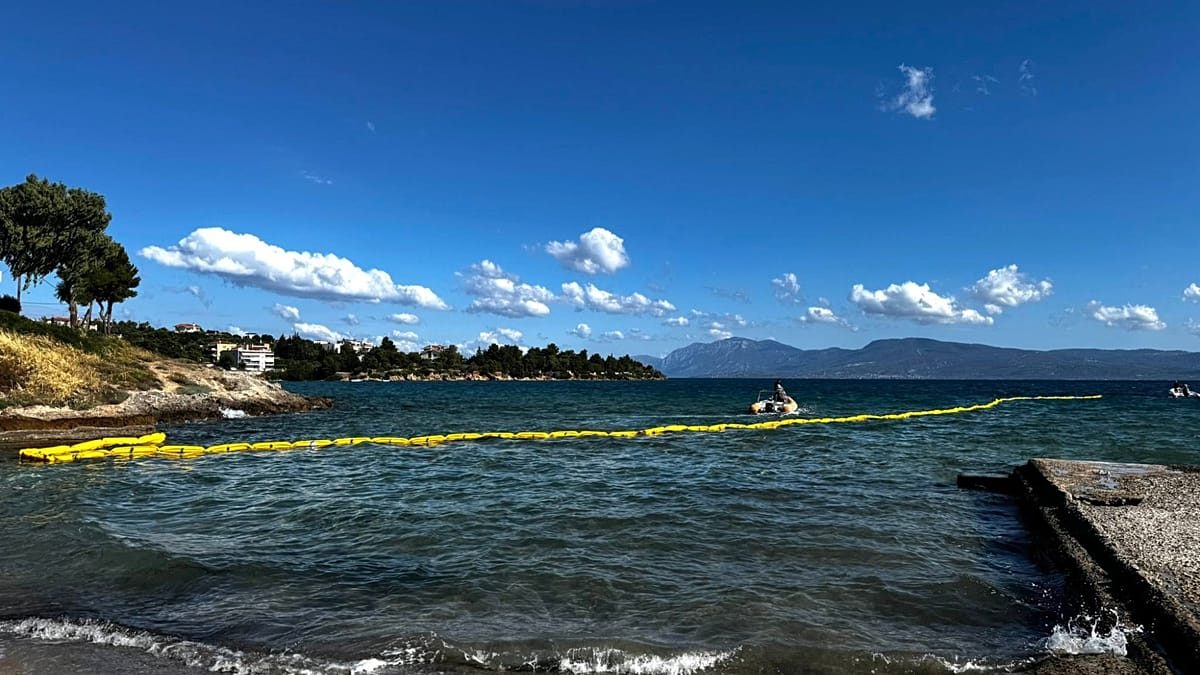
Municipalities in the Euboean Gulf are spending €366,950.10 on floating nets to keep jellyfish and pufferfish away from swimmers, an infrastructure investment testing whether physical barriers can reliably protect the region's tourism economy from invasive marine species.
The Municipality of Chalkideon has begun installing floating barriers across six beaches in the northern Euboean Gulf to block jellyfish and pufferfish from reaching swimmers. The rollout started in mid-June at Rodies beach in Chalkida, backed by a €366,950.10 investment funded by the Region of Central Greece. Specialised diving teams are deploying the nets at Alykes, Mpourntontas, Valopoula, Kalamia and Zephyros, while the Ports Organisation of Evia (OLNE) plans similar installations at Sykies, Kourenti, Souvala and Papathanasiou.
For local economies dependent on seaside tourism, the recurring arrival of jellyfish has become a serious threat to public safety and business. The creatures cause painful stings and occasional severe allergic reactions, directly deterring visitors during peak summer months. The new barriers function similarly to anti-pollution nets, offering the secondary economic benefit of trapping floating waste before it reaches the shoreline.
Local officials view the infrastructure as essential for maintaining the region's commercial appeal. "We would like to thank the Region of Central Greece for funding such an important initiative, which enables us to limit the entry of jellyfish, as well as floating waste and surface pollution, into bathing areas, enhancing safety for swimmers and improving the image of our beaches for residents and visitors to our municipality," the Mayor of Chalkideon said.
However, experts warn that the success of this infrastructure spending depends entirely on precise installation. To be effective against either jellyfish or pufferfish, a barrier must form a completely closed zone, starting from the shore, extending into deeper water, and returning to land in a semi-circular or rectangular shape.
The engineering requirements are strict. The bottom of the net relies on chains or sunk weights that must rest directly on the seabed, leaving no more than a minimal gap to prevent marine life from slipping underneath. The top requires reinforced floats standing 30 to 50 centimetres above the waterline to ensure jellyfish cannot ride over the barrier during rough seas.
Early trials already highlight the practical trade-offs of this approach. Bathers at Rodies have complained that the barrier was placed in very shallow water, severely reducing the space available for free swimming. Furthermore, the system requires ongoing operational expenditure, as specialised crews must regularly clean the nets to prevent seaweed and marine organisms from weighing them down or tearing entry holes into the enclosures.