India close on Lord's victory as England greats bow out
India are poised to secure a dominant Lord's victory that underscores the shifting balance in women's cricket, as England stalwarts Heather Knight and Tammy Beaumont bowed out cheaply in a record 457-run chase.
England closed day three of the one-off Women's Test on 130-6, needing another 327 runs to win. The required total is a world record for the women's game, far surpassing Australia's 198 against England in Sydney in 2011.
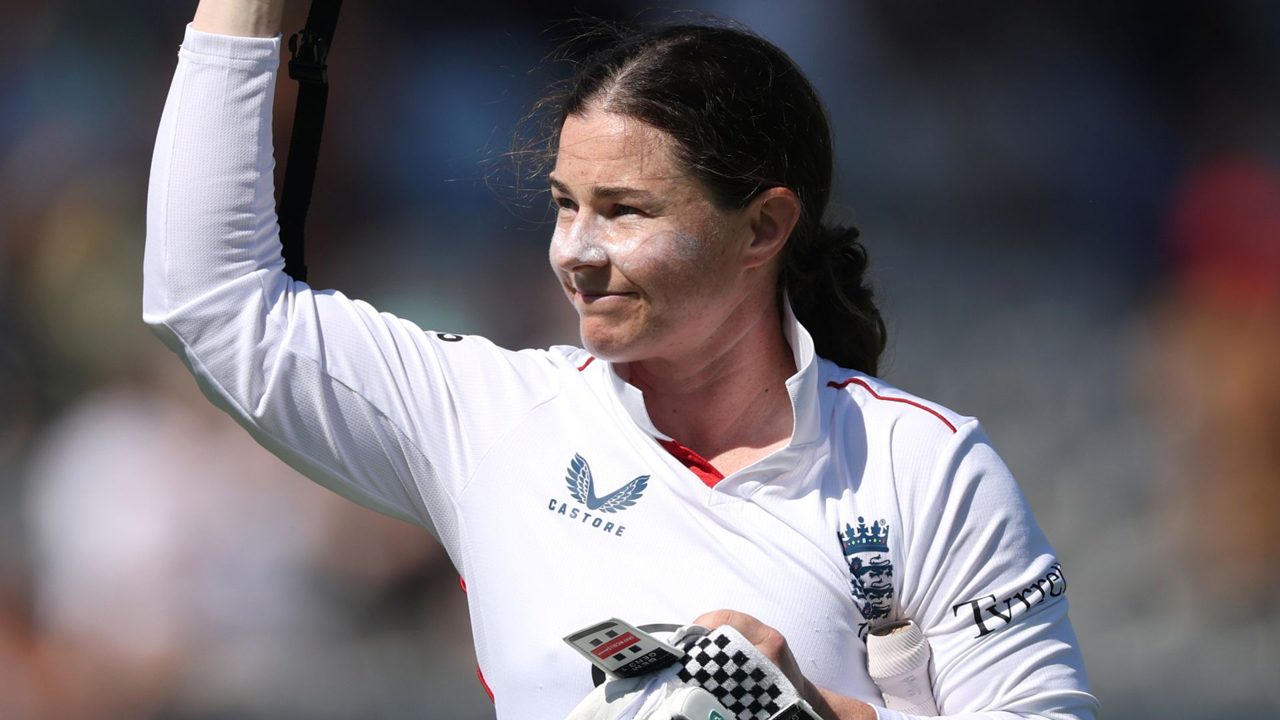
The hosts' dire situation was compounded by the cheap departures of two modern greats. Opener Tammy Beaumont fell for a golden duck to Kranti Gaud, before Heather Knight was caught at short leg for 13. Both players received guards of honour from India upon their dismissals, marking the end of their international careers.
India's grip on the match was established through Yastika Bhatia, who became the first woman to score a Test century at Lord's. Her 113, alongside 70 from Smriti Mandhana and an unbeaten 50 from Richa Ghosh, powered India to 341-7 before skipper Harmanpreet Kaur declared.
The visitors' bowling attack then matched that batting weight. Gaud, who became the first woman on the Lord's honours board with a first-innings five-for, spearheaded the early collapse alongside Sneh Rana and Sayali Sathgare. England's sole resistance came from Amy Jones, who reached a second-innings fifty, and Mady Villiers in a stubborn 67-run stand.
For England, Sophie Ecclestone provided a statistical silver lining. The spinner claimed 5-118, her fourth five-for in 10 Tests, to surpass Katherine Sciver-Brunt as England's highest wicket-taker across all formats with 343 scalps. She now joins Gaud and Bhatia on the Lord's honours board.
The looming defeat carries a broader significance for the domestic public life surrounding women's sport. India's consecutive Test victories over England, following a 347-run win in Navi Mumbai in 2023, demonstrate a widening competitive gap at the highest level. Day four, with free entry for spectators, will now serve as a subdued farewell to a generation of English cricketers rather than a celebration.