White roofs and solar panels could save hundreds during heatwaves
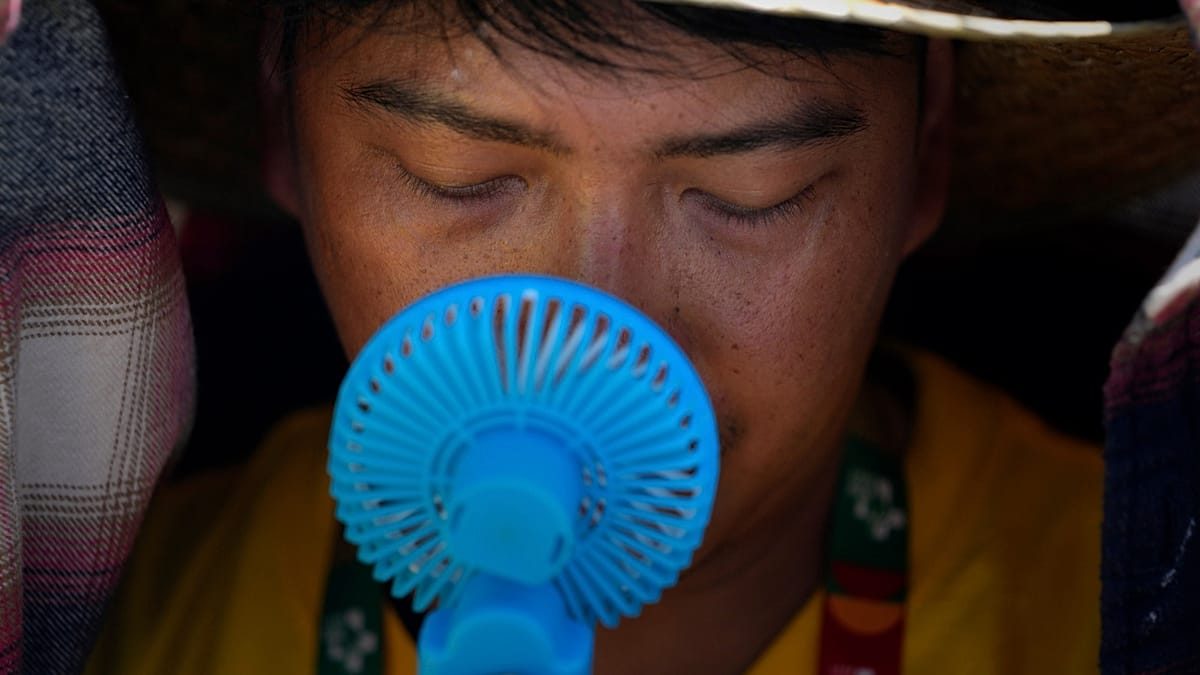
As another heatwave exposes Europe's lack of air conditioning, new research shows that structural adaptations like white roofs and solar panels could significantly reduce mortality and cool cities.
Temperatures in Yorkshire have hit 32C this week, highlighting a structural vulnerability in European housing stock. In the UK, only five to seven per cent of homes have air conditioning, leaving residents to rely on short-term behavioural hacks as heatwaves become more frequent.
The health implications of this underinvestment in cooling are severe, particularly at night. “Nighttime heat is often underestimated, but it can be particularly dangerous because people are typically at home and may not have access to cool, air-conditioned spaces,” said Ruth Engle, a data scientist at the World Resources Institute. The UK Met Office warns that the likelihood of experiencing three consecutive tropical nights in July has increased significantly due to climate change.
Local authorities are beginning to treat this as a public infrastructure issue rather than a personal inconvenience. Leeds recently became the first UK city council to launch a ‘Cool Space’ scheme, opening 39 hubs across the city to offer residents relief. It mirrors the network of climate shelters already established across Spain.
Long-term urban adaptations
Structural changes to buildings offer a more permanent economic and health fix. A 2024 paper by UCL and the University of Exeter, published in Nature Cities, analysed what would have happened if London had widely adopted cool roofs during its hot summer of 2018, when average temperatures were 19.2C. The study found light-coloured roofs could have cooled the city by 0.8C on average, preventing an estimated 249 heat-related deaths.
Rooftop solar panels offer a secondary infrastructural benefit. The same research indicated that widespread solar adoption would have cooled London by 0.3C, preventing 96 deaths. “Solar panels have great benefits as a source of renewable power, so it’s good to see they won’t make the city hotter,” said lead author Dr Charles Simpson.
Urban greenery provides a third avenue for adaptation. Research dating back to 1997 in the US found that shaded surfaces can be 11-25C cooler than unshaded materials. For European economies, the choice is shifting from whether to fund these adaptations to how quickly they can be deployed to offset rising mortality and productivity losses during increasingly brutal summers.