Hundreds of Ukrainian POWs executed by Russia, Kyiv alleges
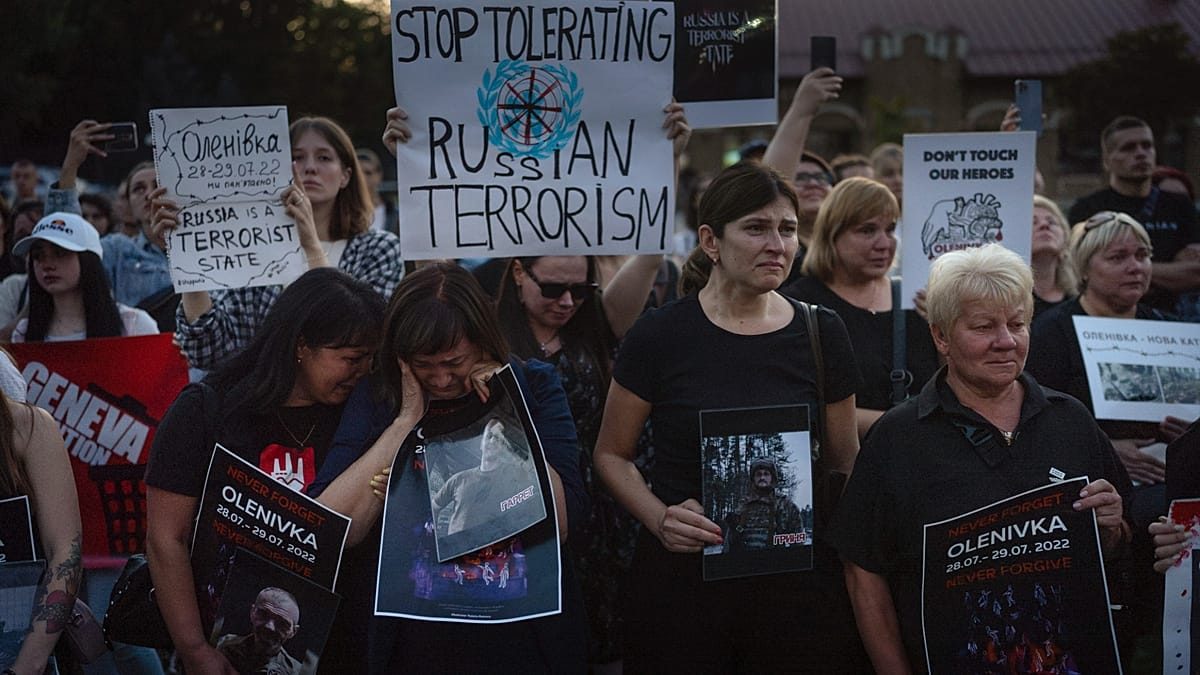
Ukrainian prosecutors allege a deliberate Russian policy of executing hundreds of captured soldiers, posing a severe challenge to international humanitarian law.
Ukrainian authorities have opened 116 criminal investigations into the killings of captured soldiers since 2022. Intelligence services, using faster frontline reporting methods, have tracked more than 900 military personnel killed in over 340 separate incidents.
The scale of the alleged executions is difficult to verify due to restricted access to combat zones. However, a United Nations report last month cited 129 verified cases and warned of a "marked increase" in such killings.
Kyiv insists these are not isolated battlefield violations but the result of a deliberate military policy. "This stems from a Russian policy that has effectively encouraged and enabled such crimes, with commanders then issuing orders to that effect," said Andriy Atamantchuk, an official with the Ukrainian Prosecutor General's Office overseeing POW executions.
The gap between the prosecutors' figure of 306 killed servicemen and the intelligence estimates stems from differing methodologies. Prosecutors rely strictly on "documented and proven facts," while intelligence services receive "information more quickly" from active units. An intelligence official noted their tracking might represent only "between 25 and 40 percent" of the actual cases.
Battlefield evidence
The human cost of these allegations is illustrated by the death of Andriy Dubnytsky, a 25-year-old soldier in the 110th brigade. During a retreat from Avdiivka in February 2024, he and four injured comrades hoped for evacuation before he messaged his wife that they would probably be captured.
Two days later, his wife, Lyudmyla, recognized his body in a video circulating on Russian social media showing five men lying in a frozen, bloodstained puddle. She identified him by a tattoo of a cross on his hand. Video evidence from another soldier, Ivan Zhytnyk, showed a Russian soldier ordering him to lay down his arms before the killings.
Legal obstacles
Under the Geneva Conventions, soldiers are protected from the moment they clearly surrender. Ukrainian intelligence attributes the initial "setting the tone" for these executions to the Wagner paramilitary group, which relied heavily on ex-convicts before its dismantling. Victims are most often shot, though investigators have also documented brutal murders including beheadings.
Securing convictions remains a profound challenge for the legal frameworks supporting Kyiv. The lack of access to active combat zones has severely hampered judicial proceedings, resulting in only five Russian soldiers being convicted in Ukraine so far, two of them in absentia.
Moscow has systematically rejected the accusations and did not reply to requests for comment on the specific allegations. For the families left behind, the slow pace of justice offers little comfort. "I don't know how that would give me any relief, even if I knew one day who did it," Lyudmyla Dubnytska said.