Republic Europe targets late-stage private secondaries with WHOOP
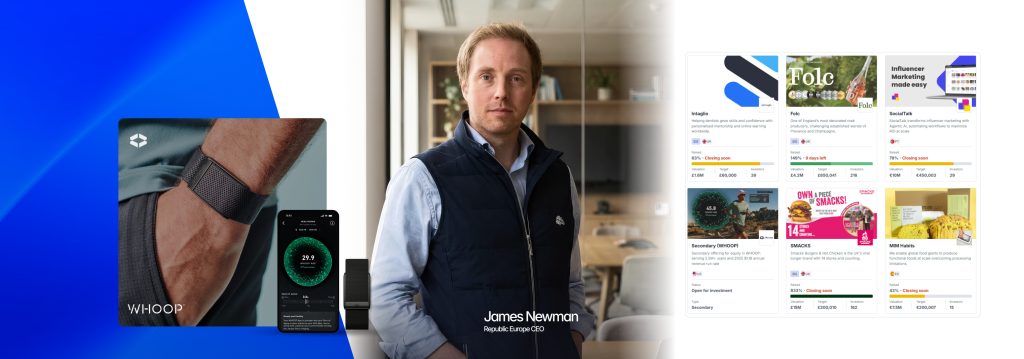
Republic Europe is expanding into late-stage secondary offerings to give individual investors access to mature private tech companies like WHOOP, a shift that challenges the traditional liquidity constraints of private markets.
Republic Europe is expanding its investment focus to include late-stage secondary offerings, launching a campaign for wearable technology company WHOOP. The move comes as private markets have grown to represent nearly 9% of global equities, up from roughly 2% a decade ago.
Companies are increasingly delaying public listings, treating an IPO as a final destination rather than a starting line. This trend was illustrated recently when SpaceX completed the largest IPO in history, debuting on the Nasdaq at a roughly $2tn valuation. "The public market did not create that value, it arrived to price it," Republic Europe noted, highlighting that over two decades of growth occurred entirely in private hands.
WHOOP provides a case study in this shifting landscape. Operating at the intersection of AI and predictive health, the subscription-only hardware business reported being cash-flow positive by the end of 2025. The company closed a $575m Series G round in March 2026 at a $10.1bn valuation, boasting a $1.1bn annual revenue run rate and subscription bookings up 103% year-on-year.
Traditionally, backing a private tech company meant accepting a decade or more of illiquidity. Republic Europe is attempting to solve this by pairing structured, company-led campaigns with a 24/7 secondary trading platform. This aims to create a continuous liquidity lifecycle, allowing investors to buy into mature companies like WHOOP, SpaceX, or Kraken at agreed prices well before a public exit.
However, the platform acknowledges that "liquidity in private markets is never guaranteed and no platform can promise a buyer." The risk profile also shifts in late-stage secondaries. "Late-stage does not mean low risk, it means the risk changes shape," the firm said. "In early-stage investing the dominant question is execution: will a small team find product-market fit? In late-stage secondaries, the business model is usually proven and the questions become quantitative: valuation, unit economics, cohort behaviour and the durability of growth."
Republic Europe is hosting a webinar on 16 July to explain how these secondary markets operate. The firm argues that "people invest differently when they’re not locking the door behind themselves," a philosophy now driving its push to open late-stage private equity to individual investors.