Anthony Barry's elite rise highlights English coaching export pipeline
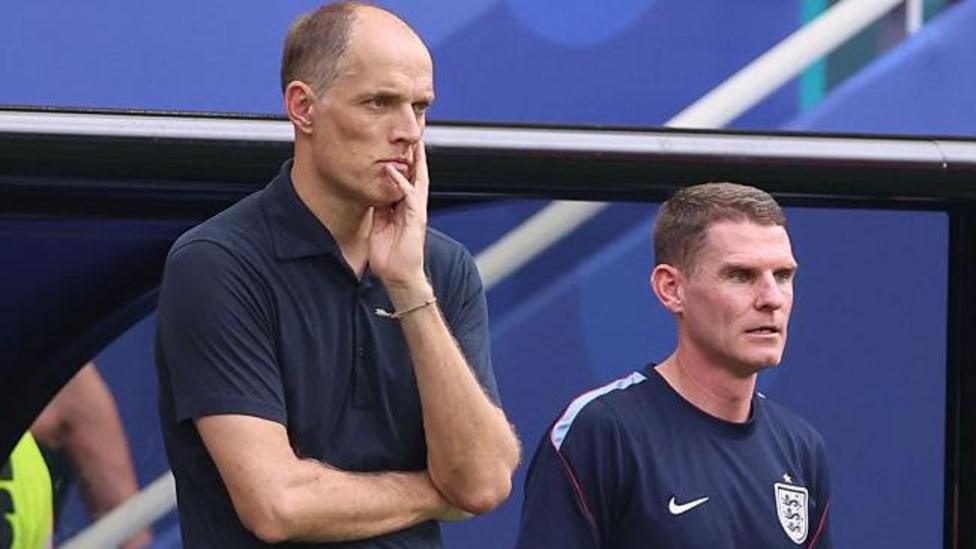
Anthony Barry will sit alongside Thomas Tuchel as England face Argentina in the World Cup semi-final, a milestone that underscores how elite English coaching talent has become a valued European export.
On Wednesday, Anthony Barry will take his seat in the dugout as England attempt to reach their first men's World Cup final since 1966. The 40-year-old assistant coach has become a public face of the team during the tournament through his direct half-time television interviews. His presence on the bench against Argentina marks the peak of an 11-year journey from the lower leagues.
In 2015, Barry was a player at Accrington Stanley, simultaneously taking his first coaching steps with the club's Under-16 side. Twenty years ago, he was part of the Accrington side that won the Conference to return to the Football League after a 44-year absence. "In shock at the question because, 20 years ago, was I really winning the league for Accrington Stanley?" he told 5 Live Sport.
Barry’s transition from lower-league footballer to elite tactical assistant highlights the professionalisation of coaching pathways in the English game. After retiring, his first job was assistant manager at Wigan Athletic. A strong impression on Frank Lampard during their Uefa Pro Licence course secured him a first-team coach role at Chelsea in 2020.
His subsequent career trajectory mirrors the cross-border movement of top-tier technical staff in European football. When Tuchel replaced Lampard at Chelsea in January 2021, he retained Barry, and the club promptly won the Champions League. Barry later followed Tuchel to Bayern Munich in 2023, noting: "As a young English coach, it's a gift to be around a manager like him."
Beyond club football, Barry expanded his portfolio by working as an assistant for the Republic of Ireland, Belgium, and Portugal. This allowed him to coach at a World Cup and European Championship while working with players like Cristiano Ronaldo and Kevin de Bruyne. His technical reputation is built on deep data analysis; he once wrote a Pro Licence dissertation analysing 17,000 throw-ins.
The current England setup represents a long-term institutional investment, with Barry, Tuchel, and three other staff members signing contracts until 2028. The management team prepared meticulously for the US tournament, travelling there last summer to inspect training bases and study how the ball moved on the grass. Barry noted that Chelsea's Club World Cup victory proved "that an English team can win" in the United States, a vital psychological and commercial marker.
Tuchel and Barry have sought to apply a club-level environment to the national team, an approach Barry considers essential given the tight schedule. With only an estimated 50 days of training with the players before the tournament, the staff prioritised physical conditioning and team chemistry over complex tactical systems. "The petrol in the car is the team spirit," Barry told BBC Sport in April.
England have relied on physicality to navigate the tournament's demanding conditions and compressed 22-day schedule for the final stages. For the European football economy, Barry’s ascent from Accrington to the global stage demonstrates the tangible return on investing in highly specialised, data-driven coaching talent. "We've been dreaming for 18 months," he said.