Poland starts €2.3bn Baltic port to challenge EU trade hubs
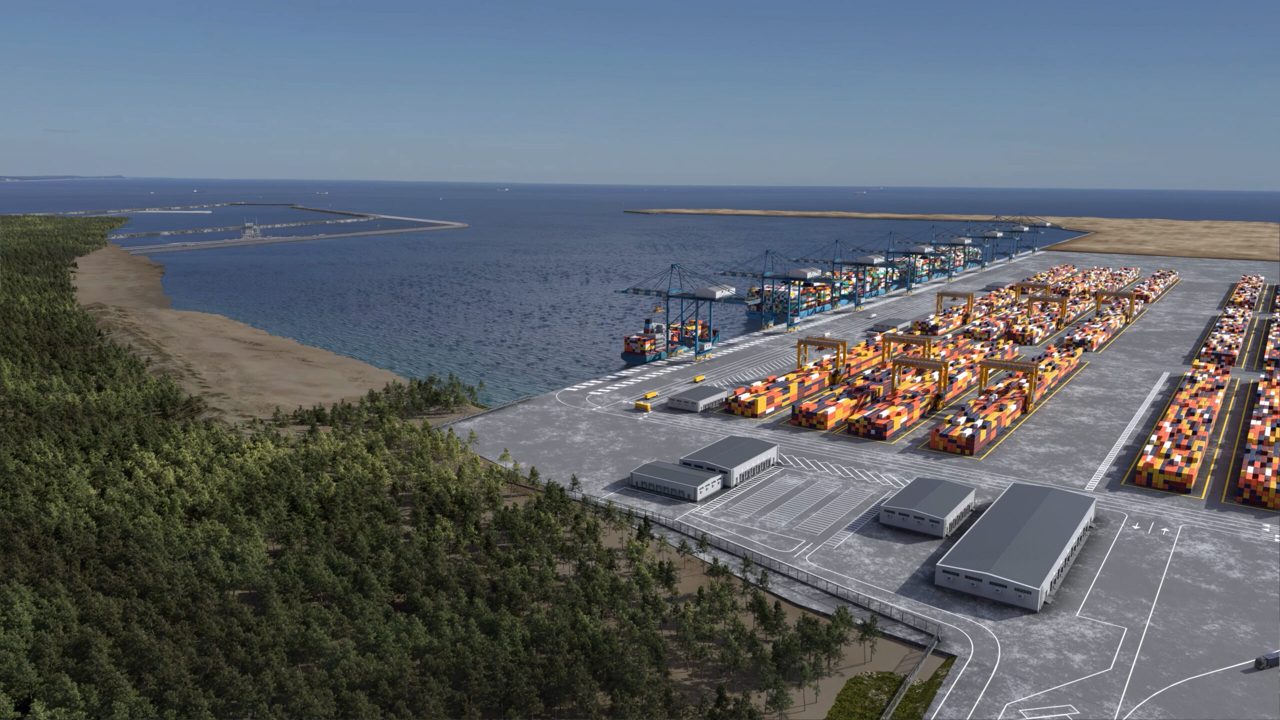
Poland has begun building a €2.3 billion deepwater port intended to divert Central European freight away from established Western hubs, though the project faces ongoing environmental opposition.
Poland has broken ground on a 10 billion zloty (€2.3 billion) deepwater port in Świnoujście, near the German border. The facility, named Cape Pomerania, will feature a 17-metre-deep basin and a 1.3-kilometre main quay capable of docking three ocean-going container ships simultaneously. Infrastructure minister Dariusz Klimczak called it “the largest port investment in Poland’s recent history”.
Once operational, the terminal is expected to handle 2 million twenty-foot equivalent units (TEU) annually. To put that scale in perspective, every port in Poland combined handled a record 3.9 million TEUs in 2025. The new capacity will therefore effectively transform the country's total container throughput.
The strategic aim is to reshape European maritime logistics by capturing freight destined for landlocked markets. Deputy infrastructure minister Arkadiusz Marchewka said the port would serve not just Poland, but eastern Germany, the Czech Republic, Slovakia, Austria and Hungary. Klimczak stated the facility would help Poland “compete with Europe’s leading ports”.
The project builds on a recent surge in Polish port traffic, driven by an 18% rise in container volumes and a 32% jump in liquefied natural gas imports last year. Gdańsk, Poland’s largest port, recently expanded its own capacity to 4.5 million TEUs, making it the EU’s fifth-busiest port ahead of Algeciras and HAROPA. Together, these expansions signal a distinct shift in the continent's freight routing.
Cape Pomerania is designed for both civilian and military operations. It will also employ zero-emission cargo-handling technologies and shore power systems to curb emissions and noise.
The location within a protected natural area has drawn fierce resistance from environmental groups on both sides of the border. While a Warsaw court rejected one legal challenge last year, a German group, Lebensraum Vorpommern, has filed a fresh lawsuit claiming the project "will lead to an environmental catastrophe". Local residents also protested the launch on Monday, with demonstrators warning against the "concreting of the Baltic Sea".
Current work focuses on a 10-month build of a technical access road to the offshore site. The broader project includes deepening a 70-kilometre approach channel, laying more than 3 kilometres of new rail track, and reclaiming 186 hectares of land. The terminal is scheduled for completion in 2030.