UK climate adaptation gap risks economic and political doom loop
Experts warn that incoming UK Prime Minister Andy Burnham must urgently close the country's climate adaptation gap to prevent a self-defeating spiral that threatens net-zero goals and economic stability.
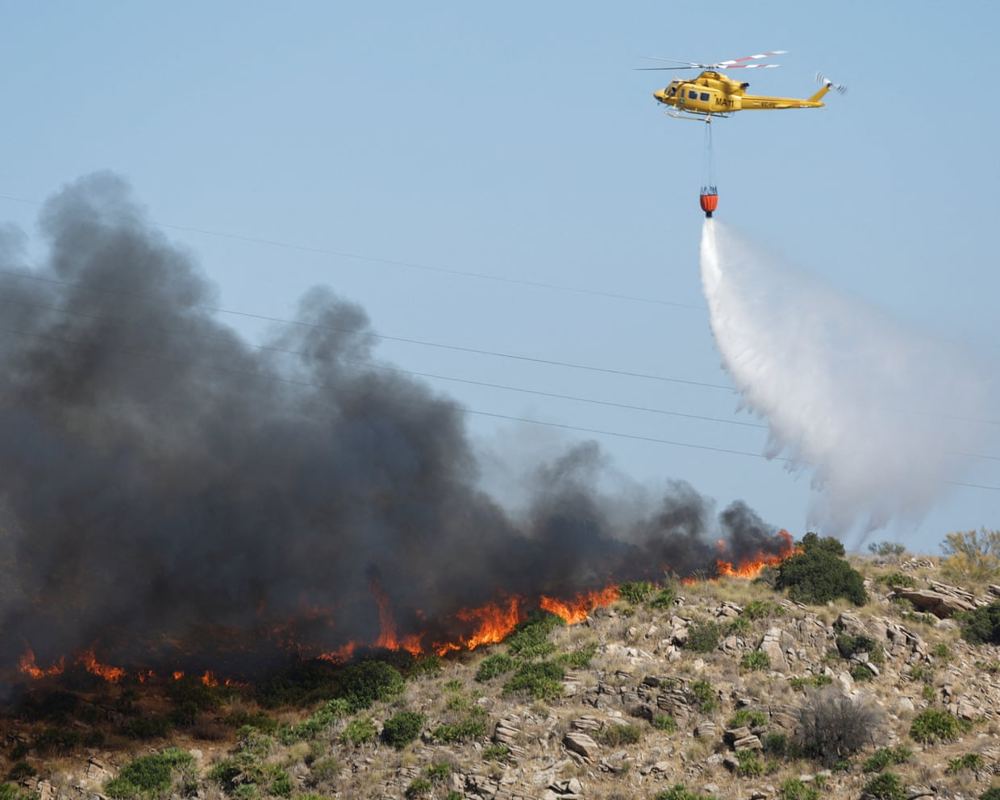
Experts are warning that incoming UK Prime Minister Andy Burnham must urgently address the country's climate adaptation gap to avoid a deepening political and economic crisis. The warning follows unprecedented heatwaves that may have killed thousands, strained the NHS, and coincided with three of Britain’s five worst harvests since 2020.
Analysts describe this as a "derailment risk", a doom loop where climate shocks provoke public anger, which populist factions then exploit to roll back climate action, ultimately causing more severe shocks. In Wales, persistent flooding has been followed by rising support for Reform UK, whose lead spokesperson denied any climate link and called the claims a "red herring".
This political dynamic is already visible elsewhere in Europe. Following devastating floods in Valencia in October 2024, Spain’s climate-denying Vox party capitalised on post-disaster misinformation to gain political ground, highlighting the dangers of prioritising renewable investment while neglecting physical adaptation.
For European markets and investors, the UK’s adaptation gap presents tangible economic threats. Extreme weather is destroying crops and driving inflation, yet conventional central bank tools like raising interest rates offer no protection from foreign supply chain failures. Furthermore, the area of high-quality farmland in England and Wales is projected to collapse by 75% over the next two decades without adaptation.
Mitigating this risk requires rethinking resilience investments. Regenerative farming can reduce the UK's exposure to climate-vulnerable global supply chains while restoring domestic nature. Similarly, retrofitting buildings for heat extremes and deploying heat pumps, which provide cooling in summer and heating in winter, can protect infrastructure while cutting emissions.
If adaptation remains an afterthought, public demands for immediate protection could be weaponised to defund decarbonisation entirely. Closing this gap is therefore not just a matter of public safety, but a prerequisite for ensuring the UK remains a stable, competitive economy in a rapidly changing climate.