Former OpenAI researcher Miles Wang plans $2bn AI drug discovery startup
A prominent OpenAI researcher is negotiating a major funding round for a new artificial intelligence drug discovery venture, highlighting surging investor confidence in applying machine learning to accelerate pharmaceutical development.
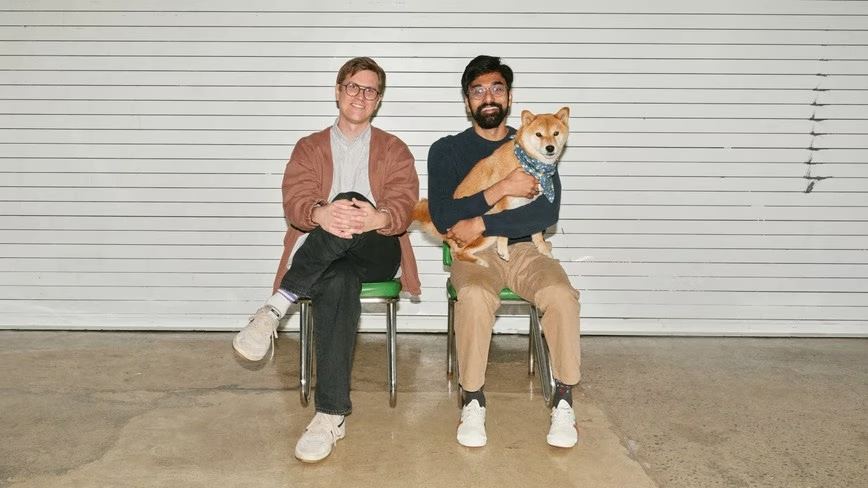
Miles Wang, an OpenAI researcher focused on accelerating scientific and biological discovery, is leaving the company to launch an artificial intelligence drug discovery startup. He is currently in discussions to raise approximately $200 million at a $2 billion valuation, according to four people familiar with the plans.
Lightspeed is reportedly in talks to lead the funding round, though sources caution that negotiations are ongoing and details remain subject to change. Wang has disputed the reported funding figures and the description of the company, but he did not provide alternative numbers or specifics.
Several other OpenAI researchers are expected to join the new venture. Wang originally joined OpenAI in 2024 after leaving Harvard, where he was pursuing a computer science degree, and he has co-authored research on using AI to automate scientific discovery.
The startup is reportedly exploring AI models designed to identify new applications for existing medications, including drugs that previously failed in clinical trials. Repurposing medicines that have already cleared safety hurdles with regulators can offer a significantly faster path to revenue than developing novel compounds from scratch.
This move underscores a broader surge of capital flowing into the intersection of artificial intelligence and life sciences. Investors are increasingly willing to back young, unproven founders in this sector, mirroring a broader trend of risk tolerance for ambitious tech entrepreneurs.
The competitive landscape is already heating up with massive valuations. Chai Discovery, a two-year-old startup co-founded by another former OpenAI researcher, Josh Meier, recently secured $400 million at a $3.8 billion valuation to predict molecular interactions for new drugs.
Similarly, Isomorphic Labs, a spinout from Google DeepMind focused on AI-driven drug discovery, closed a $2.1 billion Series B funding round in May. These substantial investments signal that major financial players view machine learning as a critical tool for overcoming the traditional bottlenecks of pharmaceutical research.