EU storage pact targets 45 GW to curb wasted renewable energy
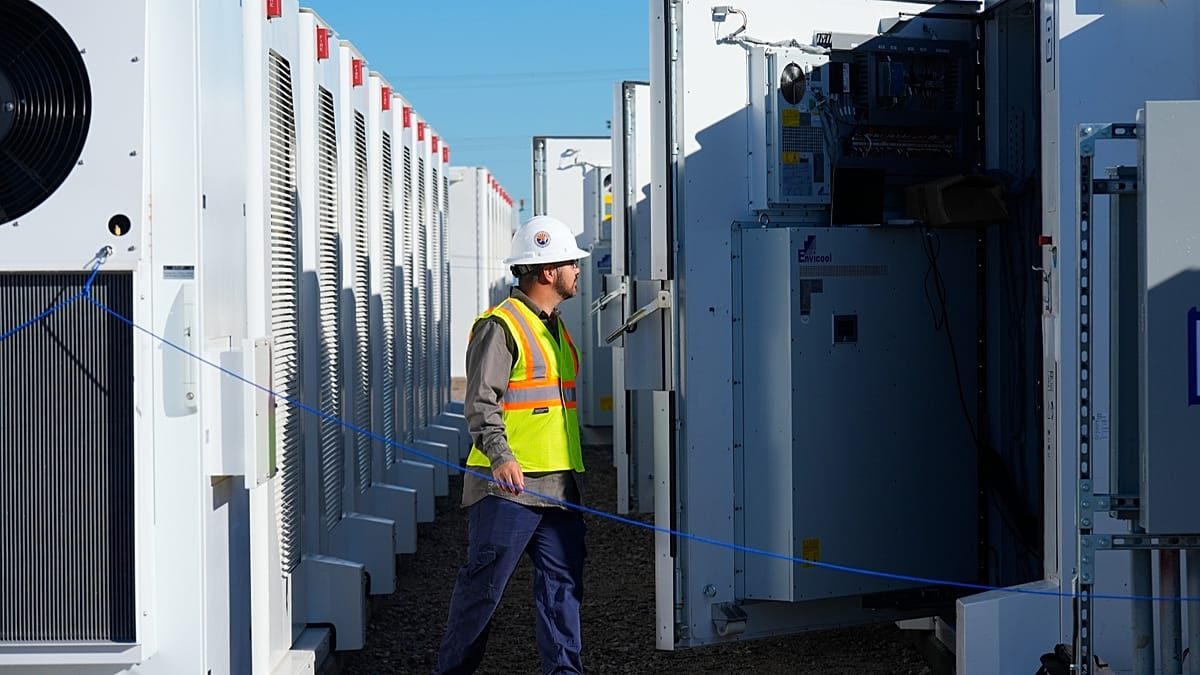
The European Commission and 22 member states have signed a non-binding pact to rapidly scale battery storage, a move essential to prevent billions of euros in wasted wind and solar power and reduce reliance on imported gas.
The European Union has signed its first tripartite agreement on energy storage, uniting the Commission, 22 member states, and industry players to add 45 GW of new battery capacity by 2028. The deal, reached at the Energy Council on June 26, aims to push storage's share of peak electricity demand from 5 percent today to 10 percent. However, the bloc still faces a steep climb to reach the 200 GW it estimates it will need by 2030.
The agreement addresses a costly flaw in the continent's energy transition. As wind and solar output surges, the grid frequently cannot absorb the supply, resulting in power that is sold at negative prices or simply switched off. "At the moment, we see a lot of negative prices and a lot of curtailment," said Walburga Hemetsberger, CEO of Solar Power Europe, warning that this directly undermines the financial viability of new renewable projects.
Scaling up storage offers substantial economic relief. Projections from Aurora/Amber suggest batteries could displace up to 60 percent of EU gas imports by 2030, saving roughly €9 billion annually. Furthermore, Joint Research Centre estimates indicate that better storage deployment could cut grid congestion costs tied to renewable integration by more than 60 percent, a potential €100 billion saving.
The underlying economics are finally aligning with these ambitions. According to IRENA, battery costs fell by around 93 percent between 2010 and 2024. Europe installed a record 21.9 GWh of new battery systems last year, and commercial storage is projected to roughly triple to 24 GWh by 2028. "By 2030, we will install roughly 30 times what we were installing just five years ago," said Jacopo Tosoni, deputy secretary general of Energy Storage Europe.
Despite this momentum, the agreement explicitly concedes it can only chip away at systemic barriers. In several member states, batteries still face double-counted network tariffs, penalised as both a consumer and a generator. Grid access poses another hurdle, as permitting queues built for conventional power plants fail to prioritise storage as a flexibility asset.
Industrial policy and raw-material shortages add further friction. The European Court of Auditors has found the bloc is not on track for a self-sufficient battery industry, citing reliance on Asian cells. "It is a first important signal, but it is by no means sufficient to establish a full battery supply chain in Europe," Hemetsberger said. JRC data shows near-zero self-sufficiency in graphite and lithium, while recycling rates remain modest.
Industry groups are already treating the June pact as a starting point rather than a solution. They are now pushing for a dedicated, binding EU Battery Storage Action Plan to close the gap to the 200 GW target.