Wind-powered SailLink expands cross-Channel routes
A new wind-powered ferry service is targeting a niche cross-Channel market, while northern France’s heritage boat-builders highlight the fragility of the region’s traditional maritime economy.
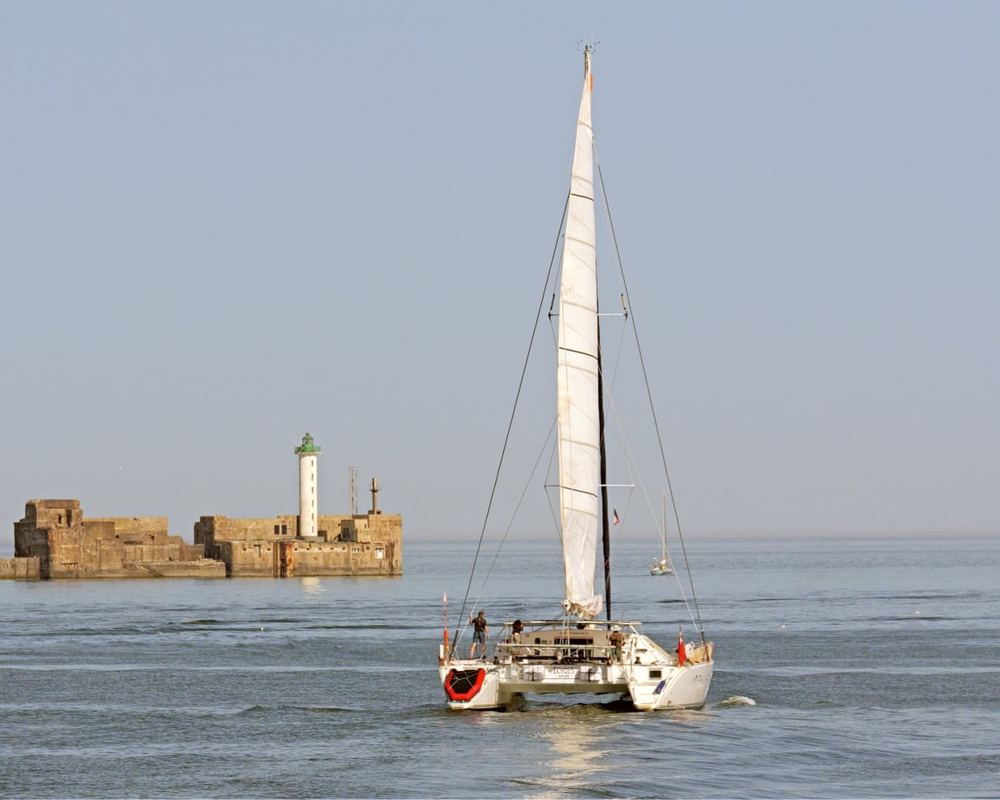
SailLink, a largely wind-powered catamaran service, is challenging conventional cross-Channel transport by offering a low-carbon alternative for travellers. The service runs between Dover and Boulogne-sur-Mer up to five times a week from April to mid-September, carrying a maximum of 12 passengers. One-way fares are priced at £85 per adult and £30 per child.
A second route, connecting Shoreham to Fécamp, is due to begin trials later this year. By using marinas rather than large ferry terminals, SailLink allows passengers to avoid standard customs queues, with officials conducting document checks directly on the boat. This model targets a different market segment than traditional operators, as P&O currently runs the last remaining foot passenger service on the standard Calais to Dover route, with summer fares starting from £30.
The emergence of SailLink highlights a gradual shift in how the Pas-de-Calais region is approaching its cross-Channel links. Boulogne-sur-Mer remains France’s largest fishing port, but the local economy is increasingly tied to leisure and heritage tourism. The city serves as a gateway to the Vélomaritime cycle path and is home to Nausicaá, Europe’s largest aquarium.
Inland, the economic importance of preserving traditional maritime infrastructure is evident in the Audomarois marshes, a Unesco biosphere reserve near Saint-Omer. Here, Les Faiseurs de Bateaux operates as the last traditional boat-builder in the marshes, constructing flat-bottomed oak boats known as bacôves.
The boat-building trade is no longer economically sustainable on its own. “We’re not just the last boat-builders but also the last boat-maintainers,” said Rémy Colin of Les Faiseurs de Bateaux. “If we stop, they will disappear.” To survive, the workshop relies on a sideline running boat trips, tours and dining experiences.
The broader tourism sector depends on small-scale enterprises, such as converted merchant barges and waterside guesthouses. This micro-economy is supported by unique regional infrastructure, including historic canals used by market gardens and France’s last postal boat service, which continues to deliver mail to isolated waterside homes.