FIFA’s untested rule changes spark chaos at the World Cup
FIFA's decision to enforce untested rule changes at the World Cup has created refereeing chaos, undermining the tournament's credibility for European audiences accustomed to clearer domestic standards.
FIFA has pushed through a suite of untested law changes at the current World Cup, creating widespread confusion among players, referees, and fans. The governing body opted to enforce these updates immediately rather than delaying their implementation until after the tournament.
The laws officially changed on 1 July, but International Football Association Board (Ifab) rules allow competitions that started beforehand to delay implementation. Because the World Cup is merely the final stage of a qualifying cycle that began months ago, FIFA had no mandate to introduce these rules before they were trialled in major European leagues.
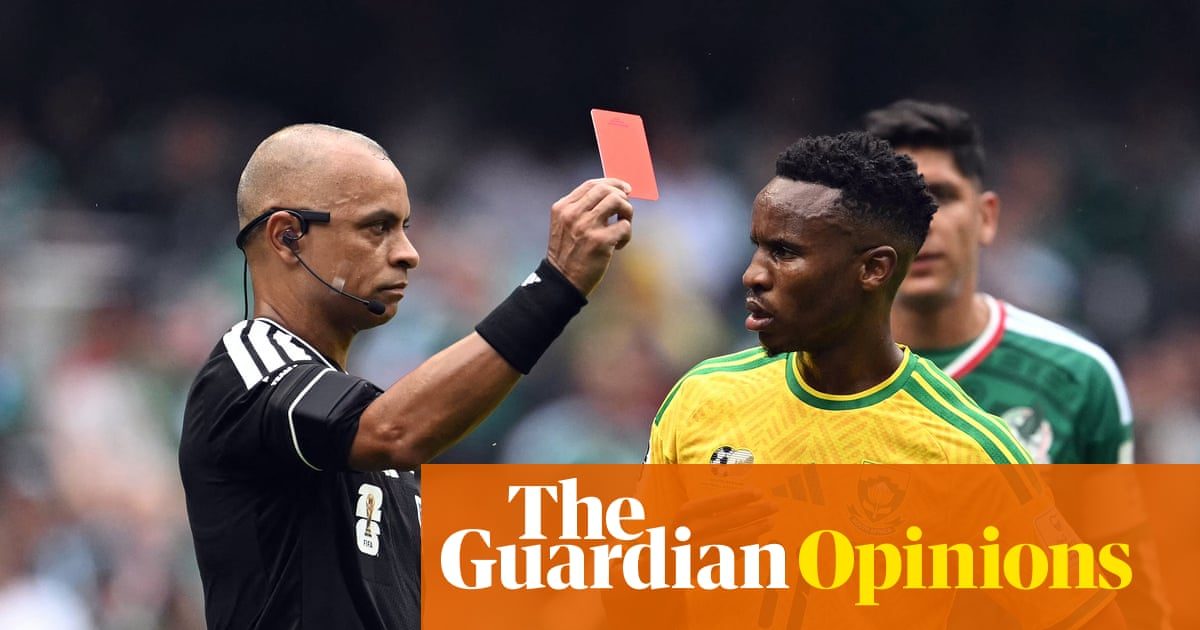
The most consequential update involves the "mistaken identity" clause, now covering yellow and red cards given to the wrong player. This saw Switzerland's Breel Embolo wrongly sent off after a yellow initially given to Argentina's Leandro Paredes was reversed, leaving the Swiss with 10 men in a 1-1 match they ultimately lost in extra time.
Paraguay's Miguel Almirón also fell foul of the revised regulations. After having a yellow card rescinded via VAR for simulation in one match, he was sent off in the next for a newly introduced offence: covering his mouth to communicate in a provocative manner.
Technology has amplified the impact of these minor tweaks. Croatia had a legitimate equalizer against Portugal disallowed because a ball sensor detected the slightest brush against Igor Matanovic's hair, which put Josko Gvardiol in an offside position at the exact moment of contact.
While officials obsess over microscopic infractions, they have ignored clear rules elsewhere. Egypt's Mostafa Ziko avoided a mandatory yellow card for removing his shirt after a disallowed goal against Argentina. Protocols suspending matches over homophobic chants, a persistent issue with Mexico, have also gone unenforced despite being audible on broadcasts.
Other changes have left significant room for confused interpretation. Players must now leave the pitch within 10 seconds of the substitution signal, barring injury or security issues, which effectively invites feigned ailments to delay play. Similarly, referees are instructed to continue play for minor injuries, resulting in matches proceeding while players lie crumpled on the pitch.
Ultimately, many disputes revert to opaque human judgment. A contested call against United States forward Folarin Balogun remains unresolved weeks later, hinging on whether a player is expected to magically land safely while a defender crashes into him. For European viewers, the tournament resembles a disjointed experiment rather than a showcase of the sport's highest standards.