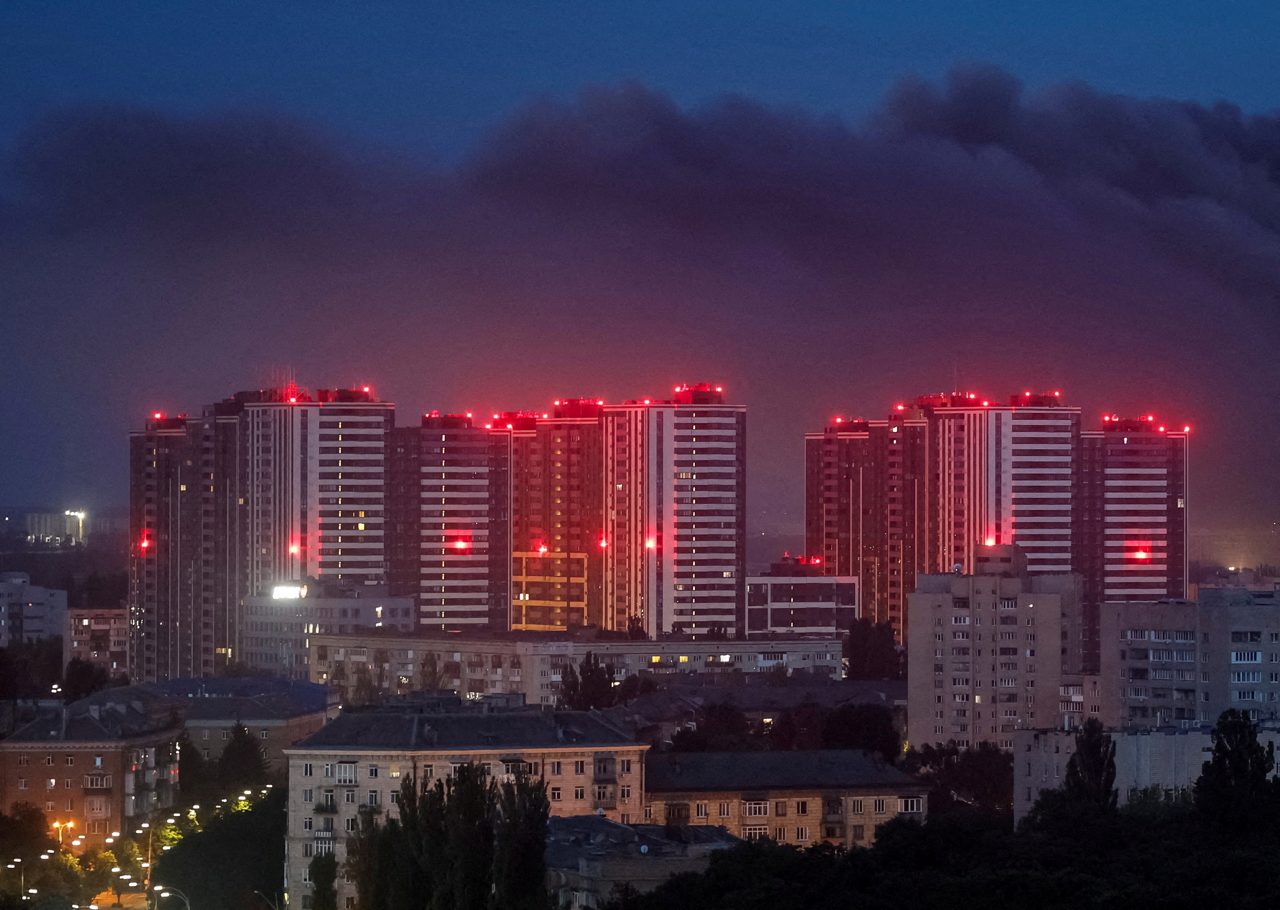
Odesa attacks kill three as Black Sea grain routes face disruption

Russian strikes on Odesa's vital port infrastructure have killed three people, while a parallel Ukrainian naval campaign forces Russia to restrict a quarter of its own grain exports amid a sudden government reshuffle in Kyiv.
Three people were killed in Odesa overnight as Russia launched a fifth consecutive day of drone and missile strikes against the Black Sea port. Governor Oleh Kiper said a multi-storey residential building, a non-residential building and a gas pipeline were hit. The Russian defence ministry stated it deliberately targeted port infrastructure used for unloading petroleum and oil, as well as sites manufacturing military hardware.
These deepwater ports in the wider Odesa area handle much of Ukraine's grain and general cargo, making them essential to the country's wartime economy. Disrupting these facilities threatens Ukraine's ability to export agricultural products, which serve as a critical source of foreign revenue. While Russia claims it only targeted military logistics, Kiper noted the strikes resulted in civilian casualties.
Ukraine has responded by escalating its naval campaign against Russian shipping. Ukrainian forces claimed to have hit 20 Russian vessels in the Black Sea overnight, following intensive strikes on ships in the Sea of Azov. The counter-attacks have forced Russia, the world's top grain exporter, to restrict shipping in the Sea of Azov.
According to Reuters, the Sea of Azov route handles about a quarter of Russian grain exports. The mutual disruption of maritime infrastructure risks sending shockwaves through global commodity markets, directly affecting food supply chains that Europe monitors closely. Some Ukrainian lawmakers have already questioned whether the sudden domestic political shift distracts from addressing these economic pressures.
The military escalation coincides with a sudden political upheaval in Kyiv. President Volodymyr Zelensky dismissed Prime Minister Yulia Svyrydenko after less than a year in office, with parliament passing a motion to accept her resignation on Tuesday. Lawmakers are set to vote on Thursday to replace her with Serhiy Koretskyi, the head of state oil and gas firm Naftogaz.
The leadership change comes as European Commission President Ursula von der Leyen arrived in Kyiv on Wednesday morning. Writing on social media, she called it a "special moment" during her 11th visit since the 2022 full-scale invasion. She stated that new initiatives to be announced during the trip would allow both sides to "produce more, and faster."