UK peers face expulsion under new age and attendance rules
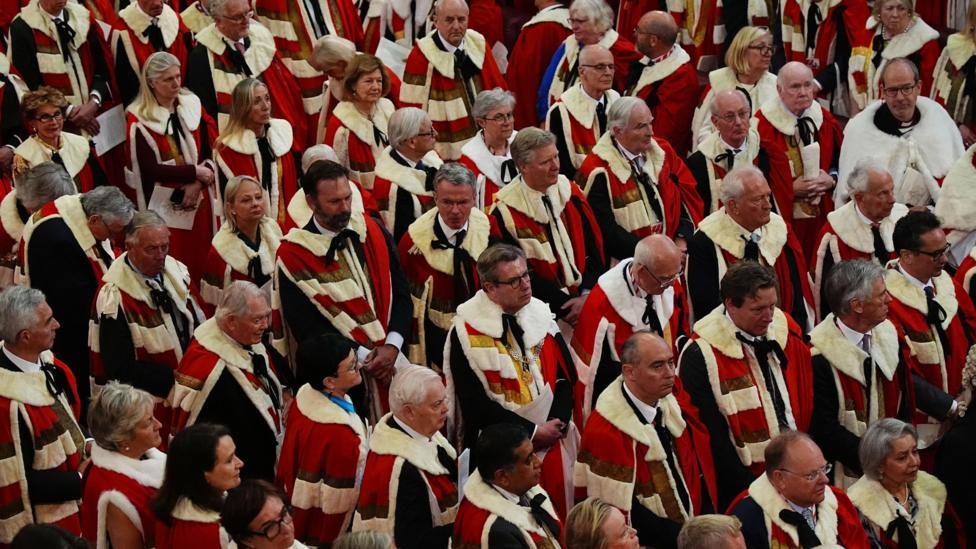
A UK parliamentary committee has proposed expelling peers who fail to attend 20% of sessions and phasing in a retirement age of 80 to shrink one of the world's largest upper chambers.
Peers in the UK House of Lords could be expelled from Parliament if they fail to attend at least a fifth of sitting days, under new proposals published on Wednesday. A dedicated parliamentary committee also recommended introducing a phased retirement age of 80 to shrink the legislature, which currently stands at 774 members.
The move targets an attendance rule that currently requires members to show up just once per parliamentary session. The committee stated this baseline was "too low and reform is necessary". Under the new threshold, peers would need to attend 20% of sitting days, averaged over two sessions, setting a firm baseline for participation based on recent averages of roughly 170 sitting days a year.
To manage the chamber's demographics, the committee proposed a gradual implementation of the retirement age to avoid a "cliff edge" where dozens of members depart simultaneously. The committee recommended the new retirement age of 80 apply to all existing members "without exception", starting at a threshold of 85 in July 2029 and reducing by one year annually until reaching 80 in 2034. New members would need to agree in writing to step down at 80, with a parliamentary briefing estimating 301 life peers will already be over 80 by July 2029.
While the committee acknowledged that "short-term absences may arise without notice in cases of emergency or on compassionate grounds," it emphasised these circumstances must not be used to inappropriately bypass the rules. The overarching goal is to modernise a legislative body that remains an anomaly in European governance, where most upper chambers are elected and significantly smaller.
For European investors and businesses operating in the UK, the speed and predictability of legislative scrutiny is a direct concern. A streamlined upper chamber could accelerate the passage of economic regulations and trade-related legislation as the UK establishes its regulatory identity outside the European Union. Baroness Taylor of Bolton, the committee chair, said the recommendations represented a "practical solution" to ensure the "continued effective functioning of the House".
The reforms stem from a promise made in the Labour government's 2024 manifesto. They follow an earlier effort this year to reduce the chamber's size by removing 92 hereditary peers, although 15 of those subsequently received life peerages. The government has been asked for a response to the latest recommendations.