Art-backed lending drives $9bn H1 rebound for auction houses
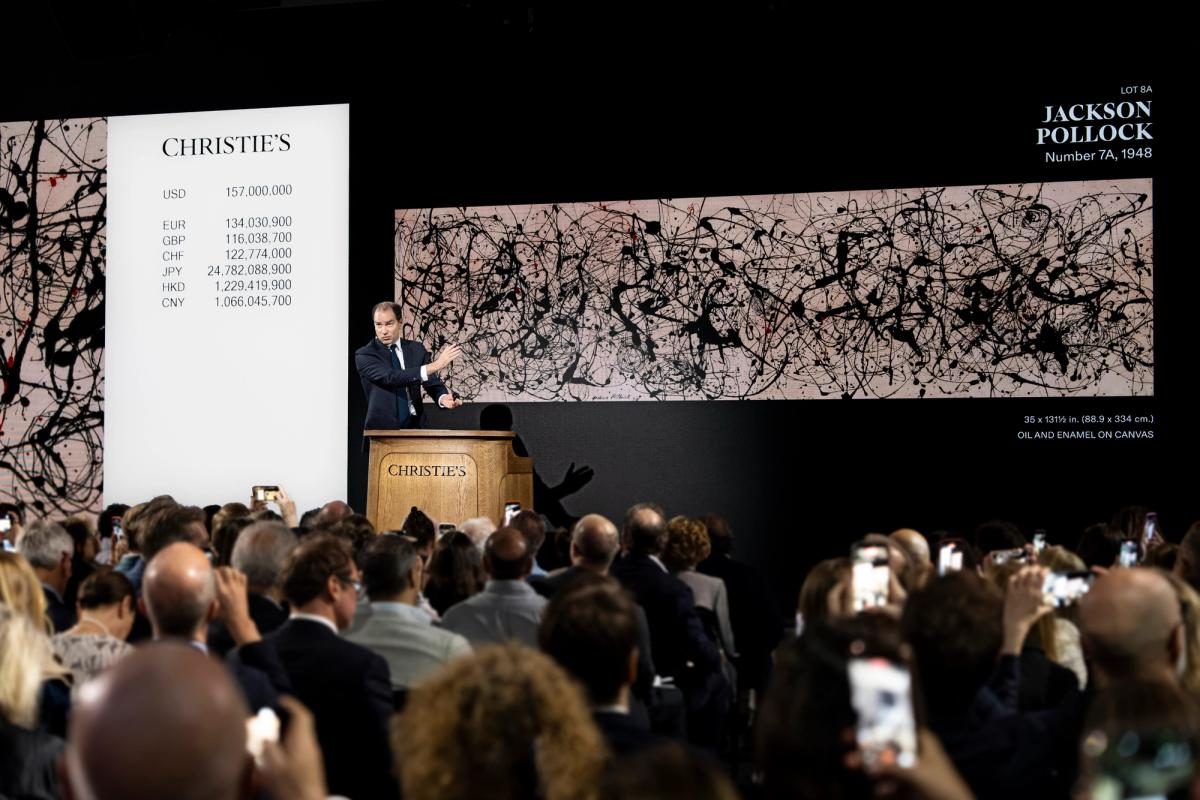
Christie's and Sotheby's have reported a combined $8.9bn in first-half sales, driven by a younger, tech-wealthy demographic and a strategic shift towards treating luxury goods and fine art as collateral for institutional lending.
Christie’s and Sotheby’s have posted a sharp recovery in first-half 2026 revenues, generating a combined $8.9bn in turnover. Christie’s public auction sales jumped 71% year-on-year to $3.5bn, while Sotheby’s total turnover hit a record $4.4bn, up 58% on the previous year.
Europe played a central role in this rebound. Sotheby’s staged the highest-value Impressionist, modern and contemporary art sale ever held on the continent when the Lewis collection realised $406.2m in London this June. Globally, the market was anchored by trophy estates, including the $630.8m sale of the S.I. Newhouse collection in New York.
A new buyer profile
The demographic driving these figures has shifted notably. Millennials and Gen Z now account for 47% of Christie’s new clients, with 85% of all bids placed online. “Our buyers are getting younger, and that’s consistent with the fact that 85% of our bids this year came from online,” says Bonnie Brennan, Christie’s chief executive.
These younger buyers are entering the market through luxury goods rather than blue-chip fine art. “Luxury has obviously been a great gateway for us for new buyers and also for younger buyers,” Brennan notes. Sotheby’s reported a record first half for the sector, with the average watch bidder spend rising roughly 60% year-on-year to $129,000.
Art as a financial asset
Beyond auction commissions, the major houses are rapidly expanding their wealth management infrastructure. Sotheby’s completed a $900m securitisation issuance in January, bundling art-backed loans into tradable notes for investors. “It also signals the continued institutionalisation of art-backed lending,” says Ron Elimelekh, co-head of Sotheby’s Financial.
Christie’s is extending credit against an increasingly broad range of collateral, including handbags, wine and classic cars. “The younger generation almost have more of a risk tolerance with what they're buying and how they're engaging with us, and that's where art finance can help them leverage that liquidity,” Brennan says.
Despite the soaring totals, buyers remain highly price-sensitive. Sell-through rates reached 91% at Christie’s and 90% at Sotheby’s, a result of conservative estimates and widespread guarantees. “The audience is disciplined, don't underestimate how savvy they are about pricing,” Brennan warns.