China's 4.3% growth exposes export reliance pressuring Europe
China's economy grew at a worse-than-expected 4.3% in the second quarter, highlighting a deep reliance on exports that threatens to flood European markets as domestic demand stalls.
China’s economy expanded by 4.3% in the second quarter, missing Beijing’s 4.5% to 5% target and marking one of the weakest readings since official quarterly reporting began in the early 1990s. The figure, released on Wednesday by the National Bureau of Statistics of China, was only marginally better than the final quarter of 2022 when strict Covid-19 restrictions were in place. First-half growth stands at 4.7%, keeping it within the official target range.
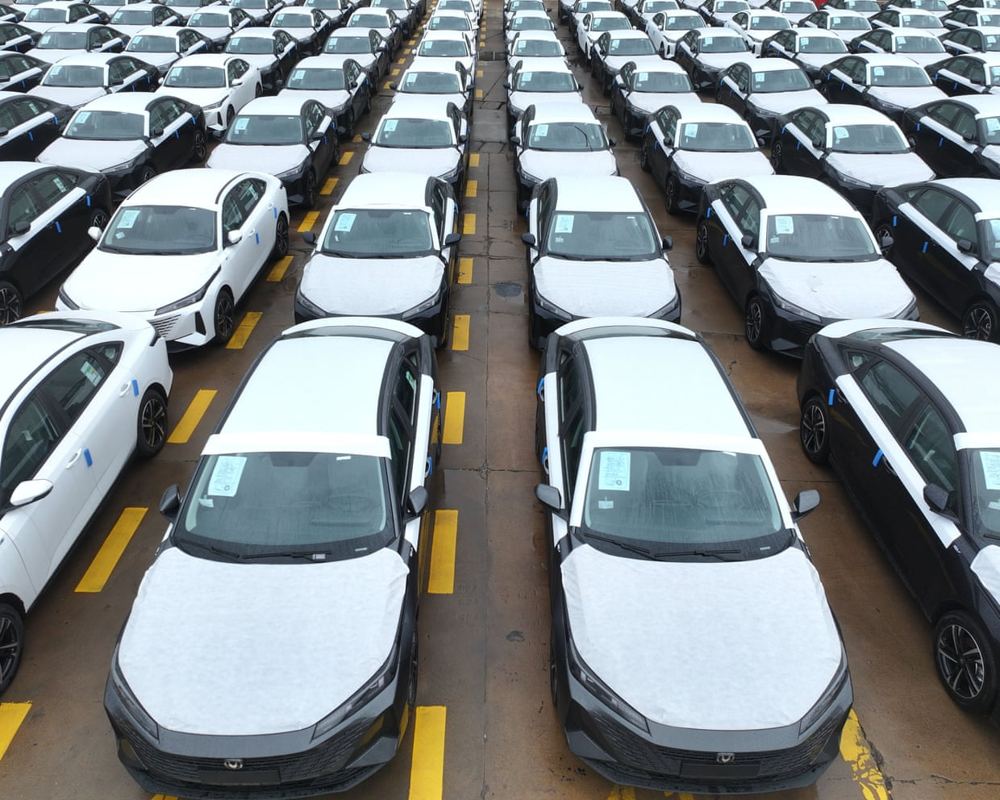
The headline number masks a stark internal imbalance. While June exports surged by 27%, domestic vehicle sales plummeted by more than 16% even as monthly car exports topped 1 million for the first time. Retail sales, excluding cars, managed just a 3% increase.
For European manufacturers and policymakers, this divergence is a pressing concern. As Beijing struggles to generate domestic consumption and investment, Chinese factories are increasingly reliant on selling goods abroad. Exports account for about 20% of China's gross domestic product, meaning any further weakness at home will likely result in an even greater flood of products seeking buyers in European markets.
The domestic engine is sputtering badly. Fixed-asset investment, historically driven by provincial authorities building infrastructure, declined by more than 4% between January and May. Li Daokui, a Tsinghua University economics professor and adviser to Beijing’s senior leadership, noted that similar contractions have occurred only twice since the founding of the People's Republic of China, in 1961 and 1967.
“The intensity and magnitude of this cumulative negative growth are unprecedented,” Li said. He noted that local governments had transformed from being the engines of growth to the bottlenecks. “If [these issues] are not addressed, all of China’s economic goals and tasks will face difficulties,” he added.
This export-dependent model is facing severe external headwinds. A US-China trade truce is due to expire in November, raising fears in Beijing that renewed tariffs could hit manufacturers. Furthermore, the US-Israel war on Iran threatens to drag down global demand.
While China has largely weathered the immediate energy shock of that conflict thanks to large stockpiles, a broader global recession would deliver long-term pain to an economy that cannot rely on its own consumers. Analysts are now watching a gathering of top Chinese Communist party officials later this month for any indication of new stimulus measures. However, with first-half growth still within the official target range, the pressure for large-scale intervention may be limited.