SpaceX shares fall below IPO price ahead of Starship launch
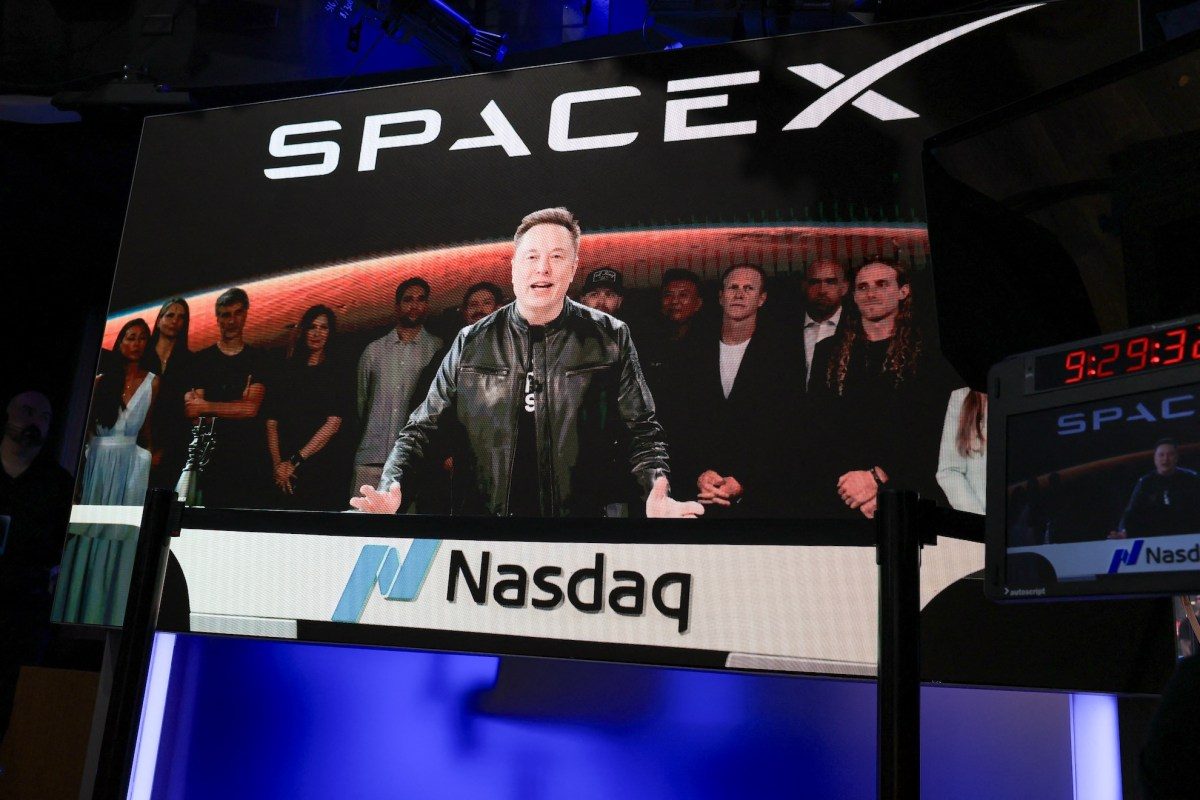
SpaceX shares fell below their $135 IPO price as investors reassess grand tech valuations, casting a shadow over planned listings by OpenAI and Anthropic.
SpaceX shares dropped below $135 on Wednesday afternoon, slipping beneath $133 before recovering to hover around their initial public offering price. The dip marks a steady, month-long decline for the rocket company since its June 12 listing. That blockbuster IPO raised nearly $86 billion and briefly pushed the company's market capitalization to levels rivaling Amazon and Microsoft.
Some of this volatility is structural. Only 4% of the company’s total shares are currently trading on the Nasdaq. Such a small float, when paired with relentless public attention on Elon Musk's ventures, creates an environment prone to wild price swings. However, the sustained downward trajectory since shares peaked above $200 points to a deeper shift in market sentiment.
Investors are recalibrating their expectations regarding Musk’s ambitious, long-term promises. This sobering up is part of a broader deflation in tech stocks over the past month. Crucially, the skepticism has not been limited to equities; bonds that SpaceX sold immediately following the IPO are now also suffering in the secondary market.
For European institutional investors tracking transatlantic capital flows, SpaceX is functioning as a critical bellwether. Its IPO was supposed to set the table for the next generation of artificial intelligence unicorns. Both Anthropic and OpenAI have filed confidentially for their own public listings. While neither company has set a firm date, the struggles of SpaceX stock will directly influence how successfully those offerings are priced.
The company’s valuation will now face an immediate, physical test. On Thursday, SpaceX will launch its Starship rocket for the first time since going public. The massive launch system remains firmly in the development phase, operating on a "fly, fail, fix" engineering philosophy that accepts failures as part of the process.
This launch follows a Starship booster failure in May. For this flight, SpaceX does not plan to recover either the booster or the upper stage. Both sections will instead simulate a landing in the Gulf of Mexico, meaning they will end in a deliberate explosion regardless of whether the flight plan goes smoothly.