Garage micro-manufacturing highlights niche custom youth bicycle market
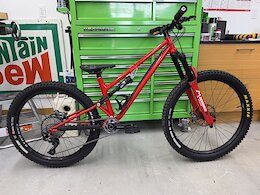
A high school teacher’s custom-built youth mountain bike illustrates how accessible digital fabrication tools are lowering barriers to entry in micro-manufacturing.
Scott Newton, a high school teacher operating under the name Newtown Metal Works, has fabricated a custom steel youth mountain bike in his garage, highlighting the growing viability of small-scale, direct-to-consumer frame building. The project, dubbed the Mollusk, was built for his son using a combination of personal machining and affordable third-party manufacturing services.
While traditional production models like the Chromag Minor Threat remain the market standard, Newton’s build demonstrates how independent builders can leverage computer-aided design and accessible tools to bypass conventional supply chains. The total material cost for the frame was approximately $500, with an additional $300 for paint, undercutting many premium youth full-suspension alternatives.
The Mollusk features a 26/24-inch wheel combination, 130mm of rear wheel travel, and a 140mm Z2 fork, completed with SRAM Code brakes and an 11-speed Shimano XT gearset. Newton also sourced robust integrated steel dropouts from Paragon Machine Works to ensure durability. For the broader manufacturing sector, this reflects a shift where high-quality components from specialized firms enable independent builders to achieve professional-grade results.
Newton noted that buying a machined bottom bracket shell for $15 was more economical than manufacturing it from raw bar stock, illustrating the practical economic limits of DIY production. He utilized affordable 316 stainless steel shock plates from SendCutSend, which can be easily modified in CAD to experiment with geometry or accommodate different suspension setups.
When asked about small-scale commercial production, Newton remained noncommittal, stating "Absolutely maybe!" However, the project underscores a persistent consumer demand for highly customized geometry, even in niche youth market segments. As digital fabrication tools become more ubiquitous, the line between amateur craftsmanship and micro-enterprise continues to blur, presenting a marginal but notable challenge to traditional bicycle manufacturing models.