OpenAI enters hardware market as Apple sues over trade secrets
OpenAI is entering the hardware market with a new coding keyboard, a move that coincides with a major trade theft lawsuit from Apple over a separate smart speaker project.
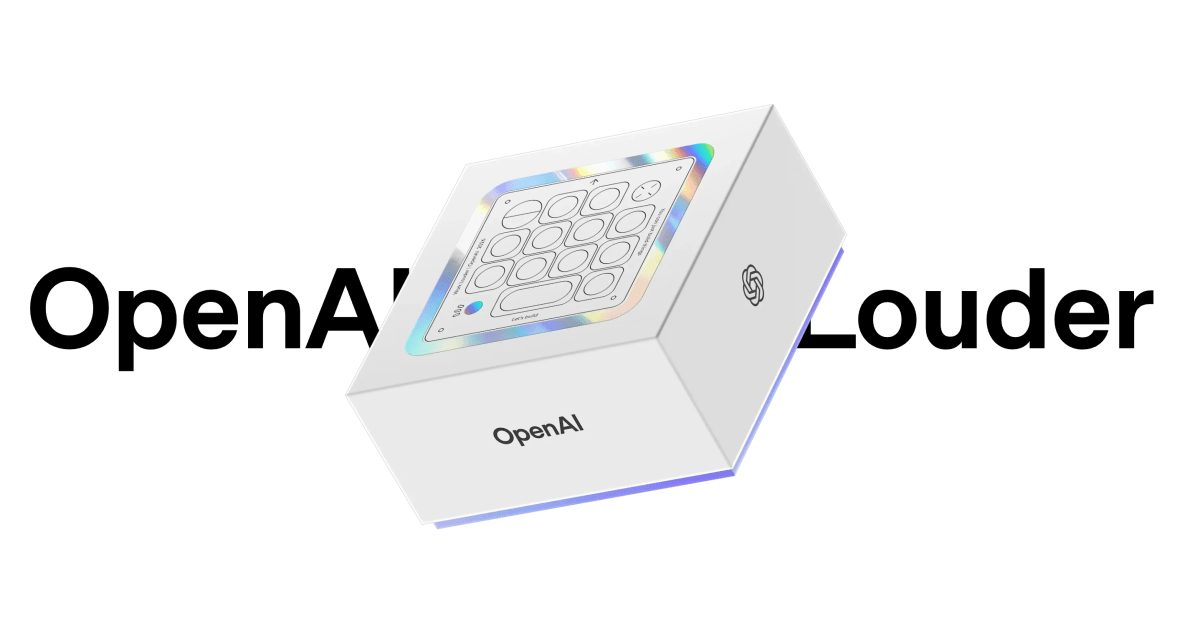
OpenAI has released the $230 Codex Micro, a light-up keyboard built to help software developers manage semi-autonomous AI coding agents. Co-designed with specialty firm Work Louder, the device features customizable "Command Keys" and a joystick to launch common workflows.
The keyboard also includes a physical dial that lets users adjust an agent's reasoning level, effectively controlling how much computing power and time the bot spends on a specific task. This targets a growing segment of the developer market where semi-autonomous bots write and execute code with minimal human oversight. Rather than navigating a desktop or mobile app, developers can use the Micro as a dedicated "command center for agentic work," according to OpenAI.
Despite the functional focus, the device is not intended for mass-market distribution. OpenAI confirmed via email that the Codex Micro is a limited-run collaboration. It functions primarily as a flashy entry point to signal the company's broader pivot into the hardware space.
The more consequential hardware development emerged this week with reports of a second, unannounced device. OpenAI is developing a portable, screenless smart speaker that integrates directly with ChatGPT. Notably, the product is said to include "mechanical elements that can move on their own."
The exact design remains unresolved, and the project is still subject to change. However, the device is reportedly being engineered by former Apple staff. This personnel link has become the focal point of a major legal confrontation.
Apple filed a lawsuit against OpenAI last week, accusing the AI company's senior leadership of a deliberate strategy to extract its confidential information. Apple alleges that OpenAI used these trade secrets specifically to develop its new hardware. OpenAI has denied the allegations.
For European investors and tech firms relying on OpenAI's software infrastructure, this hardware expansion and the ensuing legal battle carry distinct implications. Moving into physical products marks a strategic shift for a company previously focused entirely on software APIs, potentially reshaping its revenue model. At the same time, a protracted trade secret dispute with Apple threatens to tie up executive bandwidth and delay product launches. The conflict underscores the increasingly aggressive and entangled nature of the global AI supply chain.