Ex-OpenAI researcher targets $2bn for AI drug startup
An OpenAI researcher is in talks to raise $200 million for an unnamed AI drug repurposing startup, highlighting a frothy investment climate that is pouring billions into unproven biological AI ventures.
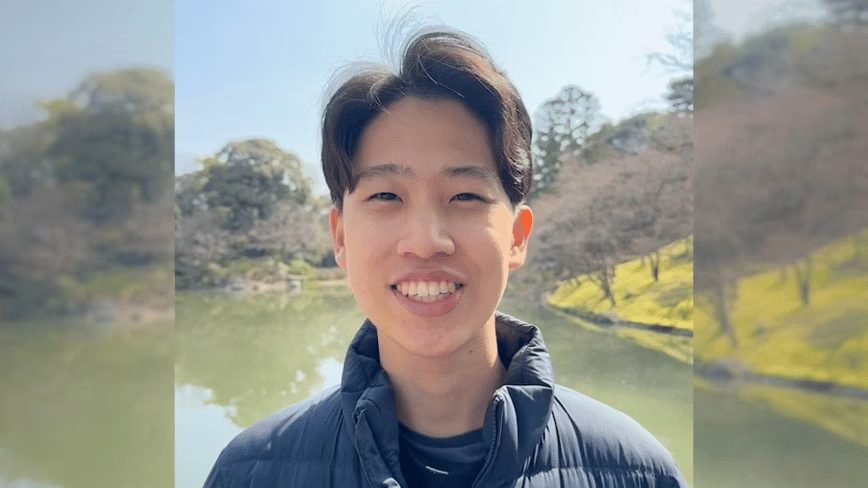
Miles Wang is leaving OpenAI to launch an AI drug discovery startup that is in discussions to raise $200 million at a $2 billion valuation. Venture capital firm Lightspeed is reportedly in talks to lead the round, though Wang disputed the funding figures and the company's description without providing alternative numbers. Several other OpenAI researchers are expected to join the unnamed venture.
The company plans to build AI models that identify new uses for approved drugs or for candidates that failed in earlier clinical trials. Repurposing existing medicines allows founders to bypass years of early safety testing, accelerating the path to patient access and potential revenue. The startup, however, currently has no product and no confirmed funding.
Wang joined OpenAI in March 2024 after leaving Harvard, working on the reinforcement learning team with a focus on alignment, safety, and biology. His relevant experience includes co-authoring a wet-lab study where GPT-5 suggested modifications to a cloning protocol, yielding a 79-fold efficiency gain in that specific setup. OpenAI stressed that this experiment did not produce an actual drug.
This massive early valuation reflects a broader gold rush in AI-driven life sciences. On the same day Wang's round was reported, Chai Discovery—co-founded by another former OpenAI researcher—secured $400 million at a $3.8 billion valuation. Google DeepMind spinout Isomorphic Labs raised $2.1 billion in May, while Anthropic and ByteDance are also pursuing similar biological applications.
This surge of capital creates a challenging environment for established pharmaceutical companies and their investors. Traditional drugmakers face mounting pressure to adopt or acquire similar AI capabilities, even as venture capitalists deploy unprecedented sums into unproven, early-stage models.
Much of this investor enthusiasm focuses on AI solving the initial design phase of pharmaceuticals, often ignoring the industry's most expensive hurdles. Designing a molecule is only the first step in a lengthy and complex regulatory process.
“Drug discovery is a ‘lighter’ problem in the food chain of bringing a drug to market,” Immunai chief executive Noam Solomon said, referring to a separate AI effort. “The harder problem is making drugs succeed in clinical trials.”
Those trials take roughly a decade, cost about $2.7 billion, and fail more than 90 percent of the time. For now, the market remains undeterred by these historical odds, as a nameless company with no product secures nine-figure interest based entirely on the promise of artificial intelligence.