Thinking Machines unveils open-weight Inkling to rival closed AI
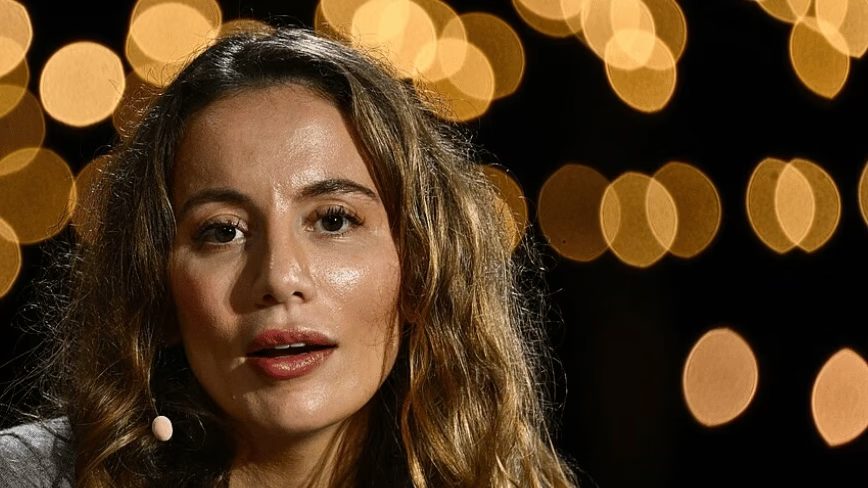
Former OpenAI CTO Mira Murati's lab has released an adaptable open-weight model designed to help enterprises avoid the costs and data risks of proprietary systems.
Thinking Machines Lab, founded by former OpenAI chief technology officer Mira Murati, has released Inkling, a massive open-weight artificial intelligence model. Unlike the flagship systems sold by OpenAI, Anthropic, and Google, anyone can download and reshape Inkling for their own needs.
The model is a mixture-of-experts system with 975 billion total parameters, activating 41 billion for any given task. It processes up to 1 million tokens of context and was trained on 45 trillion tokens of text, images, audio, and video, though it currently outputs only text, code, and structured data.
Thinking Machines openly concedes Inkling is “not the strongest model available today, closed or open.” Instead, the lab is betting that a broad, adaptable base is more valuable to businesses than a finished, rigid chatbot. “We believe in keeping the weirdness alive,” the lab wrote in a recent manifesto outlining this philosophy.
This strategy targets a growing frustration among enterprises reliant on a few American AI giants. Microsoft chief Satya Nadella recently warned that companies using closed models pay twice: through usage fees and by surrendering the knowledge embedded in their prompts. By offering an open-weight alternative, Thinking Machines argues that frozen AI will ultimately lose to models that organisations shape around their own expertise.
Users customise Inkling through Tinker, a dedicated platform, and retain full ownership of the resulting system alongside its safety risks. As evidence, the lab points to a project with hedge fund Bridgewater, where a fine-tuned open model scored 84.7% on financial reasoning tests. That score beat top proprietary models at a fraction of the cost, though the figure comes from the two companies' own evaluation rather than an independent audit.
The model allows users to adjust its “thinking effort” to balance speed and accuracy. On one coding test, Thinking Machines claims Inkling matched Nvidia’s Nemotron 3 Ultra using a third of the tokens. A lighter version, Inkling-Small, uses 12 billion active parameters for tasks requiring higher speed and lower cost.
The lab shipped Inkling in roughly nine months, compared to about five years for OpenAI and three for Anthropic. However, it relied on distillation—starting its training using other open models like Moonshot’s Kimi K2.5. The lab insists its next model will train entirely on its own data, using Nvidia GB300 systems secured in a March deal for a gigawatt of compute.
Thinking Machines raised $2 billion at a $12 billion valuation last year, though a reported $50 billion round has stalled. Two co-founders departed earlier this year, but headcount is back to around 200. Inkling itself is free; the company’s revenue will depend entirely on whether businesses pay to use Tinker.