Ryanair window blowout highlights outsourced maintenance risks
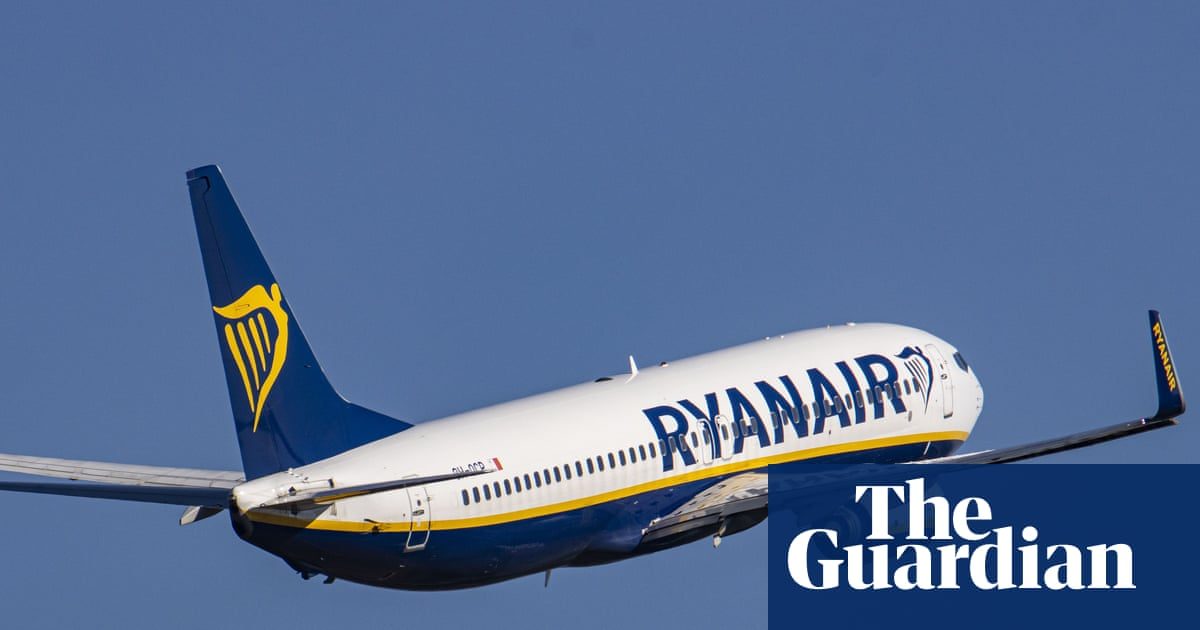
A passenger was partially pulled through a shattered window on a Ryanair-Air Malta flight from Thessaloniki, an extremely rare incident that experts say highlights the growing safety risks of outsourced aircraft maintenance across European aviation.
A window blew out mid-air on a Ryanair-Air Malta Boeing 737-800 shortly after taking off from Thessaloniki, pulling passenger Ljubisa Karović head and shoulders out of the aircraft. The flight turned back over North Macedonia after a right engine issue caused cabin decompression. Karović survived because his seatbelt was fastened, allowing his wife and other passengers to haul him back inside.
Investigators have yet to confirm the exact sequence of events, but passenger reports and online footage suggest a fan blade broke off the right engine at roughly 16,000 feet. The resulting debris appears to have shattered the window. Ryanair said the flight returned to Thessaloniki after the window "dislodged inflight."
While such incidents are exceedingly rare, the mechanical failure raises fresh questions about the maintenance networks underpinning Europe's low-cost aviation sector. Dr Simon Bennett, director of the civil safety and security unit at University of Leicester, warned of an "exponential" rise in airlines contracting out manufacturing and maintenance. "Subcontracting makes quality control more difficult. It’s more difficult to quality control a dispersed system," Bennett said.
The aircraft involved was a Boeing 737-800, a workhorse of the European short-haul market. Bennett noted that while planes are designed to withstand a blown window, older airframes pose a compounded danger. Minor fractures can accumulate over decades, meaning a sudden shock from engine debris could trigger catastrophic structural failures. "If it had been an ancient airframe, one that was 25, 30 years old, that could have triggered other latent failures and you could have had an explosive decompression and the whole aircraft could have been lost in seconds," he said.
Karović is being treated in hospital for a badly damaged hand, friction burns, and bleeding from his nose and mouth. Dr Jason Knight, a fluid mechanics lecturer at the University of Portsmouth, explained that the severe suction is short-lived because airflow stops once internal and external pressures equalize.
The last known instance of a passenger being partially blown out of a commercial aircraft occurred in 2018 on a Southwest Airlines Boeing 737, where a broken fan blade shattered a window and killed Jennifer Riordan. Earlier this year, an entire door panel blew out of an Alaska Air Boeing 737-Max, though the adjacent seats were empty.
For passengers, the primary physical defence against such a freak event remains basic. Experts advise keeping seatbelts fastened and avoiding window seats adjacent to the engines, with the shattered window on the Thessaloniki flight believed to be around rows 12F, 14F or 15F. "The people on the flight deck and in the cabin are consummate professionals, so follow their advice to the letter," Bennett said.