London startup Applied Computing raises $20m for refinery AI model
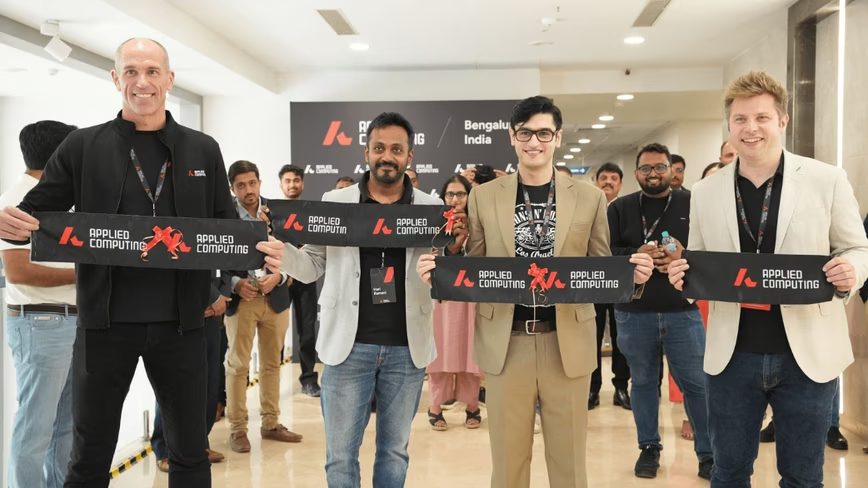
A London startup has raised $20m to build an AI model that drastically cuts the time needed to diagnose refinery problems, setting up a clash with Europe's entrenched industrial software giants.
Applied Computing, a London-based startup founded in 2023, has secured $20m in Series A funding to build a foundation model specifically for the oil, gas, and petrochemicals sectors. The round was led by engineering giant KBR, with participation from Databricks Ventures. The capital will fund research hires and international expansion, including a new Houston office and a planned push into the Middle East.
Refineries generate vast amounts of sensor data measuring temperature, pressure, and viscosity, yet operators typically use less than 8% of this information to make decisions. Applied Computing’s model, Orbital, aims to close this gap by fusing a time series model, a physics-based model, and a language model. According to co-founder and chief executive Callum Adamson, the objective is straightforward: “It’s getting those three data sources to talk to each other in real time. That’s the real key.”
For European energy and industrial firms, the economic appeal lies in operational speed. Orbital allows technicians to simulate how a change in one part of a plant ripples through the rest of the facility, replacing weeks of consultant fees and downtime. The company claims investigations that previously took days or weeks can now be compressed into seconds.
The startup claims to have reached double-digit millions in annual recurring revenue within 18 months of emerging from stealth, though it declined to name its customer count. KBR has already integrated Orbital into its INSITE 3.0 platform for ammonia production. Furthermore, the company expects to announce a European oil major as a customer in the coming weeks.
Challenging the incumbents
Applied Computing enters a crowded market dominated by established players like AspenTech and AVEVA. Rather than relying on proprietary industrial data as a moat, Adamson is betting on talent. “It’s an AI problem. It’s not a data problem, and it’s not an energy problem. If you’re a tier-one AI researcher, where are you going to work? I don’t think Shell’s on that list,” he said.
However, deploying AI in live refineries carries high stakes. As Amazon has previously warned, human oversight tends to degrade when automated systems are usually right. A $20m funding round may also prove slim against incumbents with deep installed bases, making the upcoming European partnership a critical test of the startup's viability.