Germany news: Gender switch neo-Nazi sent to men's prison
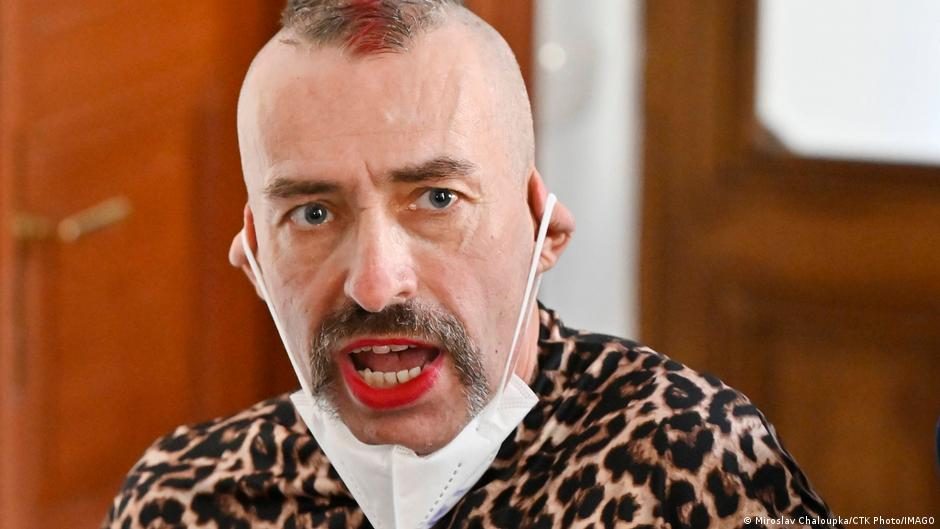
Neo-Nazi Marla Svenja Liebich has been transferred to a men's prison after extradition back to Germany, despite being legally registered as a woman. DW has more.
This was a roundup of the latest headlines from Germany on Thursday, July 16. The blog is now closed.
Germany and Algeria would like to support plans for a pipeline to transport hydrogen between the two countries, in cooperation with Italy.
During a press conference with Algerian President Abdelmadjid Tebboune in Berlin, German Chancellor Friedrich Merz said the project is "very interesting for both countries."
On his part, Tebboune called the project a "flagship project."
The project aims to facilitate the future import of hydrogen via pipeline from Algeria and Tunisia to Italy, Austria, and Germany.
To view this video please enable JavaScript, and consider upgrading to a web browser that supports HTML5 video
Lithuanian Prime Minister Mindaugas Sinkevicius held a phone call with German Chancellor Friedrich Merz, in which he reiterated his commitment to the plans to instate a German army brigade in his country.
"I can assure you both the government and I personally attach the highest priority to this issue," Sinkevicius told Merz, the state chancellery in Vilnius said in a statement.
The country's new prime minister also said he is looking forward to strengthening relations between the two countries.
The German army brigade's planned deployment in Lithuania came as a response to to Russia's growing aggression against NATO's eastern flank.
The German government presented a plan for a stronger stance in the fight against tax fraud, which includes tougher penalties, tighter rules and the creation of a new center to battle financial crime.
Finance Minister Lars Klingbeil and Justice Minister Stefanie Hubig, both of the Social Democratic Party ( SPD ), are behind the plan.
The action plan states that voluntary self-disclosures will no longer automatically exempt offenders from criminal prosecution.
According to Hubig, tax crimes harm society as a whole. Residents of Germany should know that "the rules apply equally to everyone," she stressed.
A man was arrested for attacking employees of a local youth welfare office in the eastern state of Brandenburg and setting the office on fire, which injured several people.
The incident took place in the town of Finsterwalde. The 35-year-old suspect allegedly entered the office, threatened employees, and shouted profanities before starting a fire. The motive is still unclear, according to police.
The Börde region near the city of Magdeburg in the eastern state of Saxony-Anhalt will experience a comeback for the ages.
The region's hamsters, whose existence was threatened due to the planned construction of factories belonging to technology giant Intel, will return to the region.
This comes after local zoos in Berlin and Leipzig took matters into their own hands to ensure the species continues to breed. Public broadcaster MDR reported that some 60 hamsters were released into the wild to increase their numbers in the area.
According to the local environmental authorities, hamsters in the Börde region have been at risk of extinction since 2009, and the zoos have been helping to breed the species to secure its survival.
Jens Spahn, the parliamentary leader of Germany's conservatives, and his husband, Daniel Funke, have announced that they have become parents to a baby boy.
"We Are Family," Funke wrote on Instagram alongside a photograph showing the couple with a stroller in a green outdoor setting.
Their son Georg was born in the United States through a surrogate, according to the Bild newspaper, which cited Spahn and Funke.
"My husband has become a father, and so have I with him. Georg is our greatest happiness. This feeling can hardly be put into words," Spahn told the newspaper.
The couple are currently in the US, according to the report. The baby was named after Spahn's late father, Georg. Funke is the child's biological father.
The couple said the surrogate would continue to play a role in their son's life.
Surrogacy procedures are effectively banned in Germany, and Spahn has faced a call to resign from within his own conservative Christian Democratic Union (CDU) .
"Surrogacy is prohibited in Germany for good ethical reasons," Marion Rosin, the head of the Women's Union in the eastern state of Thuringia, told Funke newspapers.
"Anyone who circumvents this ban through an arrangement abroad is acting against the spirit of German law," she said.
Low water levels on the Rhine River have disrupted passenger shipping after a hotel ship ran aground in Bonn and became lodged across part of the river.
The vessel became stuck during a docking maneuver at around 7 a.m. near the Bonn Opera House, the fire service said.
Its front left side is resting on a sandbank. All 75 passengers and 40 crew members on board are unhurt.
Authorities plan to tow the ship free this afternoon, with a tug expected to arrive at around 4 p.m.
Other vessels can still pass the stranded ship slowly in both directions.
Low water has also forced the suspension of a Rhine ferry service in Leverkusen.
Freight shipping has already been affected, with large cargo vessels carrying lighter loads because of the reduced water depth.
"The result is lower transport volumes per ship and therefore rising transport costs along the supply chain," Andreas Bartel of the Duisburg port operator Duisport told the DPA news agency.
He added that reduced capacity means more vessels are needed to transport the same quantity of goods.
Severely low water levels are affecting shipping on several of Germany's major rivers, including the Rhine, Elbe and Danube.
"Inland vessels can currently carry less cargo than they can at higher water levels," Fabian Spiess, deputy managing director of the German Inland Shipping Association, told the DPA news agency.