Turin spends 100,000 euros to clear climate-hit River Po algae
A severe algae bloom driven by climate change and agricultural runoff is choking Italy's River Po, forcing Turin to fund an expensive cleanup that threatens the city's plans for river transport and tourism.
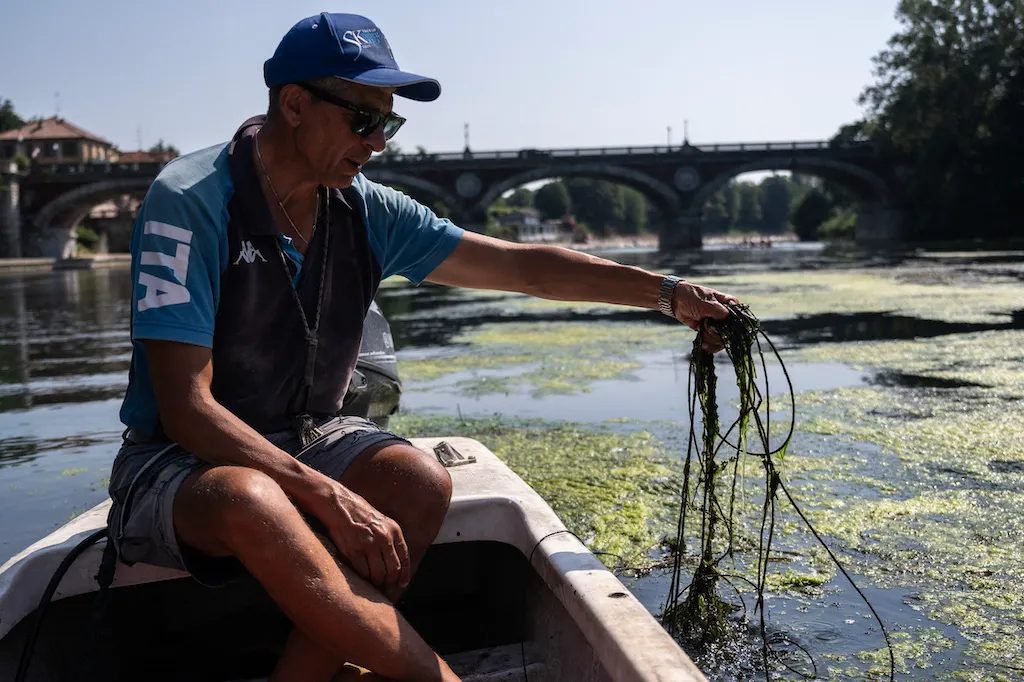
Turin has spent approximately 100,000 euros over the past three weeks to remove more than 150 tons of algae from the River Po. The massive bloom, which a local rowing coach described as resembling a "meadow," has effectively turned Italy's longest waterway into what the city's deputy mayor called a "warm lake" reaching 28 degrees Celsius. Local species like Spirogyra and blanket weed are mingling with an invasive North American plant known as Nuttall's povertyweed.
The proliferation stems from a 50 percent decline in the river's flow due to low rainfall and intense June and July heatwaves. However, officials and environmentalists point to the region's agricultural economy as a primary catalyst for the crisis. "Agricultural nutrients from livestock farms are also dumped throughout the basin, which means that plants find an ideal environment here to thrive," said Deputy Mayor Francesco Tresso.
This infestation poses a direct challenge to Turin's public investment strategy. The city council has renovated a large riverside park and scheduled two river shuttle services to resume in 2027, aiming to make the Po a central urban attraction. Those commercial and tourism plans are currently colliding with the physical reality of an excavator on a barge pulling up dripping clumps of weeds to be trucked away and composted.
The economic fallout extends beyond cleanup costs and stalled tourism initiatives. The thick vegetation reduces underwater oxygen levels, impacting the broader food chain and threatening local biodiversity, according to Alice de Marco, the local head of environmental organisation Legambiente. She argued that mitigating this recurring damage requires "limiting, reducing, or even eliminating the use of pesticides in agriculture."
Furthermore, this is not an isolated Italian problem. Similar algae invasions have struck Lake Iseo in neighbouring Lombardy this summer, as well as waterways further afield, including canals in France and the Ebro River in Spain. For European regions reliant on rivers for agriculture, transit, and public amenities, the combination of climate-driven low flows and agricultural runoff is becoming a shared, seasonal liability.
The current cleanup effort requires careful execution to avoid worsening the problem. Secondo Barbero, director of the Piedmont Environmental Protection Agency, stressed that the plants must be uprooted rather than cut, as severed parts simply generate new plants and contaminate downstream riverbanks. While officials expect the growth to slow with autumn temperatures, Barbero warned the city should prepare for a fresh round in the spring.