Bunkerhill raises $25m to solve hospital AI integration gap
US startup Bunkerhill Health has raised $25 million to deploy AI agents across major hospital networks, signalling that the real market opportunity in medical AI lies in operational integration rather than algorithm development.
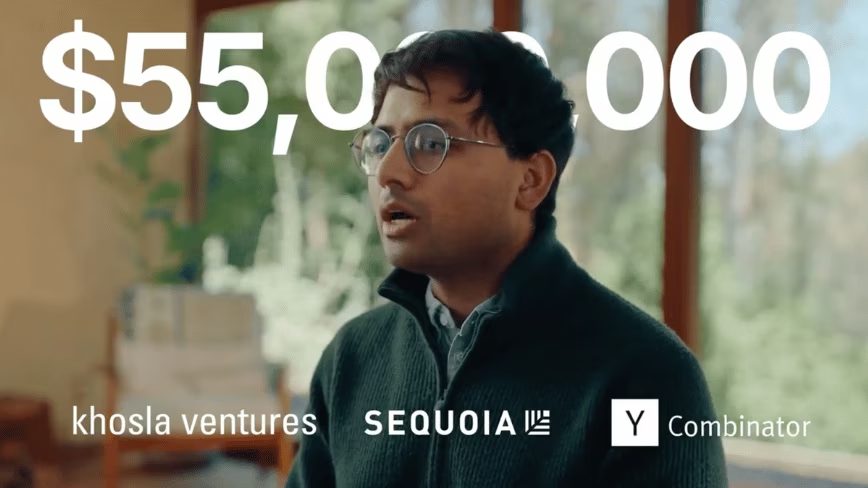
Bunkerhill Health has closed a $25 million Series B round led by Khosla Ventures, bringing its total funding to $55 million. The round also drew participation from Sequoia, Felicis, Optum Ventures, and Y Combinator. The capital injection targets a specific problem: getting artificial intelligence to actually function within the complex bureaucracy of modern hospitals.
For investors tracking the medical AI sector, Bunkerhill’s rapid growth reinforces a shifting consensus. The technological bottleneck is no longer building accurate models, but embedding them into clinical workflows. “The bottleneck in healthcare AI was never the technology, it was getting a health system to actually run it,” Khosla said. “Bunkerhill closed that gap.”
Through a platform called Carebricks, the company lets hospitals build custom AI agents to handle tasks ranging from paperwork to chasing missed follow-ups. The system carries nine FDA-cleared clinical algorithms, including tools that spot silent heart-valve disease and flag osteoporosis risk. It currently runs across 15 health systems, including Cleveland Clinic, Mayo Clinic, and Intermountain Health.
Early deployments show concrete efficiency gains. At the University of Texas Medical Branch, 22 agents are live, cutting nephrology wait times by more than half and chasing up lung findings 80% faster. In one case, an agent reading coronary scans flagged an imminent risk, leading to a life-saving triple bypass. “We don’t need superintelligence to solve our biggest problems,” said Peter McCaffrey, the AI chief at UTMB. “We need average intelligence.”
Chief executive Nishith Khandwala began this work at Stanford in 2017 but nearly abandoned it after hospitals initially rejected the pitch. His resolve hardened in 2020 when his father suffered a heart attack that a previous scan had already indicated was likely. “Medicine has advanced faster than our healthcare system’s ability to operationalize it,” Khandwala said. “Why should a hospital need to work with 100 different companies to solve 100 different problems?”
Despite the traction, the sector carries significant regulatory and ethical headwinds. Accuracy and privacy concerns persist, and Mayo Clinic is currently facing a lawsuit from a former research director regarding its AI oversight. McCaffrey noted that as AI assumes a larger operational role, the doctor-patient bond must remain “sacrosanct.”
Capital continues to flood the healthcare AI space, placing Bunkerhill alongside well-funded peers like Neko Health. Sequoia’s Alfred Lin, who led Bunkerhill’s 2023 seed round, downplayed the threat of an increasingly crowded market. “I much prefer having 1,000 flowers bloom,” Lin said, “and the best ones will become durable over time.”