Fireworks wins $1.5bn funding on bespoke AI over rentals
A $1.5bn funding round for startup Fireworks signals a shift away from renting proprietary AI, offering European firms a cheaper route to bespoke models that keep critical data in-house.
Fireworks, a San Mateo-based startup, has raised $1.5bn in a Series D round that values the company at $17.5bn. The round was led by Atreides Management, Index Ventures, and TCV, with existing backer Nvidia participating. The investment backs a direct challenge to the dominant AI business model of renting proprietary models from major labs.
Rather than relying on generalised models from large providers, Fireworks helps businesses run open-source models and fine-tune them on their own data. Chief executive Lin Qiao framed this as a fundamental industry choice. “In one [path], intelligence belongs to a few big labs, and everyone else rents it,” she said. “We are building towards the second.”
For European enterprises, this approach addresses a core tension. Companies holding vast, sensitive datasets have often hesitated to feed that information into third-party APIs due to competitive risks and strict data regulations. Fireworks’ model allows businesses to retain control over their specialized intelligence. Microsoft’s Satya Nadella has similarly argued that a firm should use a model without handing over the knowledge that makes it unique.
The strategy is gaining commercial traction. Annualised revenue has surpassed $1bn, a fivefold increase from a year ago, according to Index Ventures. Fireworks now processes more than 40 trillion tokens a day, with 95% running on these specialized models. By volume of developer requests, the startup handles more daily traffic than Google or OpenAI, despite being a fraction of their size by revenue.
This shift is heavily driven by economics. As open models rapidly close the performance gap with the best closed alternatives, the competitive focus has moved from sheer capability to cost efficiency. Fireworks estimates its platform runs at a fifth to a tenth of the cost of standard lab rentals, making broad enterprise deployment financially viable.
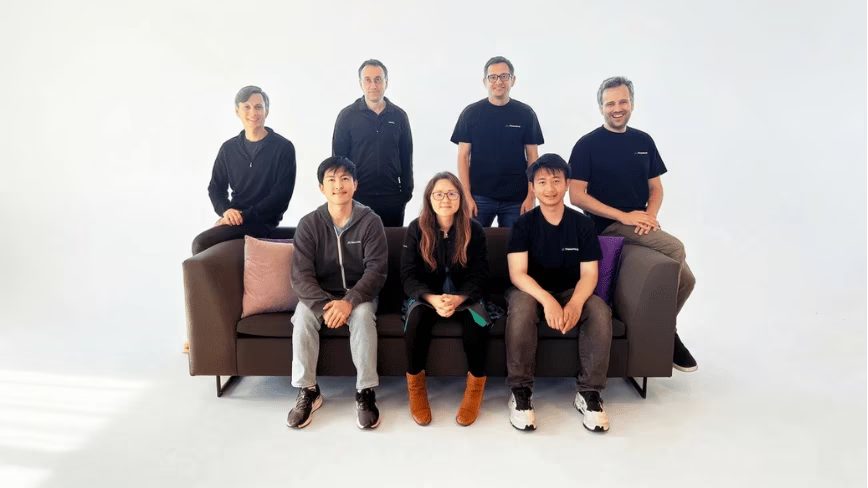
Founded by former Meta engineers in 2022, the company faces a crowded market competing against Together AI, Baseten, and neocloud training rivals. It also carries concentration risk, though Qiao noted that a previous reliance on a single client, Cursor, has broadened. “This is the year when we’ll really hit the gas,” Qiao said, adding that headcount will grow from 200 to 600 by year-end.