AI brain implant permanently restores movement and touch to paralysed man
US researchers have used an AI-driven brain implant to permanently restore movement and touch to a paralysed man, marking a clinical breakthrough in the rapidly globalising brain-computer interface market.
A team of US researchers has successfully restored hand movement and the sense of touch to a man paralysed from the chest down. The technology, detailed in the journal Nature Medicine, uses artificial intelligence and microelectrode implants to create a "double neural bypass" around a spinal injury.
The participant, Keith Thomas, suffered complete tetraplegia after a diving accident in 2020 and enrolled in the trial 13 months later. Following months of training, his right arm grew 86% stronger and his left 62% stronger. This allowed him to feed himself, drink from a cup, and scratch his nose unaided.
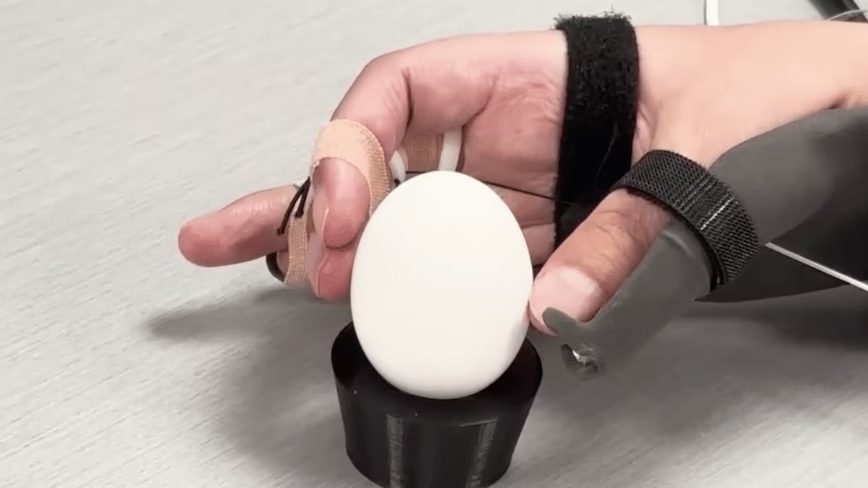
Surgeons implanted five microelectrode arrays in Thomas's brain during a 15-hour operation. AI algorithms then decode his movement intentions and stimulate his forearm muscles, while sensors in a 3D-printed brace trigger the sensory cortex to simulate touch. The system maintained 84.6% decoding accuracy over five months without retraining, allowing Thomas to lift empty eggshells without breaking them 87% of the time.
Unlike standard assistive devices, the benefits persisted after the electrical stimulation was turned off, remaining present more than two years later. “We’re not just bypassing the injury; we’re actually rewiring the nervous system,” said Chad Bouton, the study’s corresponding author. This suggests the technology prompts genuine neuroplasticity rather than providing temporary support.
This breakthrough enters a fast-moving commercial arena for brain-computer interfaces that is attracting significant capital globally. The Feinstein Institutes' success in achieving lasting physical recovery sets a new benchmark for rivals. Many competing firms are currently focused on narrower applications, such as decoding speech for patients with severe neurological conditions.
The global race is intensifying, with some developers pursuing wearable or non-invasive alternatives to avoid the risks of brain surgery. China recently cleared its first commercial brain implant, signalling that the regulatory pathway for these high-stakes technologies is accelerating internationally. European health technology firms and investors will be watching these developments closely as the US team now plans larger trials for stroke patients.
The potential market for such treatments is substantial. Around 15 million people live with spinal cord injuries worldwide, and most with tetraplegia rank hand function as their top priority for treatment. “Being able to feel my sister’s hand, to pet my dog and feel her fur, these experiences that the injury took away have been restored,” Thomas said.