Zelenskyy dismisses Ukrainian defence minister amid military reform rift
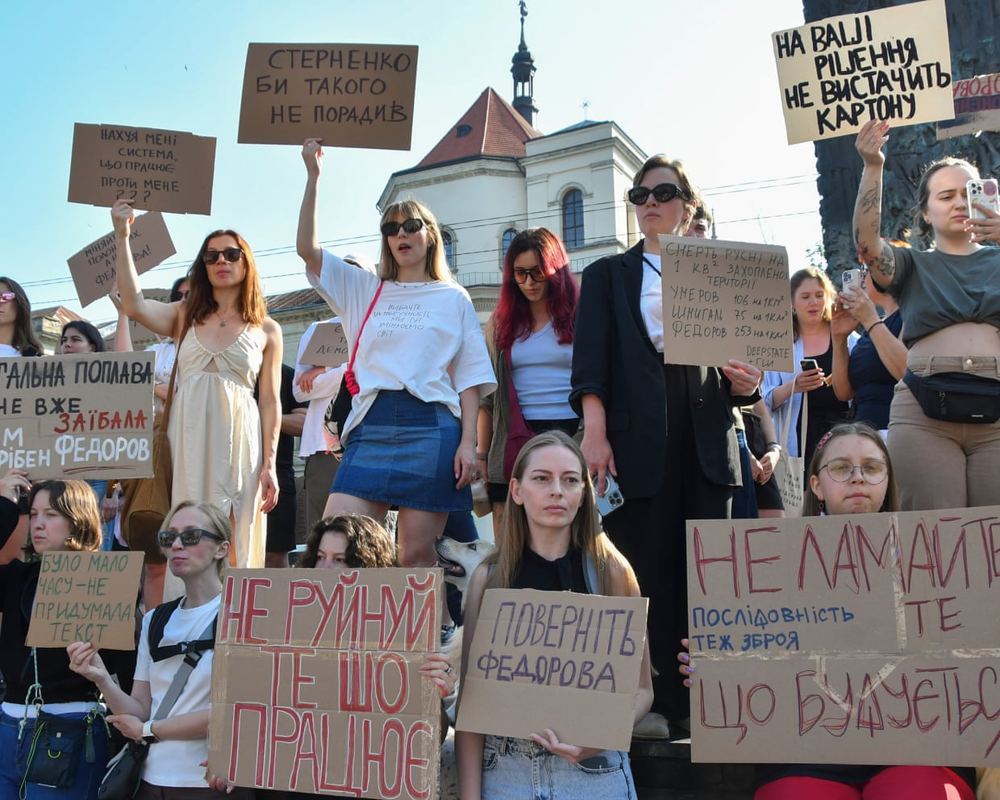
President Volodymyr Zelenskyy’s decision to replace popular defence minister Mykhailo Fedorov has triggered rare street protests and raised concerns among European partners about the stability of Kyiv’s reform agenda.
President Volodymyr Zelenskyy has dismissed Ukraine’s defence minister, Mykhailo Fedorov, following what he described as a “challenging dialogue” with the country’s top military leadership. The president confirmed he sided with commander in chief Colonel General Oleksandr Syrskyi, appointing security service head Yevhenii Khmara as acting defence minister pending parliamentary approval.
The move has ignited rare domestic unrest, with more than 1,000 demonstrators gathering outside the presidential office in Kyiv to demand Syrskyi’s removal. It marks only the second major anti-government protest since the 2022 Russian invasion, signaling deep public anxiety over the direction of Ukraine’s wartime governance.
For European partners, the reshuffle raises urgent questions about the future of institutional modernisation in Kyiv. Fedorov, a 35-year-old reformist, publicly accused the military general staff of blocking structural changes and making resource decisions based on loyalty rather than data.
Speaking at a separate press conference, Fedorov revealed he had proposed replacing Syrskyi before his own dismissal. He warned that “this sort of culture needs to be eradicated” if Ukraine hopes to defeat Russia asymmetrically with minimal losses.
The defence ministry upheaval is part of a wider government reboot. Parliament has also accepted the resignation of Prime Minister Yulia Svyrydenko, with Naftogaz chief Serhiy Koretskyi tipped as her replacement.
This political volatility arrives at a sensitive moment for European stakeholders monitoring Ukraine’s institutional stability. The likely appointment of a state energy executive to lead the government underscores the intertwining of corporate management and political survival, a dynamic that foreign investors and aid coordinators watch closely.
The domestic crisis overshadowed British Prime Minister Keir Starmer’s farewell visit to Kyiv ahead of his departure from Downing Street. Despite the turmoil, Starmer reaffirmed unwavering British support, stating that Ukrainian drone strikes on long-range Russian targets have decisively shifted the war’s momentum and that Vladimir Putin is “losing”.
Zelenskyy awarded Starmer the Order of Freedom, while the outgoing prime minister presented a framed Ukrainian flag that flew above Downing Street in February 2022. Zelenskyy praised Starmer’s leadership alongside France and expressed hope to meet his successor soon, insisting that frequent changes in London do not undermine the strong bilateral relationship.
Critics fear the dismissals are politically motivated, noting Zelenskyy’s previous removal of popular military figures like General Valerii Zaluzhnyi in 2024. Protesters argue that sidelining modernisers in favour of traditional management styles risks alienating the very reformist coalition that has sustained Ukraine’s international backing.