Tokyo retains female emperor ban in royal succession overhaul
Japan has overhauled its imperial succession laws to allow the adoption of distant male relatives, but maintaining the ban on female monarchs highlights a political system beholden to conservative factions over public opinion.
Japan's parliament on Friday approved a bill to revise the Imperial House Law, marking the first change to the legislation's main text since 1949. The updated rules allow the imperial family to adopt male distant relatives over the age of 15, making their future sons eligible for the throne. The amendment also enables princesses to keep their royal status after marrying outside the family.
However, a strict ban on female emperors remains in place. Under the revised framework, the imperial line will pass from Emperor Naruhito to his 60-year-old brother, Crown Prince Fumihito, and subsequently to 19-year-old Prince Hisahito. Should Hisahito fail to have a son, the current royal bloodline will end entirely unless the law is amended again.
The male-only succession rule, which mandates that only men descended through the paternal line can rule, dates back to an 1889 law carried into the 1947 update. This contrasts sharply with modern European constitutional monarchies, where female succession is standard. The resilience of the Japanese rule highlights the enduring influence of traditionalism in a nation that is otherwise a highly modernised global economic power.
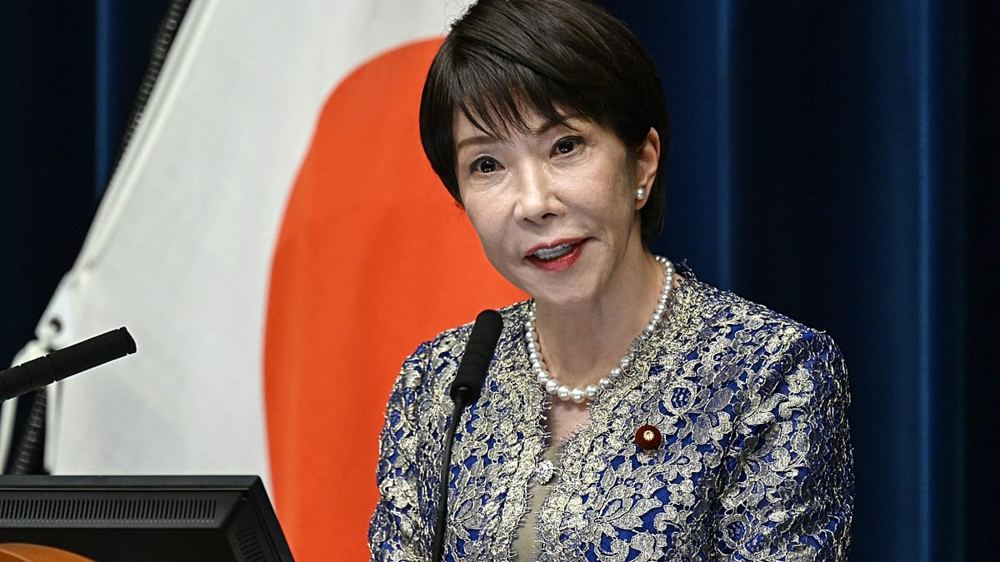
For European investors and companies, the legislative process reveals the underlying political constraints within Japan's ruling establishment. Prime Minister Sanae Takaichi, the nation's first woman leader, sided with conservative opponents of female succession. The willingness to ignore broad public sentiment to satisfy a narrow conservative voter base signals that Tokyo may struggle to push through other difficult, albeit economically necessary, structural reforms.
Public polling consistently showed strong support for allowing women on the throne. A late March survey by the Mainichi Shimbun found 61% of respondents backed a female emperor. A subsequent poll of more than 2,000 people conducted on 20 and 21 June saw that support climb to 73%.
Hideya Kawanishi, a professor at Nagoya University and an expert on Japan's imperial system, told AFP that the new bill "fails to reflect public opinion". He accused the conservative camp of the ruling Liberal Democratic Party of ignoring voters to preserve the male-only line. "This is because the solid conservative base that supports them harbours attitudes akin to male chauvinism, and this measure was probably necessary in order to secure their votes in elections," Kawanishi said.