EU carbon market to include medium-haul flights from 2029
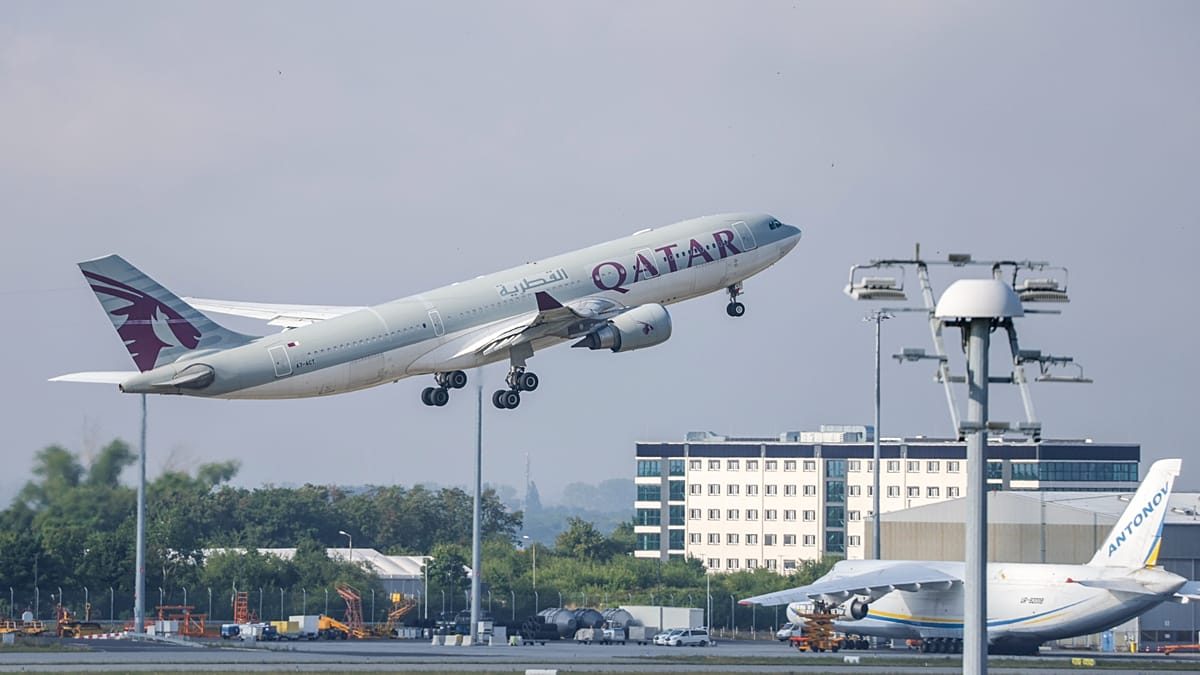
The European Commission has proposed bringing international flights under 5,000 kilometres into its carbon market from 2029, a move designed to level the playing field for European carriers against subsidised foreign rivals.
The European Commission proposed on Friday to extend its Emissions Trading System (ETS) to international flights arriving in the European Economic Area from destinations within 5,000 kilometres, starting in 2029. The measure would end a longstanding "stop-the-clock" arrangement that has exempted foreign airlines from paying for their carbon footprint.
Routes such as Frankfurt to Dubai or Istanbul will fall under the carbon market, while longer sectors like Frankfurt to Tokyo, as well as landing flights from the United States and China, will remain exempt. All private jets departing and landing in Europe will also be covered. Domestic services to outermost regions, including flights between mainland Spain and the Canary Islands, will keep their exemptions until the end of 2035.
The proposal addresses a growing competitive imbalance for European airlines. "Aviation is the only major sector where emissions are going up rather than down," Climate Commissioner Hopke Woekstra told reporters. "At the same time, the EU faces a level playing field issue: currently ETS only covers the EEA and quite a few countries, particularly in the Gulf, subsidise their airlines." By forcing medium-haul foreign carriers to pay for CO2, Brussels aims to neutralise the pricing advantage enjoyed by rival hub airports outside the bloc.
"Why should a family flying to Benidorm once a year for their family holiday pay ETS while a private jet user who makes twenty trips a year to luxury locations is not covered," Woekstra added. The expansion is also a legal necessity. Brussels is obliged to review whether the international CORSIA offsetting scheme is delivering sufficient reductions by 2032, and if not, propose extending carbon pricing to all departing international flights.
Overhauling free allowances
Beyond aviation, the Commission proposed a fundamental shift in how free carbon allowances work for energy-intensive industries post-2030. Free allocations will be transformed into "investment allowances", meaning companies will receive 80 percent of their allowances only after publishing a board-approved decarbonisation plan. The remaining 20 percent will be withheld until investments and actual emissions reductions are delivered.
This redesign directly targets the practice of companies using free allowances to fund operations outside of Europe. "We cannot accept any longer that companies use their free allowances to invest outside Europe," said Peter Liese, the European Parliament's lead negotiator on the ETS revision. "Best would be to connect them with investments in the particular site so that workers can keep their job.”
To support these industrial transitions, Brussels wants at least 50 percent of national ETS revenues reinvested into the covered sectors, including aviation and manufacturing. This funding is critical as the industry struggles to meet sustainable aviation fuel mandates, which require a 2 percent blend this year—a target that has largely failed—scaling to 70 percent by 2050.
The reform sets the stage for a fierce political battle after the summer break. While the Commission argues the changes preserve investment certainty for the EU's 2040 climate target, campaign group Transport & Environment warned that "vested fossil fuel interests" are pushing to dilute the system. "Weakening the ETS is a short-term bet that will damage Europe's long-term competitiveness. It also deprives governments of the revenues needed to boost innovative technologies of the future," said Kädi Ristok, the group's director of energy and climate.