Brittany tourism booms amid heatwaves, but water shortages loom
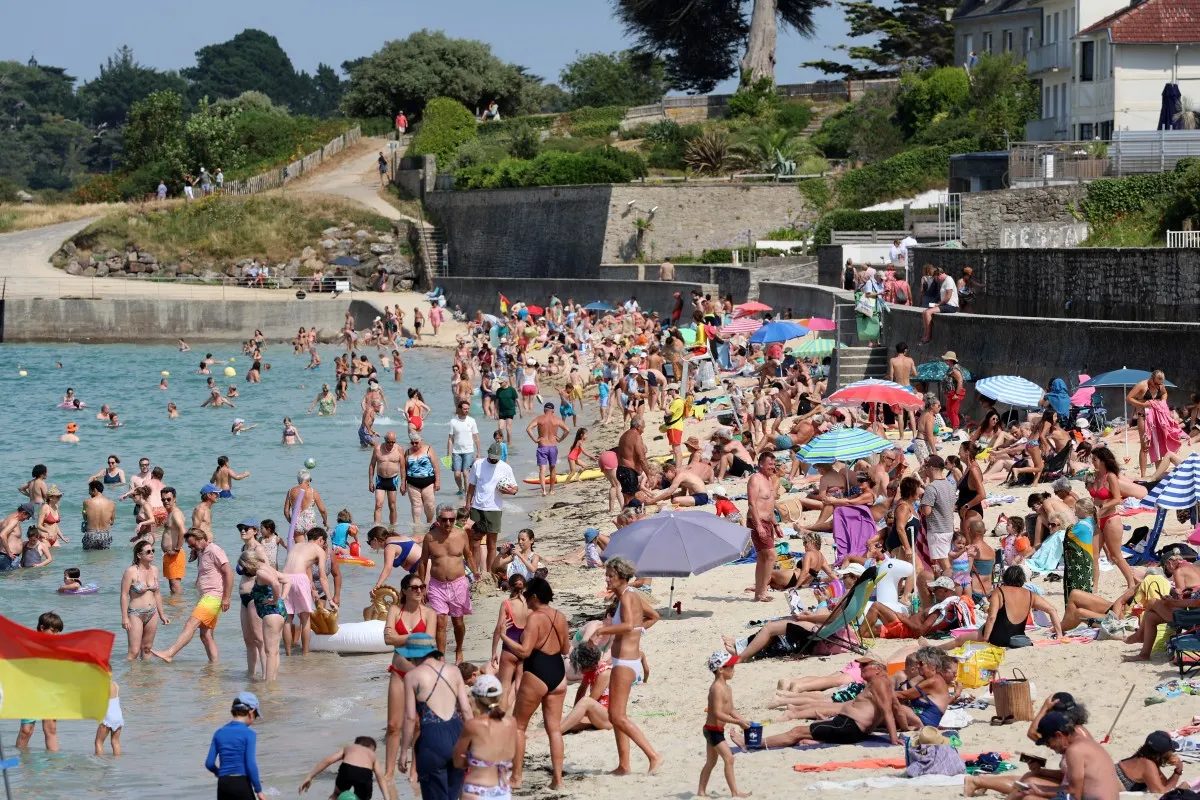
Rising temperatures are driving a 13 percent surge in western French tourism bookings, bringing an economic boost to Brittany that is threatened by the region's growing water scarcity.
Tourists fleeing recent heatwaves have driven a 13 percent increase in bookings across Manche, Brittany and Loire-Atlantique. After three heatwaves in six weeks, visitors are abandoning the Mediterranean coast for western France in search of cooler air. The shift is delivering a sudden and significant economic uplift to a region historically associated with rainy summer holidays.
Accommodation providers are seeing demand accelerate much earlier in the year. "This year rooms started selling out as soon as temperatures began rising in April and May," said Antoine from the beachfront Ker Moor Hotel in Saint-Quay-Portrieux. He noted a growing influx of guests from southern cities like Nice, Carcassonne and Marseille, alongside increasing numbers of Spanish and Italian visitors since 2022.
The changing travel patterns are altering the local tourism model. Lisa from the Saint-Malo tourism office noted that visitors from inland areas like Rennes now travel to the coast specifically to escape the heat. "Owners think it’s largely thanks to the weather and people wanting to get some cooler air," she said.
For businesses, this new reality requires rapid capital investment. Hotels that have never needed air conditioning are now facing guest demands for it. "We're seriously considering installing AC," Antoine said. "We weren't even thinking about that a few years ago."
A fragile infrastructure
However, the short-term tourism boom collides directly with Brittany's physical limits. Meteorologist Stéven Tual, founder of weather forecasting company Temps Breton, warned that the idea of the region as a safe "climate refuge" is misleading. He pointed out that Rennes exceeded 40C this year, with coastal areas nearing that mark. "Brittany is not at all spared from climate change," he said.
The region's granitic soil severely restricts access to groundwater, leaving it heavily dependent on surface water. "If it doesn’t rain for three weeks, drought sets in very quickly," Tual explained. This creates a precarious balance as rising temperatures, agricultural demand, and a growing tourist population all compete for a limited supply.
The severe drought conditions seen during the 2022 heatwave offer a warning. Back then, widespread water restrictions disrupted agriculture, shellfish farming, and river ecosystems, while even hospital capacity was affected. Tual noted that while the influx of visitors is "a good thing for the regional economy," coherent policies are required to manage the consequences.
Without them, the region faces a future of difficult resource allocation. "As more people come to the region, we will eventually face the question: who do we give water to?" Tual said. "Which sectors do we prioritise?"