US architectural gem Prairie House rescued by preservation group
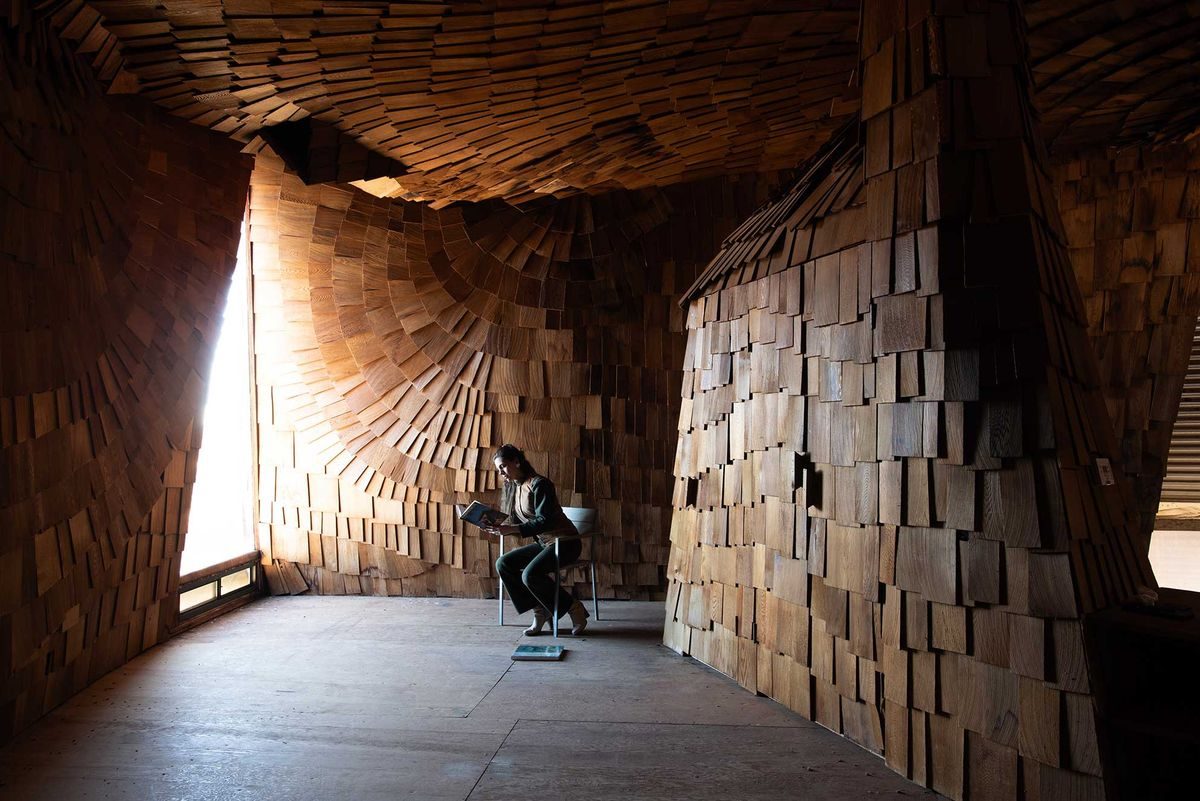
A newly formed nonprofit is raising funds to restore Herb Greene's 1961 Prairie House in Oklahoma, rescuing a rare example of resource-constrained mid-century architecture from demolition to create a community cultural space.
The Prairie House Preservation Society (PHPS) is restoring a decaying 1961 residence in Norman, Oklahoma, to secure its survival as a public space. The nonprofit assumed management of the property after the 2016 death of the owner who had bought it from architect Herb Greene in 1968. By that time, the building's wooden exterior had rotted and its futuristic aluminium carport had weathered badly.
The urgency to save the structure stemmed from a recent local loss. In 2016, the nearby Bavinger House, famous for its spiralling form, was abruptly demolished. “That really set off a big alarm amongst the architectural community that these places don’t last forever,” says Beau Jennings, PHPS’s interim executive director.
The Prairie House represents a distinct strand of mid-century American architecture that contrasts with the era's sleek glass towers. Known as the American School, this movement was led at the University of Oklahoma by Greene and Bruce Goff. Goff, who recently received a major retrospective at the Art Institute of Chicago, and the 90-something Greene taught students to design structures responding directly to their environment.
Greene applied this principle to his own home, layering its curved walls with unfinished cedar planks that Life magazine described as “bird- and beast-like”. The building's amorphous shape acts as a practical shield, with its narrowest side facing west to buffer against Great Plains storms. “You feel like you’re inside something that’s living,” says Lila Cohen, PHPS president, Greene’s great-niece and an architect.
The design was born partly out of economic constraint, a reality that now drives the current fundraising efforts to save it. “Things like it and the Bavinger House are products of the environment, where there are not always resources and you’re forced to be a little more industrious and find your own way and use the materials you have because you may not have the funds to get the materials you might want,” Jennings says.
Because the house was privately owned for decades and invisible from the road, locals knew it primarily through Julius Shulman’s photographs. Since forming in 2022, PHPS has offered the property's first public tours while raising funds for a master plan to stabilise it. “It doesn’t look like a house. It’s really a sculpture,” Cohen says.