Germany joins French nuclear drill as Berlin and Paris reset defence ties
Germany's participation in a French nuclear exercise signals a tangible shift toward an independent European deterrent as US commitment wavers and a major joint fighter jet project collapses.
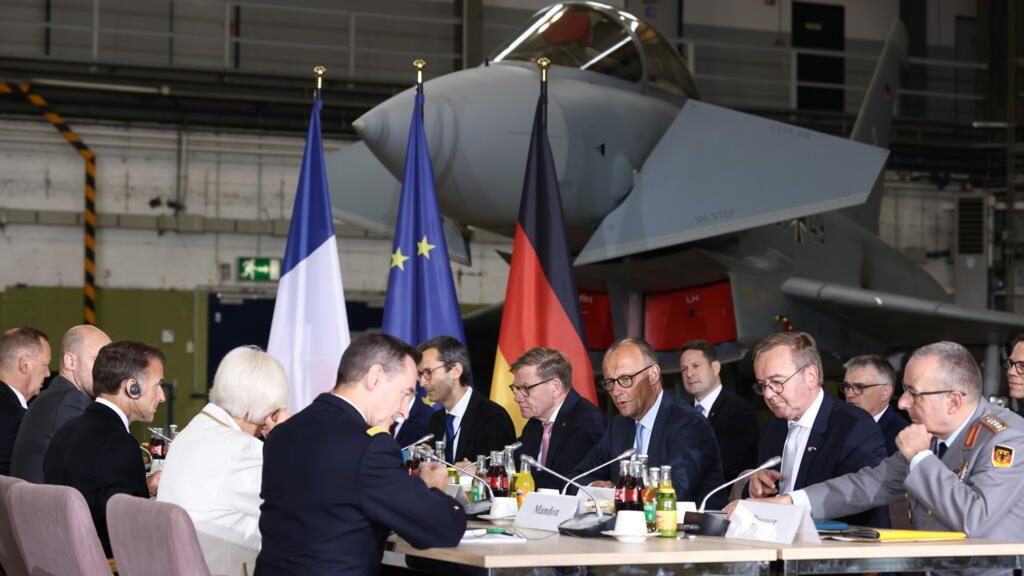
Germany will participate in a French nuclear military exercise this autumn, Chancellor Friedrich Merz announced after a joint defence council with President Emmanuel Macron near Cologne.
The move marks a concrete step in European defence integration at a time when faith in the US security umbrella is faltering under President Donald Trump. Merz framed the involvement as strictly additive, stating: "This is complementary to our nuclear participation and deterrence within NATO, which we still hold to."
France remains Western Europe's only other nuclear power alongside the UK, and Macron has insisted Paris will retain tight control over its atomic arsenal. Germany is one of eight nations that have agreed to engage with France's nuclear deterrence framework.
The nuclear agreement is part of a broader effort to salvage a defence partnership that took a severe hit with the collapse of the Future Combat Air System (FCAS) earlier this year. The flagship fighter jet project fell victim to disputes between Airbus and France's Dassault, raising doubts about the ability of European aerospace firms to collaborate on next-generation hardware.
Rather than abandoning the technological groundwork entirely, Merz confirmed that both governments will continue developing the cloud computing solution created for the FCAS programme. For the European defence sector, salvaging this software component preserves critical digital infrastructure that could underpin future joint military systems.
Beyond nuclear deterrence, Germany committed to an autumn military manoeuvre led by France under the "Coalition of the Willing" framework for Ukraine's allies. Macron noted this group plans to hold exercises in countries bordering Ukraine in the coming months to validate deployment plans for a post-war multinational force.
The diplomatic push carries political urgency for Macron, who faces a spring presidential election where far-right leader Marine Le Pen is a frontrunner. Merz sought to insulate the bilateral agenda from this domestic uncertainty, telling reporters that Germany's "hand remains extended towards France" regardless of the election outcome.
The meetings took place in a castle near Cologne, the site where Charles de Gaulle and Konrad Adenauer agreed on a friendship treaty in 1962. Macron said the goal was to give a "new dynamic" to defence cooperation and create a "powerful Europe which unites our strengths."