Amazon-backed Zoox recalls 105 robotaxis over emergency response flaw
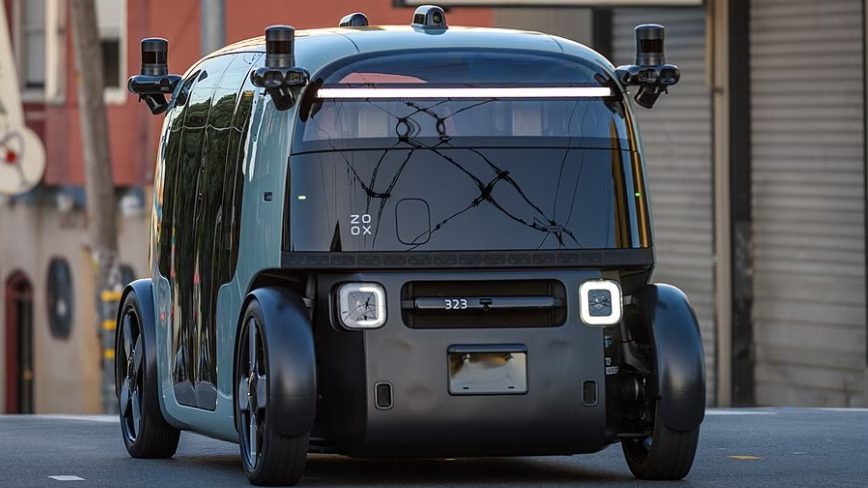
Amazon’s Zoox has recalled software in 105 robotaxis after one drove into a fire scene, highlighting a persistent industry-wide failure to handle emergencies that will shape future European regulation.
Amazon’s autonomous vehicle subsidiary Zoox has voluntarily recalled the software in 105 of its robotaxis. The action follows a June 20 incident in Las Vegas where an unoccupied vehicle drove directly into heavy smoke at an active fire scene.
The smoke had obscured the area, which first responders had not yet cordoned off with traffic cones. Upon entering the smoke, the vehicle braked hard and attempted to steer away before coming to a complete stop. A remote Zoox employee then instructed the car to reverse, and firefighters subsequently placed cones to block the area. No injuries were reported.
Zoox notified the US National Highway Traffic Safety Administration of the recall on July 8, describing it as "the only event of this kind" to occur. The decision follows a direct directive from NHTSA Administrator Jonathan Morrison, who ordered autonomous vehicle developers to fix first responder interference by the end of July. Morrison cited "a clear pattern" of driverless vehicles disrupting emergency scenes, blocking ambulances, and failing to recognize smoke, flares, or flashing lights.
The recall highlights a systemic vulnerability in the autonomous driving sector. While self-driving technology can reliably manage routine traffic, it consistently struggles with the unpredictable nature of emergency scenes. Waymo recalled roughly 3,900 robotaxis last month after some drove into closed freeway construction zones, and its vehicles also stalled during July 4 fireworks. These incidents demonstrate that edge cases are not as rare as the industry often claims.
For European investors and regulators, these recurring software corrections carry significant economic implications. Amazon acquired Zoox for $1.3 billion in 2020, betting heavily on a market that is proving expensive to scale. Zoox issued several software recalls last year alone over lane crossings, vehicle movement prediction, and pedestrian detection. Repeated withdrawals threaten to delay commercial viability and inflate capital requirements for a sector still chasing profitability.
Zoox currently operates its steering-wheel-free vehicles in parts of Las Vegas and San Francisco, with limited service in Miami and Austin. It is racing to close the gap with Waymo, which operates about 4,000 automated vehicles nationwide. However, European cities present denser, more complex environments where emergency response integration is strictly mandated. Until US operators can prove their vehicles reliably recognize and yield to fire scenes, European expansion for these firms remains a distant prospect.