Agility Robotics opens training hub as humanoid market matures
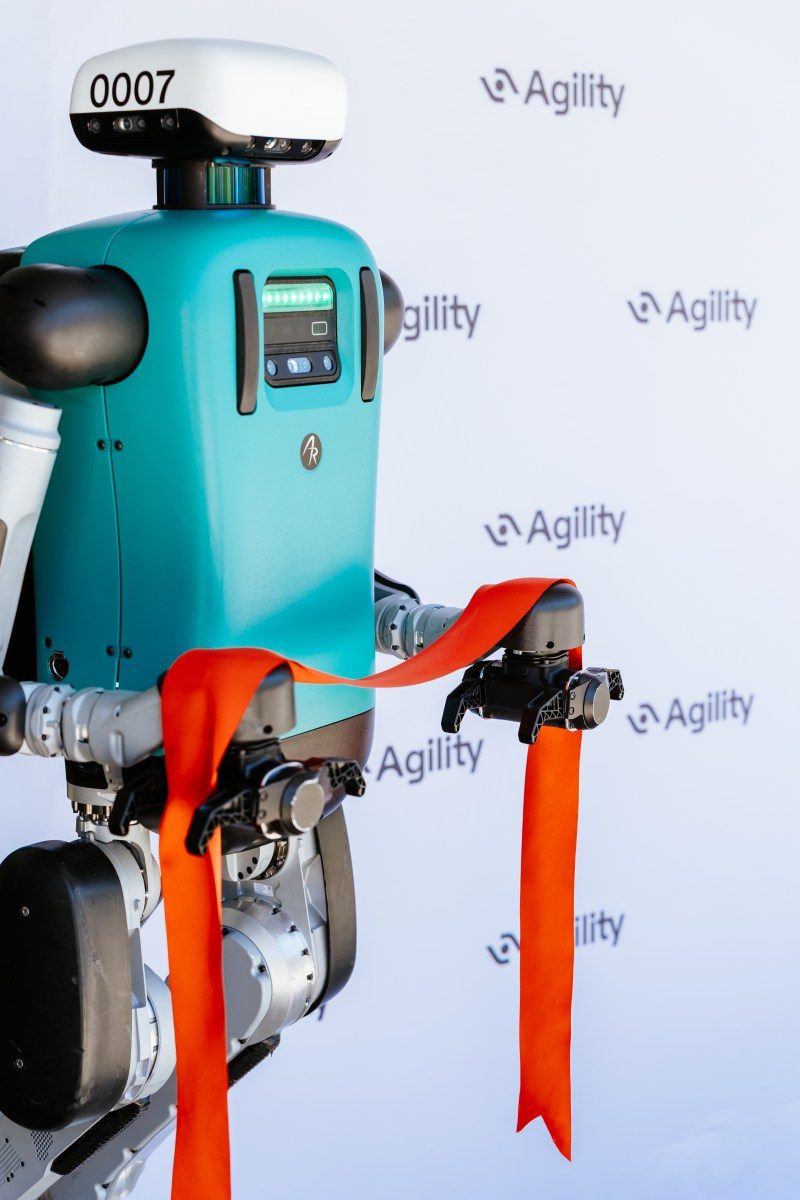
Agility Robotics is opening a large California training facility to scale its revenue-generating Digit robots, a move that signals the commercial maturation of humanoid automation for global logistics and manufacturing.
Agility Robotics has opened a 60,000-square-foot facility in Fremont, California, dedicated to training its humanoid robots. The site, located near Tesla’s upcoming Optimus manufacturing hub, is designed to accelerate deployments as the company prepares to become the first pure-play humanoid robot firm to go public later this year through a reverse merger.
While competitors are still developing prototypes, Agility’s six-foot-tall Digit robot is already generating revenue in industrial settings. The company has secured $300 million in contract orders and counts major logistics and manufacturing firms among its clients, including Amazon, GXO, Toyota Motor Manufacturing Canada, and the German industrial supplier Schaeffler.
This commercial focus is a deliberate strategy to outpace a newer wave of AI-driven robotics startups like Figure and 1X. Dozens of Digits have been deployed to date, with the robots having moved 100,000 totes at a single GXO logistics facility. CEO Peggy Johnson noted the company's operational readiness, stating, “We have commercialized. We now know what it takes to walk into these facilities and meet their safety bars, their regulatory bars, compliance, plug into their IT infrastructure, plug into their warehouse management system.”
That emphasis on rigorous compliance is particularly relevant for European manufacturers bound by strict workplace safety regulations. Agility deliberately separates its core safety controls from generative AI. Co-founder and chairman Damion Shelton explained: “The analog with humanoids is all the safety stuff needs to go through a path that’s not generative AI, right? You don’t want to get creative with your safety stack.”
However, the company still relies on AI to solve the programming bottleneck required for mass adoption. Shelton noted that generative AI answers the challenge of scaling applications, as “the number of things you can imagine a robot doing is far larger than the number of engineers who can program robots.”
More than 30 customers are currently negotiating deployments, a pipeline the new facility will support. Agility will unveil a fifth version of Digit this autumn that can sense humans, allowing it to operate outside restricted robot-only zones. The company is ignoring the consumer market to focus purely on industrial logistics. “Let’s start with the bins and the totes, and then let’s do the picking and the kitting,” said co-founder Jonathan Hurst. “And then let’s like start working on cardboard, which is really hard, and loading and unloading tractor trailers and things like that. Okay, now we’re at 100 million robots, you know? A trillion-dollar company.”