UK factory farm plans spark food security warnings
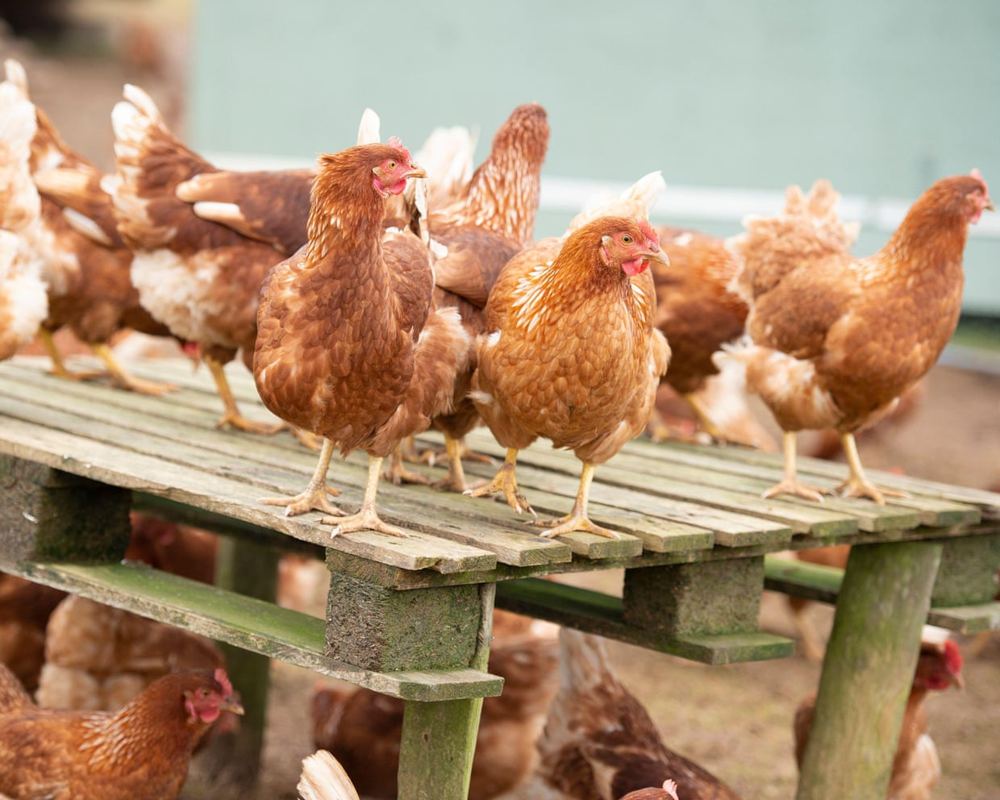
The UK government’s push to boost poultry production through relaxed planning rules is facing fierce criticism over its reliance on imported feed, highlighting a broader European dilemma between domestic food scaling and supply chain resilience.
The UK government is facing backlash over a plan to accelerate the construction of intensive poultry farms by rewriting national planning rules. Environment Secretary Emma Reynolds has positioned the expansion as a core component of the country’s food security strategy. She recently told an agriculture festival that the government would use state levers and a new Farming and Food Partnership Board, featuring leaders from the National Farmers’ Union and the Food & Drink Federation, to boost domestic food production.
Campaigners argue the policy will achieve the exact opposite. Sustain and Communities Against Factory Farming (CAFF) are calling for the poultry growth plan to be scrapped. They warn that scaling up intensive farming actually undermines national security because it deepens the country's reliance on imported animal feed.
“Animal farming at current levels is unsustainable without imports, soy from South America makes up 18% of produced animal feed,” said Maya Pardo, CAFF’s campaign lead, citing a government security assessment. She noted that this dependence leaves the UK vulnerable to supply chain disruptions and ecosystem collapse. Ruth Westcott of Sustain added that intensive poultry farming is “highly resource-intensive, polluting and inefficient, so it can never be a solution to food security.”
This tension reflects a wider challenge for European food markets. A recent UK farming roadmap warned that geopolitical instability and the climate crisis are already threatening food availability, risking severe price shocks. The country's top security officials have similarly warned that ecological collapse could trigger food shortages within years.
The agricultural sector is already feeling the pressure of global volatility. Italian coffee company Lavazza recently warned that geopolitical tensions and climate impacts will keep commodity prices elevated for years. In this environment, food producers and investors are being forced to weigh rapid capacity expansion against long-term resource vulnerabilities.
Some industry voices argue the government's approach is misaligned with its own environmental goals. Harriet Bell, the regenerative farming lead at Riverford, said planning reforms to build reservoirs and renewable energy infrastructure are welcome, but they must not become a “free pass for developments that undermine healthy water systems, biodiversity or animal welfare.” She stressed that long-term food production depends on healthy soils and water systems.
Tim Benton, a professor of population ecology at the University of Leeds, suggested agricultural policy is undergoing a permanent shift. Food security will soon become the “organising principle” for the sector as governments recognize they are “in a new world where events are happening all of the time and will continue all of the time.”