Spain and Morocco vie for 2030 World Cup final in six-country tournament
FIFA's unprecedented 2030 World Cup spanning three continents will test European transport infrastructure and pit Spain against Morocco in a high-stakes battle to host the lucrative final.
The 2030 World Cup will be split across six countries and three continents, with the bulk of the 104 matches hosted by Spain, Portugal, and Morocco after three ceremonial opening games in South America.
On June 8, 2030, the tournament begins in Montevideo, Buenos Aires, and Asunción to mark the competition's centenary. Uruguay's Estadio Centenario is closing later this year for a 30-month overhaul to add a roof and increase capacity to 63,000 ahead of the anniversary. After those opening fixtures, squads will travel roughly 6,000 miles to Europe and North Africa for the group stages, a mid-tournament continental shift FIFA plans to manage with extra rest days.
For Europe's co-hosts, the six-week tournament represents a major infrastructure and tourism test. Spain, hosting for the first time since 1982, will stage the largest share of matches across Madrid, Barcelona, and other yet-to-be-finalized cities. Portugal will make its World Cup debut as a host, utilizing venues in Lisbon and Porto.
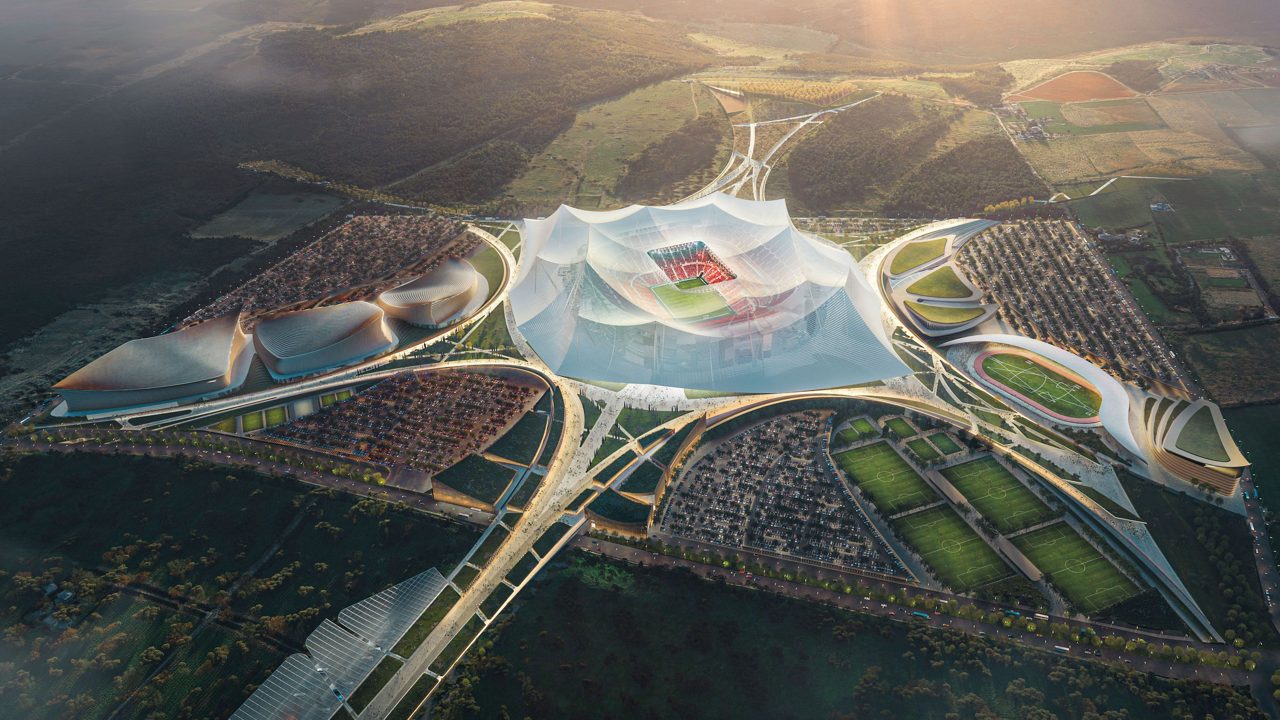
Morocco is aggressively leveraging the event to position itself as a global sporting hub, directly challenging Europe's traditional dominance. The country is constructing the 115,000-seat Grand Stade Hassan II near Casablanca. Shaped like a traditional Moroccan tent, the arena is set to become the largest soccer stadium in the world and will host matches alongside venues spread from Tangier to Agadir.
This Moroccan investment is now at the center of a fierce contest to host the July 21 final. The decider is a three-way race between Madrid's Santiago Bernabéu, Barcelona's rebuilt Camp Nou, and the Grand Stade Hassan II. Spanish officials long assumed the final would remain in Spain, but the domestic press has recently acknowledged that Casablanca is pulling ahead. FIFA will not select the site until December 2026.
The geographic proximity of the main hosts could mitigate the logistical strain of the unprecedented format. Spain and Morocco are separated only by the Strait of Gibraltar. Fans will be able to travel between a match in Seville and another in Tangier in roughly an hour by ferry or a couple of hours on Al Boraq, Africa's first high-speed rail line.
The tournament's scale could still grow. South American football body CONMEBOL is pushing to increase the field from 48 to 64 teams, a proposal FIFA's president indicated he would hear out. Following the 2030 edition, the World Cup will move to Saudi Arabia in 2034.