Concert cost squeeze risks Europe's emerging artists
Surging production costs and tightening fan budgets are squeezing profit margins on European mega-tours, threatening the cross-financing model that develops the continent's future musical talent.
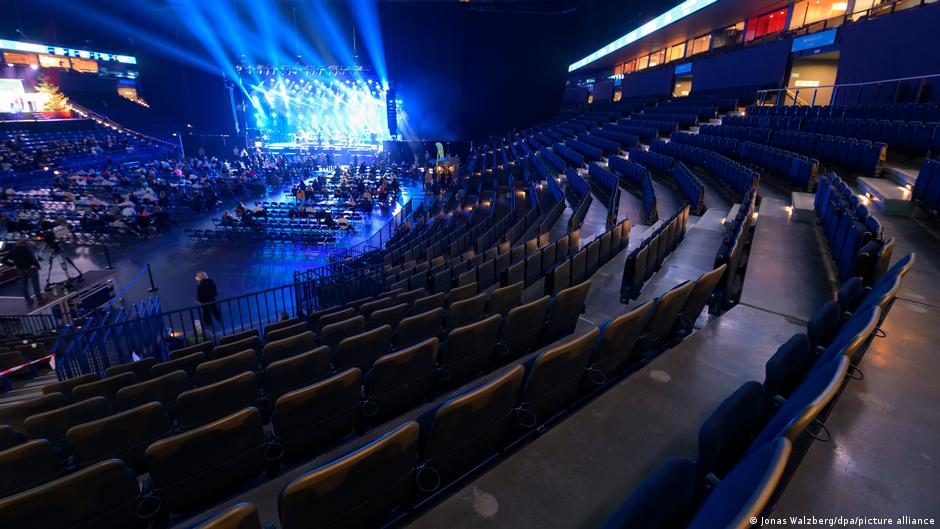
Empty seats are appearing at concerts across Europe as the live music industry grapples with a severe mismatch between rising production costs and what fans can afford to pay. This phenomenon, known as "blue dot fever" after the available seats on ticketing platforms, is signalling a structural shift in the sector's economics rather than a decline in audience interest.
Overall demand remains robust. Around 70 million people attended popular music concerts in Germany in 2024, surpassing pre-pandemic levels according to GEMA. Megastars continue to command massive audiences, with Beyoncé generating €359 million in 2025 and the Oasis Live '25 tour posting record box office figures.
However, the financial fundamentals underpinning these mega-events are deteriorating. "Due to increasing personnel costs, rising technical costs, energy and inflation, we have soaring production costs in comparison with 2019," said Johannes Everke from Germany's Federal Association of the Concert and Event Industry. Because ticket prices are not rising fast enough to keep pace, profit margins for promoters are shrinking.
A threatened talent pipeline
Inflation is also reshaping consumer behaviour. When budgets are tight, fans are choosing to spend their disposable income on a single major event rather than several smaller gigs. "Many people would choose to go for a large concert, perceived to be a major event, over several smaller ones," noted Stephan Thanscheidt from FKP Scorpio, one of Europe's largest promoters.
This concentration of spending creates a direct threat to the industry's future. Promoters have historically relied on the surplus generated by massive stadium shows to cross-finance lesser-known acts. Artists like Ed Sheeran began as such passion projects, funded by the profits of established stars.
The traditional music business model has simultaneously collapsed. Tours once served as loss-leaders to promote album sales, with record labels subsidising the costs. Now, live performances account for roughly half of an artist's income, forcing established musicians to tour endlessly and saturating the market.
Some megastars are responding by abandoning traditional tours in favour of residencies. Shakira will play 12 concerts in Madrid in late 2026 in a purpose-built stadium, while Harry Styles recently completed a 12-show run at Wembley. Yet Everke warns this is not a scalable solution, as very few artists can draw fans across continents to a single city.
To prevent the market from fracturing entirely, industry figures are pointing to the British LIVE Trust model as a potential blueprint. Under this scheme, attendees voluntarily contribute one pound per ticket to a fund supporting grassroots venues. Harry Styles adopted this during his London residency, a move Everke described as a "fantastic sign of solidarity within the industry."