Royal Academy mounts largest Richard Dadd show in 52 years
The most comprehensive show of the artist since the 1970s brings together more than 100 works at the Royal Academy of Arts in London
The Royal Academy of Arts in London opens "Richard Dadd: Beyond Bedlam" on 25 July, marking the most comprehensive display of the Victorian artist’s work in over half a century. Curated by Nicholas Tromans, the exhibition brings together 100 pieces, including highly finished oil paintings and intricate watercolour drawings. It stands as the largest show dedicated to Dadd since a pivotal 1974 retrospective at the Tate Gallery, an event that originally expanded his audience beyond a small circle of intellectuals like Sacheverell Sitwell and Siegfried Sassoon.
Dadd trained at the Royal Academy Schools in 1837 and quickly earned acclaim for his imaginative fairy scenes, including "Puck" and "Titania Sleeping" from 1841. His trajectory changed dramatically following an arduous 1843 drafting trip to the Middle East, after which he developed a severe mental illness. That same year, acting on hallucinations, he murdered his father and was subsequently committed to Bethlem Hospital in south London in 1844.
He was later moved to Broadmoor Asylum in Berkshire in 1864, remaining there until his death in 1886. Deprived of conventional inspirations like dramatic perspectives, flowers, and family faces, Dadd painted entirely from memory and an untethered psychological state. The exhibition showcases the masterpieces that built his posthumous reputation, headed by the famous "The Fairy Feller’s Master-Stroke" (1855-64).
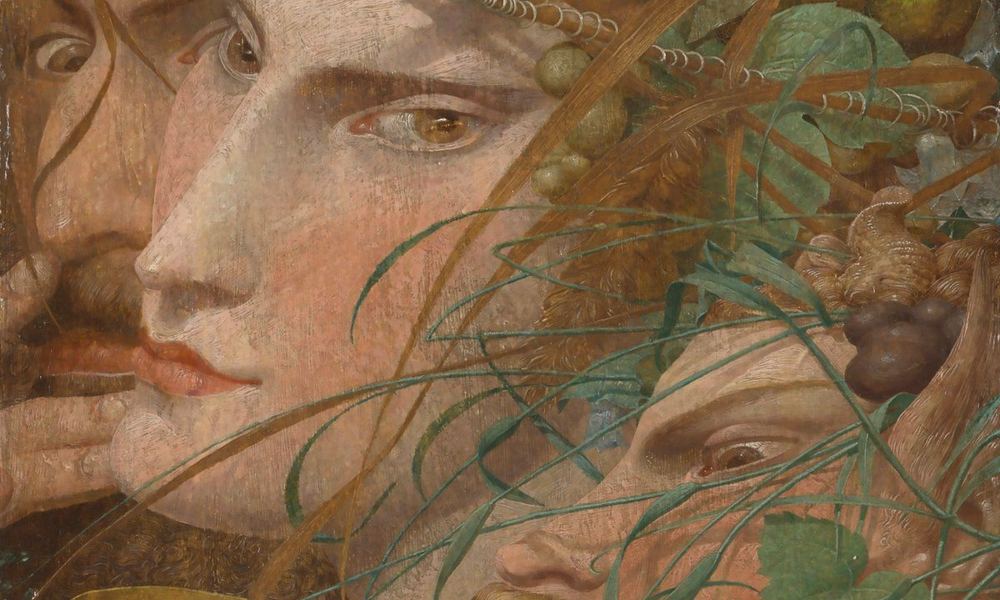
Other highlighted works include "Contradiction: Oberon and Titania" (1854-58) and "Bacchanalian Scene" (1862), demonstrating his unique blend of technical bravura and a restless imagination. The exhibition advances the scholarly understanding of Dadd’s complex mind. An essay by art historian Sarah Thomas offers a persuasive new reading of "The Child’s Problem" (1857), linking the mysterious work to blind chess, abolitionism, and classical sculpture.
Separately, psychiatrist Robert Howard breaks new ground by formally diagnosing Dadd with schizophrenia in his catalogue contribution. This medical perspective directly addresses the long-debated relationship between his psychiatric condition and his artistic output. Visitors viewing the exhibition until 25 October will encounter strict conservation lighting designed to protect the historic pieces.
Attendees are advised to bring a magnifying glass to fully appreciate the microscopic details hidden in his compositions, such as a butterfly confronting a fairy beneath a leaf in "Contradiction". The show builds on decades of rigorous research, expanding upon Patricia Allderidge’s 1974 Bethlem Hospital catalogue and Tromans’s 2011 comprehensive account of the artist.