Wafcon 2026 kicks off in Morocco as 2030 World Cup infrastructure takes shape
The delayed and expanded Women's Africa Cup of Nations begins on 26 July, serving as both a 2027 World Cup qualifier and a practical stress test for the stadiums Morocco will use when it co-hosts the 2030 men's tournament with Spain and Portugal.
The 2026 Women's Africa Cup of Nations will begin in Rabat on 26 July after the Confederation of African Football postponed the tournament from its original March dates. The 16-team event, expanded from previous editions, features 34 matches and concludes with the final on 16 August.
For European stakeholders, the tournament offers a tangible measure of Morocco's accelerating investment in sports infrastructure ahead of the 2030 FIFA World Cup. Morocco is scheduled to co-host that men's tournament alongside Spain and Portugal. While last year's Wafcon used six stadiums across five cities, this edition has been consolidated into five venues in just Rabat and Casablanca. Fes was originally scheduled to host Group D but those matches were shifted to Casablanca.
The three stadiums deployed in Rabat also staged matches at the 2025 men's Africa Cup of Nations. This consolidation reflects a strategic focusing of resources as the country undertakes broader redevelopment projects. The venue for the Wafcon final remains unconfirmed, though it will likely be the larger Prince Moulay Abdellah Stadium in Rabat if the host nation advances.
The commercial and sporting significance of the tournament extends directly to European club football. The Wafcon acts as the African qualifier for the 2027 Women's World Cup in Brazil, dictating which national teams—and by extension, which players—will be on the global stage. European leagues, which employ the bulk of Africa's top female talent, will be watching closely for future transfer targets.
The four semi-finalists will secure automatic qualification for the 2027 World Cup. The four losing quarter-finalists will enter a secondary play-off round on 13 August, competing for two remaining spots at an intercontinental qualifier. This structure ensures high stakes throughout the knockout phase.
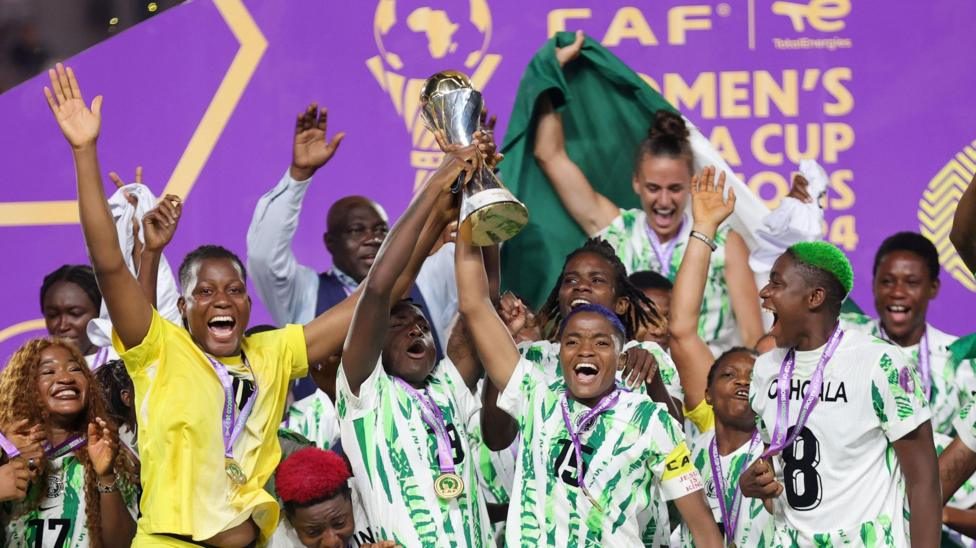
European coaching expertise is heavily represented among the leading contenders. Morocco employs Jorge Vilda, who guided Spain to the 2023 World Cup title, as they attempt to win their first trophy after finishing as runners-up in the last two editions. Holders Nigeria, managed by Justin Madugu, feature Chiamaka Nnadozie and captain Rasheedat Ajibade.
South Africa, the 2022 winners, remain a primary obstacle under coach Desiree Ellis. Zambia, featuring Barbra Banda, and Ghana, managed by Kim Bjorkegren, round out the top contenders in a field that includes debutants Malawi and Cape Verde. Kenya returns for the first time in a decade.
The group stage opens on 26 July with Algeria playing Senegal in Rabat, before the hosts face Kenya later that evening. Morocco will then play their highly anticipated North African derby against Algeria on 30 July. All matches will kick off at either 17:00 GMT or 20:00 GMT.


