Germany backs tiered EU enlargement, targets 400bn euro budget cut
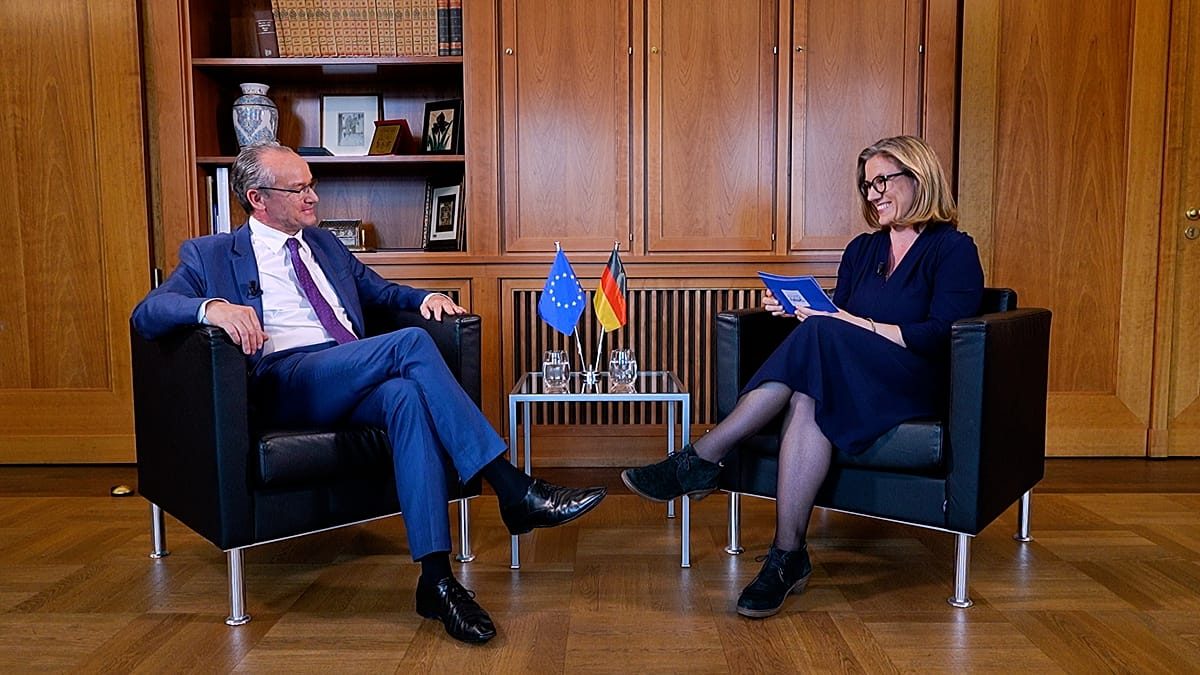
Germany's Europe minister has endorsed a tiered membership model for accession candidates while demanding a 400 billion euro cut to the next EU budget to shift funds toward defence and technology.
Gunther Krichbaum, Germany's Minister of State for Europe, has publicly backed Chancellor Friedrich Merz's plan for associate EU membership for Ukraine, Moldova, and the Western Balkans. The proposal would grant these countries access to European Parliament meetings without voting rights. Krichbaum argues this approach costs nothing while sending a decisive geopolitical message. "These countries belong with us, to the European Union," he said, noting it would demonstrate unity to Russia and China.
The endorsement reinforces a joint push by Merz and French President Emmanuel Macron to accelerate integration for Albania, Bosnia and Herzegovina, Kosovo, Montenegro, North Macedonia, and Serbia. Critics have dismissed associate status as a second-class waiting room, but Krichbaum rejects this characterization. He insists the model is designed to make candidates feel like part of the club during a lengthy transition.
This shift is driven by a recognition that the traditional accession process has become unmanageable. Krichbaum compared the current system to a high jump competition where the bar has been raised from 1.50 metres to 2.10 metres due to decades of added regulations on consumer and environmental protection. "We have to move away from this high jump competition," he said, advocating instead for a tiered staircase system where full membership remains the final destination.
The structural rethink extends directly into the looming fight over the EU's 2028-2034 multiannual financial framework. The European Commission has proposed a 1.7 trillion euro spending ceiling, but Berlin is demanding a drastic 400 billion euro reduction. Krichbaum attributed this hardline stance to Germany's subdued 2026 growth forecast, which leaves the bloc's largest net contributor with limited fiscal room for manoeuvre.
He nevertheless argues the EU can afford enlargement within its existing budget. He points out that former recipient countries have transformed into donors, noting simply that "the Polish economy is booming."
Rather than just shrinking the budget, Krichbaum wants to completely overhaul how European money is spent. "If we were reinventing the European Union today and, theoretically, had a reset button we could press, we would not start with agricultural policy," he said. "But today the focus is on issues such as security, defence, cyber security, but also of course space, artificial intelligence and competitiveness. These are all areas from which we expect to generate our prosperity in five, ten, fifteen or twenty years’ time."
To achieve this, he proposed merging cohesion policy and agricultural policy into a single funding pillar. Member states would then have the autonomy to distribute the money internally, allowing for a gradual reallocation of capital away from traditional farming.
Krichbaum warned that delays in reaching a budget agreement would only complicate an already fraught political landscape. "In other words, it is already complicated enough. I believe we have a strong interest in having the negotiations on the multiannual financial framework truly wrapped up by the end of this year," he said, cautioning that unforeseen events in 2027 could make consensus even harder.