Montenegro backs EU safeguards but rejects second-class membership
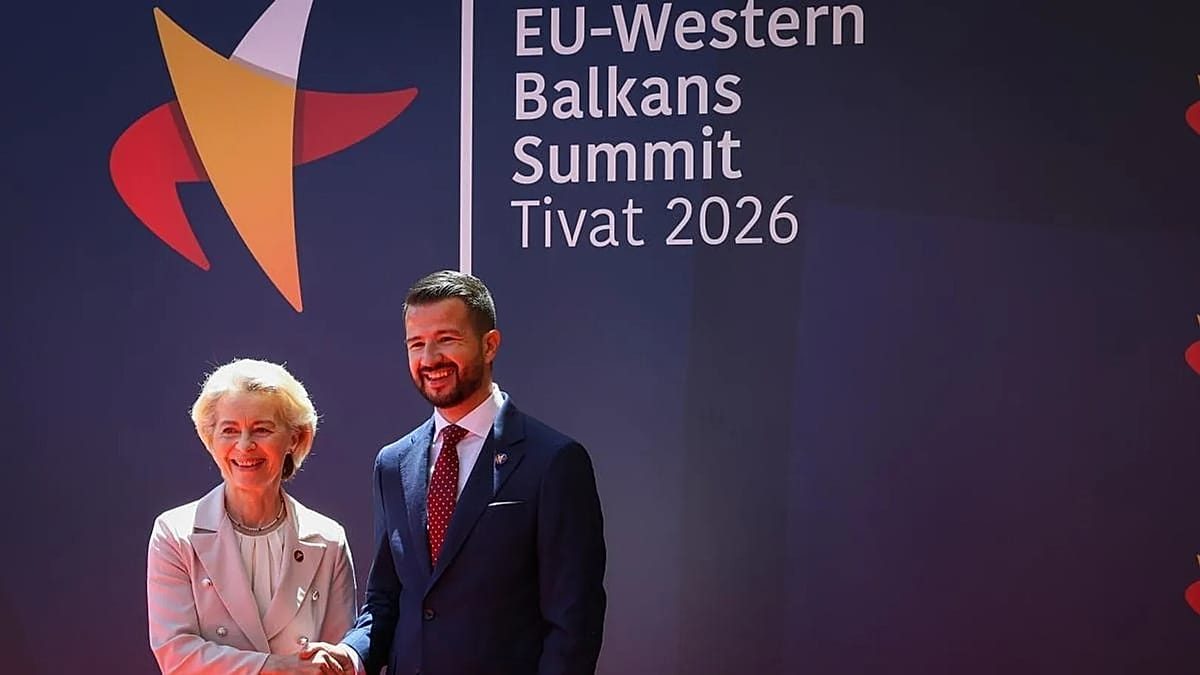
Montenegro's ambassador to the EU has warned against creating a two-tier membership system as founding states push for new rule-of-law safeguards, a dispute that will shape the bloc's next expansion and the investment climate in the Western Balkans.
Montenegro has thrown its support behind new rule-of-law safeguards for future EU members. However, the candidate country firmly rejected proposals that would strip new entrants of their voting rights, warning such a move would create second-class membership.
The intervention from Podgorica comes as the most advanced candidate country targets EU entry by 2028 to become the 28th member state. For investors and businesses operating in the Western Balkans, the terms of this accession are critical, as rule-of-law stability directly dictates market confidence and the flow of foreign capital.
Five of the EU's six founding members are pushing for stricter mechanisms to prevent democratic backsliding after accession. This is a direct response to the erosion of standards in Viktor Orbán's Hungary. Petar Marković, Montenegro's head of mission to the EU, said any new safeguards must rest on objective criteria.
"Montenegro has an interest in introducing guarantees meant to maintain EU standards. But the potential breaches would have to be assessed on a case-by-case basis against objective criteria to prove systematic backsliding," Marković said. He noted that according to the European Commission's periodic review, Montenegro already outperforms some existing member states on rule-of-law reforms.
The ambassador drew a hard line against using a transitional period to pre-emptively curtail a new member's voting rights. He described the mechanism as "politically and legally dubious," arguing it would effectively create a two-tier union that undermines the economic and political integration driving enlargement.
Despite these warnings, Marković acknowledged a strategic upside to clear safeguards. He noted they could ease the ratification process in national parliaments, providing vital reassurance as the political landscape in founding states shifts rightward and grows more sceptical of enlargement.
A separate friction point is the "gradual integration" model championed by France and Germany, which would grant candidate countries early access to certain EU benefits. Marković argued that overhauling the rules now would be fundamentally unfair after 14 years of negotiations under the current framework.
"Discussions on a new methodology should focus on the candidate countries for which the current methodology has not worked. For Montenegro, it clearly has," he said. "This is not about what we deserve. This is a rational choice."
"Strategically, the stakes could not be higher. The EU has a real chance to reverse the Brexit effect and return to expanding again," Marković concluded. For the European economy, successfully integrating Montenegro without creating a precedent for diminished rights would signal to markets that the bloc can still grow while enforcing its core principles.