OpenAI absorbs US medical records, raising stakes for health tech
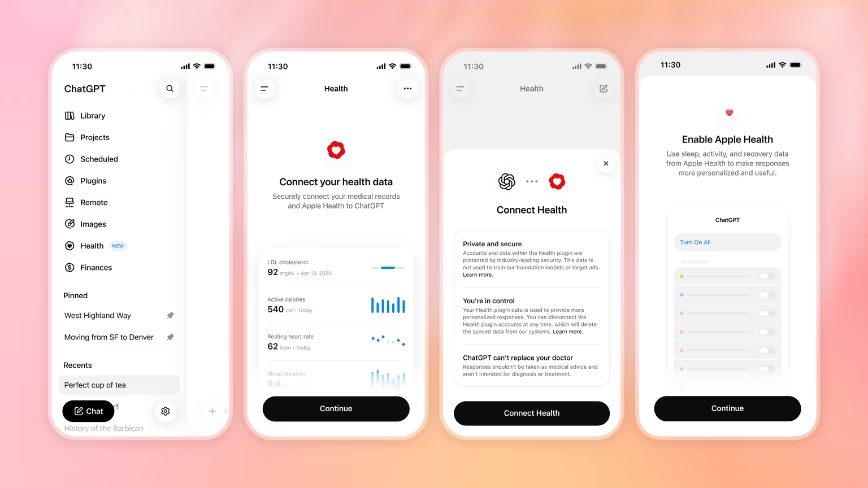
OpenAI is connecting ChatGPT to personal medical records for millions of US users, a move that reshapes the consumer health market and sets a stark test for data privacy rules that European regulators are watching closely.
OpenAI rolled out ChatGPT Health to all logged-in US adults on Thursday, allowing the chatbot to ingest Apple Health data, lab results, medications and visit notes.
More than 300 million people already ask the chatbot health questions weekly. By integrating this data directly into the main chat interface, after finding over 70% of health queries happened outside a dedicated tab, OpenAI is positioning itself as a primary health management tool. Free users receive GPT-5.5 Instant, while paying subscribers get GPT-5.6 Sol, a model OpenAI calls its strongest yet for health.
The company promises connected records and chats will not train its models or target ads, with data deleted 30 days after disconnection. This reliance on Apple Health is also complicated by an ongoing trade secrets lawsuit between OpenAI and Apple. For European health tech firms, these corporate and privacy risks contrast sharply with the EU’s GDPR framework and the incoming AI Act, which classifies medical AI as high-risk.
The commercial push is backed by bold assertions. Ashley Alexander, OpenAI’s vice-president of health product, claimed its models “are now capable of reasoning at levels that are better than clinician level.” When pressed, the company’s health lead Karan Singhal moved to “temper” that statement, conceding only that “individual studies” pointed that way.
The confidence is already colliding with real-world harm claims. Days earlier, a Florida pastor sued OpenAI, alleging the bot gave him “extremely dangerous medical recommendations” that delayed his treatment for a near-fatal pulmonary embolism.
OpenAI’s own disclaimer acknowledges the tool “can still make mistakes” and is not a substitute for a doctor. Yet the integration of sensitive health data into a mainstream consumer product marks a point of no return for the industry. As one critic noted of the broader trajectory: “The interesting thing to me is the surveillance ratchet.” Investors in European digital health should expect this aggressive US model to accelerate the global debate over who bears responsibility when an AI gets a diagnosis wrong.