FIFA charges Argentina over World Cup final clashes and Falklands political banner
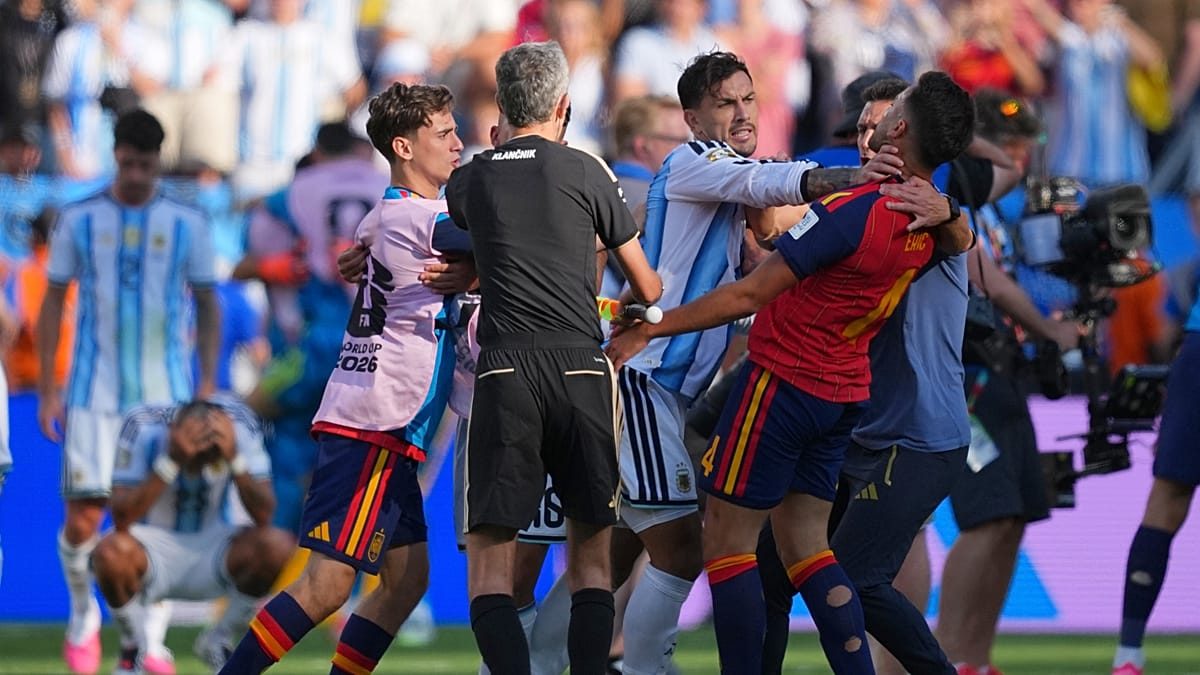
FIFA has opened multiple disciplinary cases against the Argentine national team over post-match violence and political demonstrations, testing the governing body’s ability to police conduct and diplomatic sensitivities in global tournaments.
FIFA has lodged formal disciplinary charges against the Argentine national football team following incidents at the recent World Cup. The cases stem from post-match altercations after Spain’s 1-0 victory in the final on July 19, as well as a political demonstration during the semi-final match against England.
Argentine midfielder Leandro Paredes faces three separate charges of assault related to the post-game clashes. Defender Nahuel Molina faces two assault charges, including an incident where Spain captain Rodri was struck in the stomach, alongside a charge of unsporting behaviour.
Assistant coach Roberto Ayala is subject to one charge of alleged assault, while Thiago Almada also faces an unsporting behaviour citation. Spain’s Gavi has been levelled with a similar unsporting behaviour charge. The governing body is also investigating discriminatory chants by fans and the throwing of objects by spectators across several matches.
Beyond the on-field violence, Argentina is charged with using a sports event for non-sporting demonstrations. This follows the team unfurling a banner reading “Las Malvinas son Argentinas” after their 2-1 semi-final win over England.
The display reignited longstanding sovereignty disputes over the archipelago, known as the Falkland Islands in the United Kingdom and the Malvinas in Argentina. The 1982 conflict, initiated by an Argentine military invasion and ending in a British victory, remains a sensitive diplomatic issue, prompting the British government to formally request a FIFA investigation.
Spain coach Luis de la Fuente condemned the post-final incidents, describing them as intolerable and unacceptable. Speaking to Spanish public broadcaster TVE, he stated he did not witness the clashes while celebrating with other people, adding that such behaviour cannot be allowed from players of that calibre who have a magnificent coach.
Broader Implications for Sports Governance
For European stakeholders, this dual investigation highlights the growing challenge of policing geopolitical friction within global sports. FIFA’s handling of the political banner and the violent aftermath will serve as a critical test case for how international federations enforce conduct rules without escalating diplomatic tensions involving European nations.