AC Milan retires number 6 as one-club captain Franco Baresi dies at 66
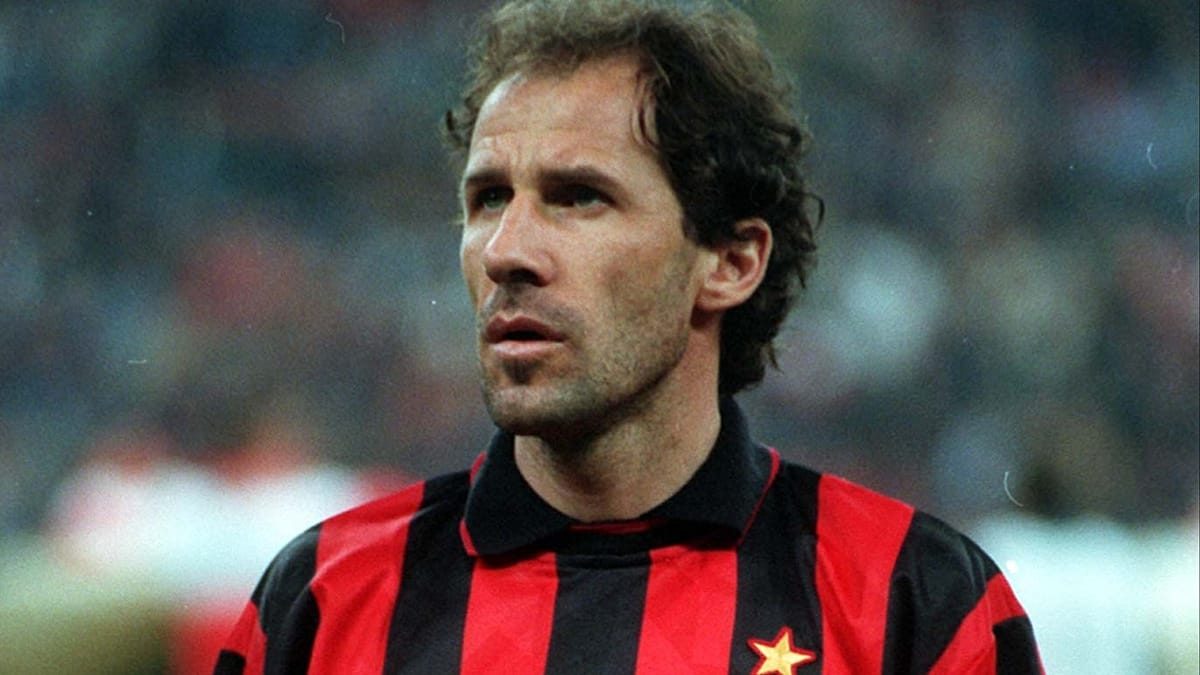
The death of Franco Baresi, who spent twenty years as AC Milan's captain and won three European Cups, closes the book on an era of loyalty that modern football has largely left behind.
Franco Baresi, the captain who led AC Milan through two decades of domestic and European dominance, has died at the age of 66. The club announced his death on Thursday morning through its official channels, confirming what had been feared since his health deteriorated in recent days.
Milan's statement described the loss in personal terms. "The entire history of AC Milan is in tears following the passing of Franco Baresi. His example and integrity will be forever etched into the Club's DNA, just as his iconic number 6 shirt is," the club said, extending condolences to his family.
Baresi was a one-club man in the strictest sense. Born in Travagliato, in the province of Brescia, on 8 May 1960, he entered Milan's youth academy and made his Serie A debut in 1978 at seventeen. He never left, playing more than 700 official matches before retiring at the close of the 1996-1997 season.
Those twenty years spanned the full arc of the club's modern history. He was present for the 1979 scudetto, the painful spells in Serie B, and the reconstruction under Arrigo Sacchi that turned Milan into Europe's most feared side. Under Fabio Capello, the team Baresi captained went 58 league matches unbeaten.
The honours list reflects that sustained excellence: six scudetti, three European Cups or Champions League titles, two Intercontinental Cups, two UEFA Super Cups, four Italian Super Cups, two Serie B championships and a Mitropa Cup. Milan confirmed it will permanently retire his number 6 shirt, a distinction reserved for the club's most defining figures.
With the national team, Baresi occupies a unique place in Italian football history. He was part of the 1982 World Cup-winning squad in Spain under Enzo Bearzot, though he did not feature on the pitch. He went on to finish third at Italia '90 and captained Italy to the 1994 World Cup final in the United States, playing through a serious meniscus injury sustained during the tournament. He remains the only Italian player to have collected a first, second and third-place finish across World Cup campaigns.
His final months were shaped by illness. In 2025, Milan disclosed that routine tests had detected a lung nodule. Baresi underwent a minimally invasive procedure to remove it, followed by consolidating immunotherapy, and stepped back from public club duties while he recovered. Unfounded reports of his death circulated on social media in recent days before Milan confirmed the situation was grave. His condition then worsened.
For European football, Baresi's death is more than the loss of a great defender. He represented a model of institutional loyalty that has become nearly extinct in a sport now defined by transfer markets, global broadcasting rights and player mobility. His entire senior career belonged to one shirt, one city, one set of colours.
Italian football has lost its most understated standard-bearer. The game across the continent has lost one of its most intelligent and elegant defenders, and a reminder that greatness did not always require moving on.