False funding cuts and solar-farm myths spread as Spain fights deadly fires
A fabricated newspaper front page and conspiracy theories linking wildfires to renewable-energy projects are circulating across Spain, threatening public trust in the country's climate and energy policy at a critical moment.
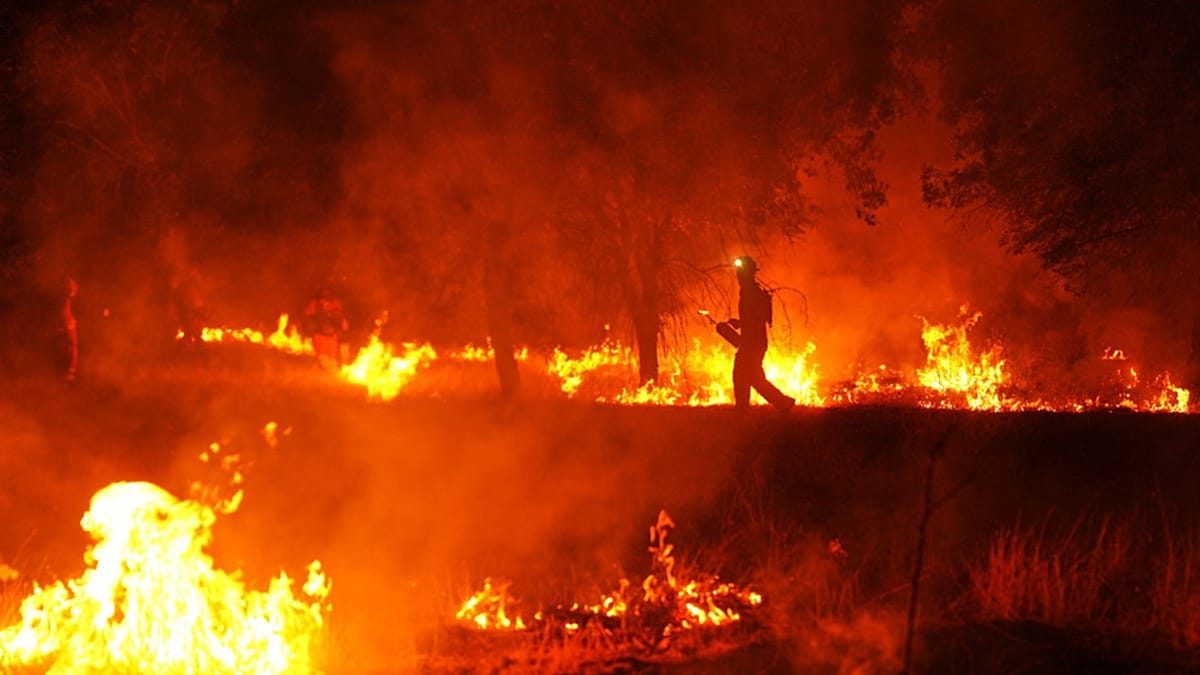
As Spain battles a deadly wildfire season under a fresh heatwave, a parallel wave of fabricated claims is spreading across social media, targeting both the government's prevention spending and the country's solar-energy expansion. Prime Minister Pedro Sánchez has publicly urged citizens to rely on credible information, warning that disinformation is complicating the emergency response.
The most prominent fabrication is an image shared on X and Facebook mimicking the front page of El País, which supposedly reported that the government had slashed wildfire-prevention funding by more than half, from €423 million in 2018 to €181 million in 2026. El País published no such front page; the actual lead story on its 24 July issue was an interview with former prime minister José Luis Rodríguez Zapatero.
Official figures point in the opposite direction. According to the Ministry for Ecological Transition's latest Forest Investment Study, central-government spending on wildfire prevention rose from €13 million in 2018 to €28.3 million in 2024, and recent announcements have outlined expanded preparedness measures for the 2026 season.
Solar farms in the crosshairs
A second cluster of false claims alleges that the Los Gallardos fire in Almería province, which has killed at least 13 people, was deliberately set to clear ground for the Sorbas II photovoltaic project by energy firm EIDF. Posts circulating online cited planning documents and a notice in Spain's Official State Gazette as evidence of the link.
A review by Spanish fact-checking outlet Maldita found that the proposed Sorbas II site was not affected by the wildfire and was earmarked for agricultural land, meaning no reclassification would have been necessary. Investigators have not connected the blaze to the project; their working hypothesis is that a fallen electricity cable or power line sparked the fire.
Broader posts on X, Facebook and TikTok have claimed that solar developers or the government are routinely igniting fires to redevelop land. Spain's Forestry Law, however, generally bars any change of use on burned forest land for at least 30 years, except in narrowly defined public-interest cases.
A recurring pattern with wider stakes
Sánchez, speaking in Almería on 13 July and again on 27 July, called the media's role "crucial" in countering misinformation and singled out false narratives about solar plants, lithium mines and rare-earth extraction. He also pointed to the climate crisis as a driver of the intensifying heatwaves that fuel the fires.
The episode echoes last year, when unfounded claims that developers were torching forests to free up building land circulated widely in Spain. The recurrence suggests an organised appetite for narratives that pit rural communities against the energy transition.
For European policymakers and investors, the episode is more than a domestic curiosity. Spain is one of the continent's fastest-growing solar markets, and sustained conspiracy theories linking renewables to environmental destruction risk eroding local acceptance of new projects. With the EU pressing ahead on its clean-energy targets, the credibility gap that disinformation opens in one member state can slow permitting, inflate political risk premiums and complicate cross-border investment in the sector.
Authorities say investigations into the true causes of the fires remain ongoing.