Scholars push EU to use trade law for settler import ban
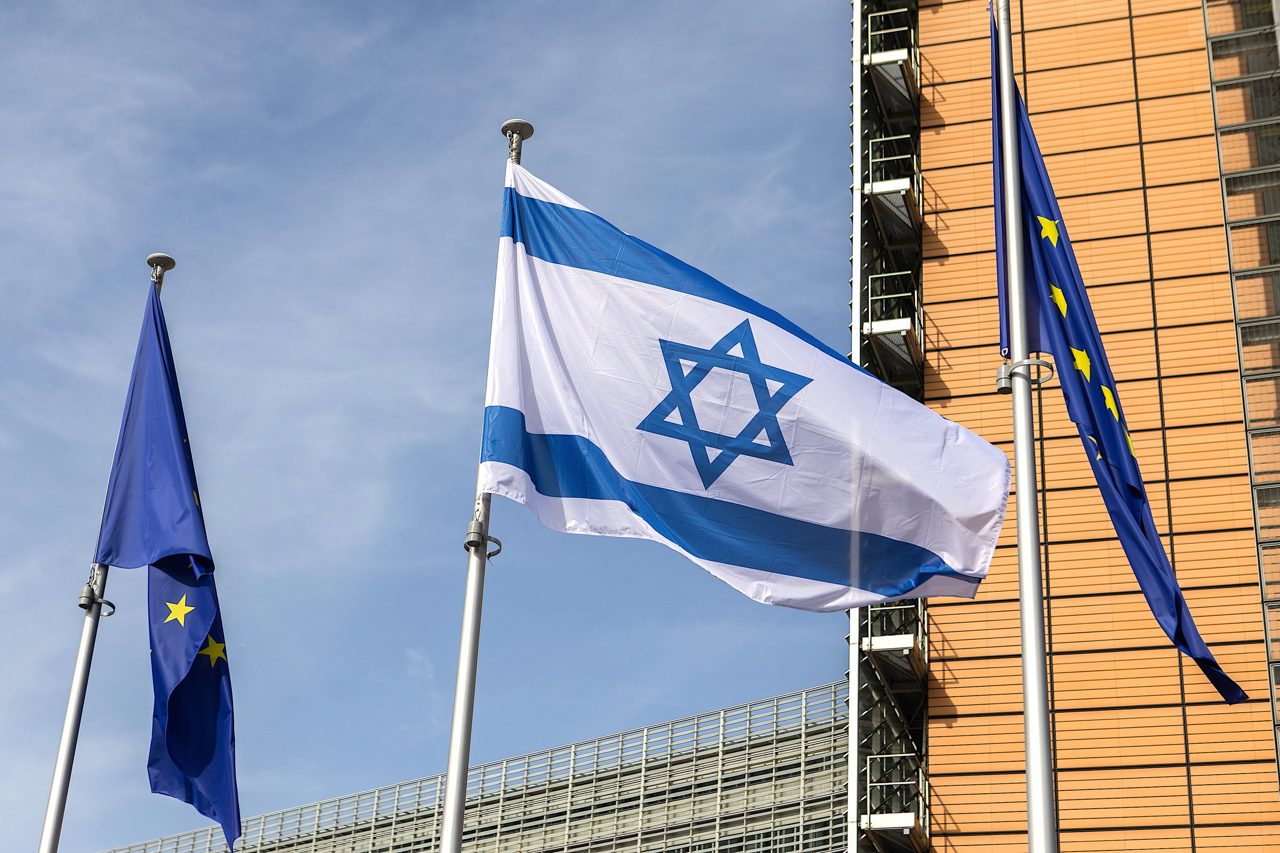
Top legal experts have accused the European Commission of deliberately misinterpreting international law to avoid banning settlement imports, a move that could deny pro-ban states a voting route that bypasses national vetoes.
Five leading legal scholars have warned Ursula von der Leyen that a Commission options paper on restricting imports from Israeli settlements contains “manifestly incorrect and misleading claims” designed to justify inaction.
In a 31 July letter, the experts argue the Commission wrongly asserts that the EU's current trade regime complies with a 2024 International Court of Justice advisory opinion. The ICJ explicitly requires states to prevent trade and investment that helps maintain the illegal situation in occupied territories.
Allowing these goods to enter on most-favoured nation terms, particularly through Israel’s reimbursement scheme for settlement exports, directly contradicts that ruling. Direct EU imports from settlements are estimated at around €230m annually, against total EU-Israel trade of €43.3bn in 2025.
The Commission argues this comparatively small trade volume means a ban is a political foreign policy tool rather than an economic one. The scholars call this logic “self-contradictory”, noting the limited volume actually proves the ban’s primary goal is simply to stop the EU from contributing to the economic viability of the settlements.
This legal classification matters profoundly for the outcome. The scholars argue the measure should be framed as ensuring consistency in the EU’s Common Commercial Policy, which would place it under Article 207 of the EU treaty. This legal basis opens the door to qualified majority voting, bypassing the unanimity requirement that has historically blocked action.
A qualified majority vote would neutralise potential vetoes from Germany, Italy and the Czech Republic, all of which have questioned whether such voting can be used. France, Sweden, Belgium, Ireland, the Netherlands and Spain have spearheaded the push for a full ban, which was the most popular option among ministers when they debated the issue in mid-July.
“This is not a sanction against Israel because it applies exclusively to trade with settlers in the occupied territories,” said Ignacio García Bercero, the commission’s former trade department director and a current Bruegel researcher.
“The commission’s role is to uphold EU law, not to devise legal arguments for avoiding it,” said Alberto Alemanno, an HEC Paris professor and signatory to the letter. “When legal analysis is shaped to defend inaction rather than apply the law, the credibility of the EU’s commitment to the rule of law is at stake.”
The diplomatic pressure coincides with escalating violence. The UN human rights office reported an “all-time high” in settler violence in the West Bank, averaging six attacks per day. On 18 July, Israel allocated more than €350m to expand West Bank construction and announced plans for three illegal settlements in Gaza.
Foreign ministers will revisit the issue at an informal meeting in early September, though a decision is not expected until their regular meeting on 12 October, ahead of Israeli elections on 27 October.