European national teams threaten World Cup boycott over FIFA privatisation
Europe's football federations have warned they will walk away from the tournament if Gianni Infantino presses ahead with selling a stake in the World Cup, escalating a decade-long crisis of confidence in FIFA's leadership.
Europe's national teams have threatened to boycott the FIFA World Cup unless president Gianni Infantino abandons his plan to privatise the tournament by selling a stake to outside investors. The ultimatum marks the sharpest confrontation yet between European football and the Zurich-based governing body, and raises the prospect of a fractured global game.
The proposal would hand commercial control of the sport's most valuable asset to private capital. For European federations, the move strikes at the principle that the World Cup belongs to the football community rather than to shareholders. Critics within the game have accused Infantino of tarnishing the culture of the tournament and what they call the soul of the sport.
The boycott threat lands at the end of a turbulent decade under Infantino, who took the FIFA presidency in 2016 with a mandate to restore credibility after the corruption scandals that toppled Sepp Blatter. Instead, his tenure has been marked by a steady accumulation of controversies that have eroded trust among European stakeholders.
Those controversies range from ethics probes and his naming in the Panama Papers to the award of the 2034 World Cup to Saudi Arabia, announced before a formal vote had taken place. In 2024, Saudi state oil group Aramco signed a four-year global partnership with FIFA, drawing accusations that commercial deals and host-nation selections had become entangled.
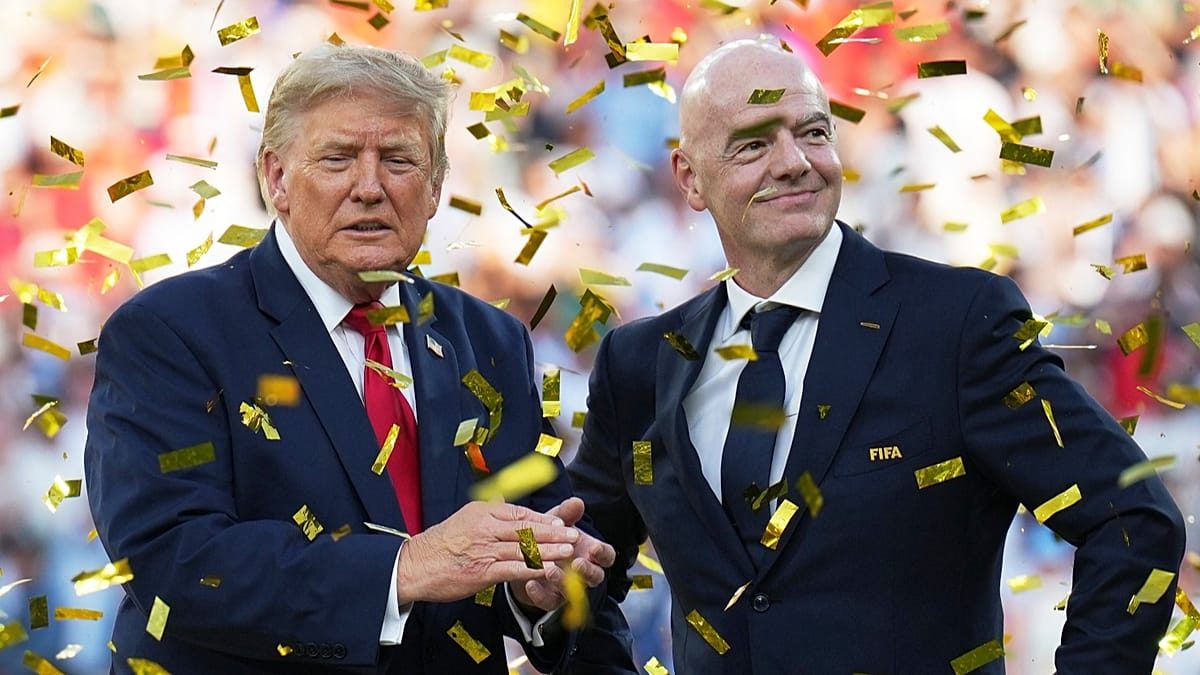
Infantino's political alignments have deepened European unease. In December 2025 he unilaterally awarded Donald Trump the inaugural FIFA Peace Prize ahead of the 2026 World Cup staged in the US, Canada and Mexico. He attended Trump's inauguration, visited Mar-a-Lago during the transition, and moved a FIFA office into Trump Tower in Manhattan. Rights group Fair Square filed an ethics complaint alleging repeated breaches of FIFA's political-neutrality code.
His 2018 declaration that "it's very clear that politics should stay out of football and football should stay out of politics" now reads as hollow. Blatter himself has said his successor inhabits a "different sphere."
Legal pressure is mounting from within European football. In June, former UEFA president Michel Platini filed a criminal complaint in France alleging that Infantino orchestrated a campaign of false accusation to block Platini's own bid for the FIFA presidency. The suit targets Infantino, former FIFA officials Marco Villiger and Domenico Scala, and calls for Swiss ex-attorney general Michael Lauber to be investigated by French authorities.
The 2026 World Cup itself has compounded the governance crisis. Exorbitant ticket prices drew accusations of elitism, while Infantino's use of a private jet to attend two matches a day led the New Weather Institute to label the tournament "the most polluting event ever."
For European football, the commercial stakes are enormous. The World Cup generates billions in broadcast and sponsorship revenue that flow back into national associations, grassroots programmes and club development. A privatisation deal would redirect a share of that income to investors and reshape the tournament's commercial incentives for decades.
Whether the boycott threat is credible or a negotiating gambit, it signals that Europe's federations no longer view FIFA's leadership as a partner acting in the sport's collective interest. The coming months will test whether Infantino can retain the confidence of the continent that produces most of the world's players, fans and television revenue, or whether the game's centre of gravity shifts for good.