Norway urges border action as Ceuta migrant influx strains Schengen
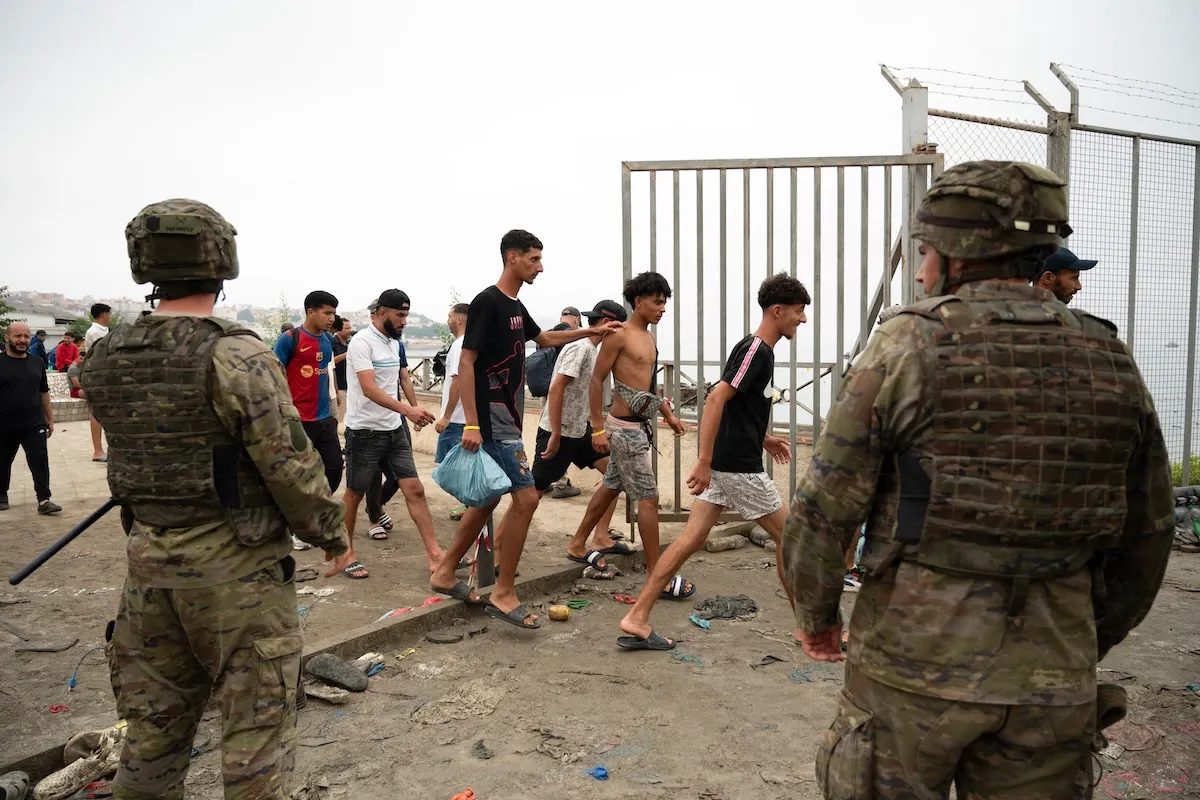
A sudden influx of 60,000 migrants into Spain’s North African enclave of Ceuta has sparked demands for emergency border controls and threats to suspend Madrid from the Schengen zone, highlighting deep fractures in Europe’s free movement framework.
More than 60,000 migrants swam into the Spanish enclave of Ceuta on Thursday. By Friday, Spanish authorities confirmed that 25,000 of those individuals had already been returned to Morocco.
The mass crossing follows a July ruling by the Spanish Supreme Court. The court determined that migrants arriving in Ceuta cannot be immediately turned back and must have their asylum cases formally processed.
Peter Frølich, a Conservative MP who chairs the parliament's foreign policy committee, warned that a failure to secure external borders is "a recipe for division in Europe". He urged the Norwegian government to offer Madrid practical assistance to help get the situation under control.
However, Frølich insisted that solidarity must be paired with strict demands. He stated that European partners must ensure Spain does not pursue a "naive and unsustainable immigration policy".
Erlend Wiborg, an MP for the far-right Progress Party, suggested Norway might have to impose emergency border controls. He demanded the government commit to "ensuring that the external borders in Schengen are strengthened" and "tighten its asylum policy now, so that these asylum seekers understand that there is no point in coming all the way to Norway".
Norway’s justice minister, Astri Aas-Hansen, described the sudden influx as "disturbing". She emphasized that Spain must honor its obligations under both the Schengen and Dublin agreements by preventing new arrivals from moving onward to other European nations.
The political fallout extends beyond Norway, threatening the operational integrity of the Schengen free movement area. Danish Prime Minister Mette Frederiksen and Italian Prime Minister Giorgia Meloni have both suggested the EU should consider suspending Spain from the borderless zone.
For European businesses and investors, the potential fragmentation of Schengen presents a significant economic risk. The reintroduction of hard borders or the suspension of member states would disrupt continental supply chains, increase freight transport costs, and undermine the frictionless trade that underpins the single market.
The Dublin regulation typically requires the first European country of entry to process asylum claims. If southern nations fail to manage these flows, northern economies often face the political and financial burden of secondary migration, creating friction that directly impacts domestic labor markets and public spending.